The Birmingham News: A History of Alabama's Leading Daily
Founded during the industrial surge of the late 19th century, The Birmingham News has served as a primary chronicle of Alabama's growth, political shifts, and urban development. From its humble beginnings as a four-page paper to its transition into a digital-first media entity, the publication has mirrored the evolution of the city it covers.
The Early Years and the "New South"
The Birmingham News was launched on March 14, 1888, by Rufus N. Rhodes. Originally titled The Evening News, the venture began with just two reporters, $800 in operating capital, and a circulation of 628. At the time, Birmingham was only 17 years old but was rapidly becoming a booming industrial hub and a symbol of the "New South"—a term referring to the region's efforts to modernize and recover following the American Civil War and Reconstruction.
Rhodes, a former editor of the Daily Herald, started the paper after a dispute with his previous publisher over a public works project. Rhodes championed the construction of a viaduct across the "Railroad Reservation" to connect north and south Birmingham. This project, known as the 21st Street Viaduct or the "News Bridge," was dedicated on July 4, 1891, and became a point of pride for the publication.
The paper's growth was explosive. By 1891, circulation exceeded 7,000, making it the largest daily in Alabama and earning it the contract to publish the General Laws of Alabama. After several name changes, it officially became The Birmingham News in 1895.
Expansion and the Hanson Era
The News adopted a progressive political stance, supporting the Democratic platform and causes such as prohibition. It also played a pivotal role in the "Greater Birmingham" movement, which advocated for the annexation of suburban communities. This effort contributed to the city's population growing from 40,000 in 1900 to 138,685 by 1910.
Following the death of Rufus Rhodes in 1910, Victor H. Hanson took over as general manager. Hanson, an experienced newspaperman who had founded his own paper at age 11, modernized the publication's operations and tone. Under his leadership, subscriptions jumped from 18,000 in 1910 to 40,000 by 1914. In 1912, the paper launched a Sunday edition, eventually dominating the market over its rival, the Age-Herald.
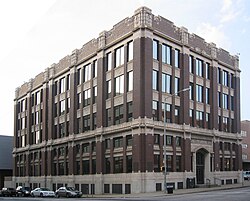
In 1917, the company moved into a six-story Jacobean-style office building at 4th Avenue North and 22nd Street, which was hailed as one of the most efficient newspaper plants in the South.
Acquisitions and Corporate Ownership
The News aggressively expanded its footprint through acquisitions. In 1918, it purchased the Birmingham Ledger, and in 1927, Hanson acquired the Birmingham Age-Herald. By 1950, a joint-operating agreement was established with Scripps-Howard (owners of the Birmingham Post), allowing the Birmingham Post-Herald to share the News's building, presses, and advertising services while maintaining independent editorial staffs. This arrangement lasted until the Post-Herald closed in September 2005.
A major turning point occurred in 1956 when the Hanson family sold the paper to S. I. Newhouse Sr.'s Advance Publications for $18 million—the highest price ever paid for a daily newspaper at that time. Advance Publications continues to own the News, along with The Huntsville Times and Mobile's Press-Register, all of which share the website al.com.
Modern Infrastructure and Digital Transition
On August 10, 2006, the company opened a new $25 million headquarters. This 110,000-square-foot facility featured a glass atrium and was designed by Williams-Blackstock Architects. However, as the industry shifted toward digital media, the large physical space became a liability.
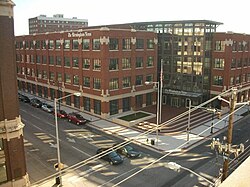
By 2013, Alabama Media Group announced the sale of the 2006 building, stating it was not conducive to "digital-first, print-last" operations. The News vacated the premises in 2014, moving into a renovated warehouse. The building was later purchased by Infinity Property & Casualty Corp. for $20 million in 2015.
The Decline of Print
The transition from ink to pixels was marked by several significant cutbacks. In October 2012, Advance Publications eliminated print editions on Mondays, Tuesdays, Thursdays, and Saturdays. This move made Birmingham one of the largest U.S. cities without a daily newspaper.
The final phase of this transition arrived on November 3, 2022, when management announced that The Birmingham News and its sister papers would completely discontinue print editions on February 26, 2023, converting to all-digital operations.
Key Facts
- Founded: March 14, 1888, by Rufus N. Rhodes.
- Peak Reach: More than 215,000 readers per week.
- Record Sale: Sold to Advance Publications in 1956 for $18 million.
- Digital Shift: Ceased all print editions on February 26, 2023.
- Ownership: Currently owned by Advance Publications as part of Alabama Media Group.
| Year | Milestone | Circulation/Detail |
|---|---|---|
| 1888 | Launch as The Evening News | 628 |
| 1891 | Largest daily in Alabama | 7,000+ |
| 1909 | Pre-Hanson expansion | 17,000 |
| 1914 | Modernization under Victor Hanson | 40,000 |
| 1918 | Purchase of Birmingham Ledger | 60,000 |
| 2023 | Full Digital Conversion | Print discontinued |
Frequently Asked Questions
Why was The Birmingham News founded?
It was founded by Rufus N. Rhodes after he had a falling out with the publisher of the Daily Herald over the proposed construction of a viaduct (the 21st Street Viaduct) to connect north and south Birmingham.
Who owns The Birmingham News today?
The paper is owned by Advance Publications, a privately held company based in New York, which also owns The Huntsville Times and the Press-Register.
When did the paper stop printing daily editions?
The paper began reducing its print schedule in October 2012 and eventually ceased all print editions on February 26, 2023, to become an all-digital operation.
What is the relationship between The Birmingham News and al.com?
al.com is the shared website for Advance Publications' three largest Alabama newspapers, including The Birmingham News.
What was the significance of the 1956 sale?
The sale of the News to S. I. Newhouse Sr. for $18 million was the largest sum ever paid for a daily newspaper at that time.