Articles/Texas: A Comprehensive Overview of the Lone Star State
Texas historyTexas geographyTexas populationTexas economyTexas state symbols
Texas: A Comprehensive Overview of the Lone Star State
Exploring Texas: The Lone Star State Known globally as the Lone Star State, Texas is a land of vast landscapes, diverse cultures, and a history that shaped the American West. From the bus...
Exploring Texas: The Lone Star State
Known globally as the Lone Star State, Texas is a land of vast landscapes, diverse cultures, and a history that shaped the American West. From the bustling metropolitan hubs of Houston and Dallas to the rugged beauty of Big Bend, Texas offers a unique blend of tradition and rapid modern growth. With its motto of "Friendship" and a spirit of independence, the state continues to be a major driver of the United States' economy and culture.
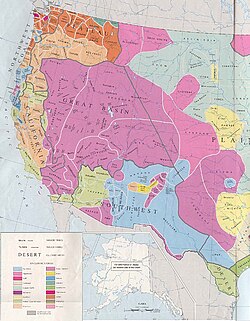
Early Native American tribal territories: Early Native American tribal territories
Key Facts
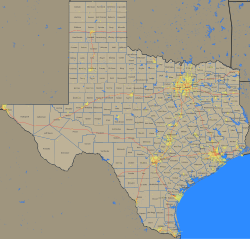
Texas Counties and municipalities
Capital: Austin
Largest City: Houston
Statehood: Admitted to the Union on December 29, 1845
Nickname: The Lone Star State
Motto: Friendship
Population: Approximately 31.7 million (2025 estimate)
State Sport: Rodeo
A Journey Through History
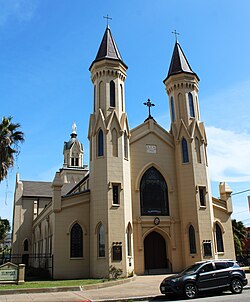
St. Mary's Cathedral Basilica of the Archdiocese of Galveston-Houston
Precontact and Colonization
Long before it became a state, the region was home to various Native American tribes. The area's history transitioned through periods of Spanish colonization, as evidenced by historical maps of the northern frontier of New Spain.
Nicolas de La Fora's 1771 map of the northern frontier of New Spain clearly shows the Provincia de los Tejas.[53]: Nicolas de La Fora's 1771 map of the northern frontier of New Spain clearly shows the Provincia de los Tejas.[53]
The Republic and Statehood
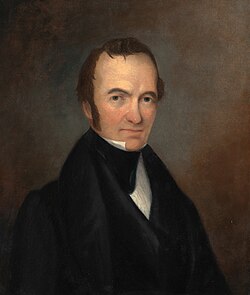
Texas holds a unique place in American history, having existed as an independent nation known as the Republic of Texas. This era was defined by influential figures like Stephen F. Austin, the first American empresario (a land agent authorized to settle colonies), who helped establish early American settlements within Mexican territory.
Stephen F. Austin was the first American empresario given permission to operate a colony within Mexican Texas.: Stephen F. Austin was the first American empresario given permission to operate a colony within Mexican Texas.
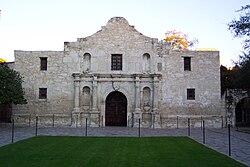
The struggle for independence and the subsequent political shifts eventually led to Texas being admitted as the 28th state of the Union in 1845. The legacy of this era remains visible in iconic landmarks like the Alamo and through historical commemorations of the Texas Declaration of Independence.
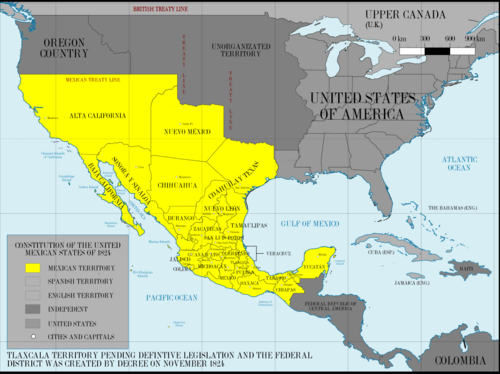
Mexico in 1824. Coahuila y Tejas is the northeasternmost state.: Mexico in 1824. Coahuila y Tejas is the northeasternmost state.
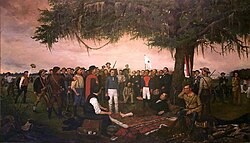
Surrender of Santa Anna. Painting by William Henry Huddle, 1886.: Surrender of Santa Anna. Painting by William Henry Huddle, 1886.
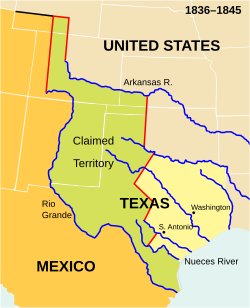
The Republic of Texas with present-day borders superimposed: The Republic of Texas with present-day borders superimposed
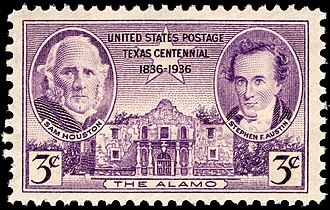
On March 2, 1936, the U.S. Post Office issued a commemorative stamp commemorating the 100th anniversary of the Texas Declaration of Independence, featuring Sam Houston (left), Stephen Austin and the Alamo.: On March 2, 1936, the U.S. Post Office issued a commemorative stamp commemorating the 100th anniversary of the Texas Declaration of Independence, featuring Sam Houston (left), Stephen Austin and the Alamo.
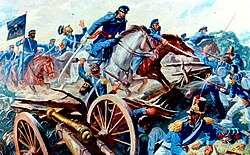
Captain Charles A. May's squadron of the 2nd Dragoons slashes through the Mexican Army lines. Resaca de la Palma, Texas, May 1846.: Captain Charles A. May's squadron of the 2nd Dragoons slashes through the Mexican Army lines. Resaca de la Palma, Texas, May 1846.
Geography and Climate
First Baptist Church of Dallas
Texas is the second-largest state in the U.S. by both land area and population. Its geography is incredibly varied, ranging from the coastal plains of the Gulf of Mexico to the high elevations of the Guadalupe Peak, which reaches 8,751 feet.
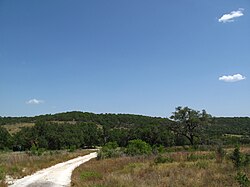
Texas Hill Country: Texas Hill Country
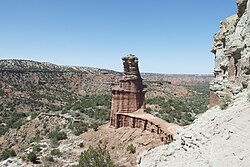
Palo Duro Canyon: Palo Duro Canyon
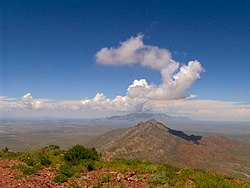
Franklin Mountains State Park: Franklin Mountains State Park
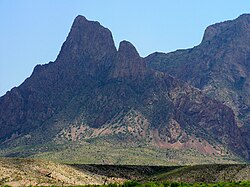
Big Bend National Park: Big Bend National Park
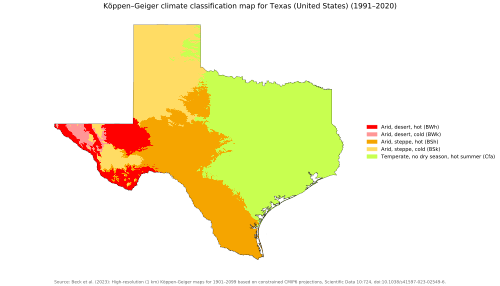
The state's climate is equally diverse, categorized by various Köppen climate types (a system used to classify climates based on temperature and precipitation). While much of the state experiences hot summers, the weather can vary significantly between the humid Gulf Coast and the arid western regions.
Köppen climate types in Texas: Köppen climate types in Texas
Water and Natural Resources
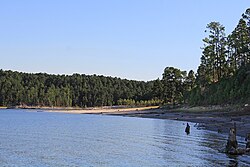
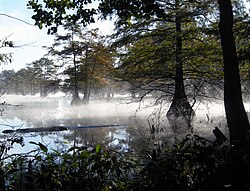
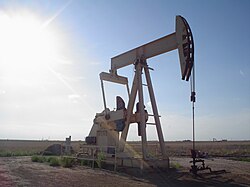
Water plays a vital role in the Texas landscape, with numerous reservoirs and rivers supporting both wildlife and human industry. The state is also famous for its natural resources, particularly its massive energy sector, which includes significant oil and gas production.
Sam Rayburn Reservoir: Sam Rayburn Reservoir
Steinhagen Reservoir: Steinhagen Reservoir
An oil well: An oil well
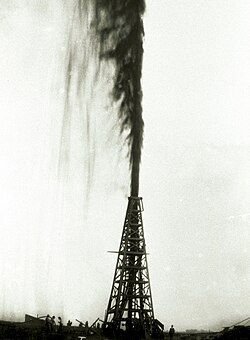
Spindletop, the first major oil gusher: Spindletop, the first major oil gusher
Demographics and Culture
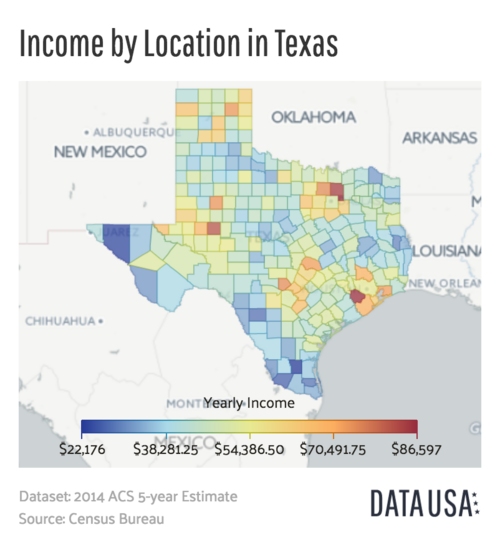
A geomap depicting income by county as of 2014
Texas is a melting pot of ethnicities and languages. As of recent census data, the population is highly diverse, with significant Hispanic or Latino, Non-Hispanic White, and African American communities. While English is the most spoken language, Spanish is widely used throughout the state.
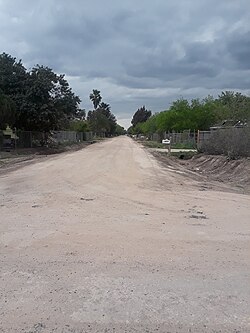
Colonia in the Rio Grande Valley near the Mexico–United States border: Colonia in the Rio Grande Valley near the Mexico–United States border
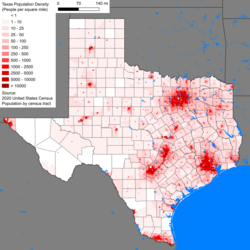
Texas population density map: Texas population density map
Map of counties in Texas by racial and ethnic plurality, per the 2020 U.S. census Non-Hispanic White 20–30% 30–40% 40–50% 50–60% 60–70% 70–80% 80–90% Hispanic or Latino 40–50% 50–60% 60–70% 70–80% 80–90% 90%+: Map of counties in Texas by racial and ethnic plurality, per the 2020 U.S. census Non-Hispanic White 20–30% 30–40% 40–50% 50–60% 60–70% 70–80% 80–90% Hispanic or Latino 40–50% 50–60% 60–70% 70–80% 80–90% 90%+
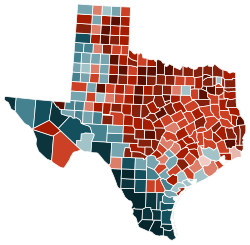
Largest alone or in any combination ethnic origin by county in Texas, per the 2020 census[216]: Largest alone or in any combination ethnic origin by county in Texas, per the 2020 census[216]
Arts, Sports, and Traditions
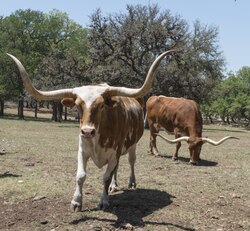
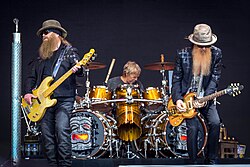
The culture of Texas is expressed through its music, sports, and unique traditions. From the legendary Texas longhorn cattle to the high-energy atmosphere of a professional rodeo, the state's identity is deeply rooted in its heritage. Music icons like ZZ Top and the presence of major professional sports teams in Dallas, Houston, and San Antonio further define the Texan experience.
Texas longhorn cattle in Boerne, Texas: Texas longhorn cattle in Boerne, Texas
ZZ Top performing in 2016. The power trio are considered cultural icons of Texas and blues-inspired rock music.: ZZ Top performing in 2016. The power trio are considered cultural icons of Texas and blues-inspired rock music.
Rodeo (the state sport) in Austin: Rodeo (the state sport) in Austin
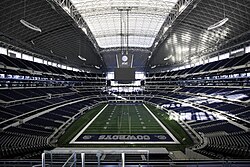
AT&T Stadium, home of the Dallas Cowboys, who are commonly known as America's Team: AT&T Stadium, home of the Dallas Cowboys, who are commonly known as America's Team
Playoff game between the San Antonio Spurs and the Dallas Mavericks in 2014; the Spurs won the NBA Finals that year.: Playoff game between the San Antonio Spurs and the Dallas Mavericks in 2014; the Spurs won the NBA Finals that year.
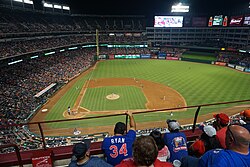
Texan baseball fans attending a game between the state's two MLB teams (Texas Rangers and Houston Astros) at Globe Life Field in Arlington: Texan baseball fans attending a game between the state's two MLB teams (Texas Rangers and Houston Astros) at Globe Life Field in Arlington
Economy and Infrastructure
The Alamo is one of the most recognized symbols of Texas.
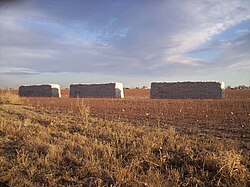
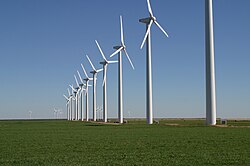
Texas boasts a massive and complex economy. It is a leader in energy production, agriculture (including cotton and cattle), and technology. Major metropolitan areas like Houston, Dallas-Fort Worth, and Austin serve as hubs for international commerce, aerospace, and medical research.
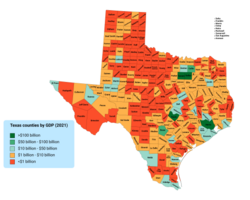
Texas counties by GDP (2021): Texas counties by GDP (2021)
Cotton modules after harvest in West Texas: Cotton modules after harvest in West Texas
Brazos Wind Farm: Brazos Wind Farm
Astronaut training at the Johnson Space Center in Houston: Astronaut training at the Johnson Space Center in Houston
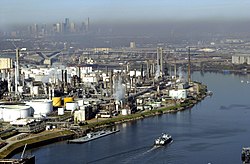
Port of Houston along the Houston Ship Channel: Port of Houston along the Houston Ship Channel
The Texas Medical Center in Houston: The Texas Medical Center in Houston
The state's infrastructure is designed to support this growth, featuring massive interstate systems, major international airports, and significant transportation networks including rail and sea ports.
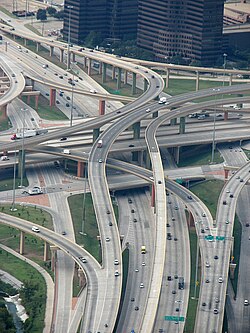
The High Five Interchange in Dallas: The High Five Interchange in Dallas
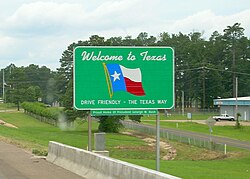
"Welcome to Texas" sign, entering the state from Arkansas on Interstate 30: "Welcome to Texas" sign, entering the state from Arkansas on Interstate 30
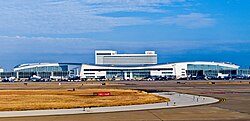
Terminal D at Dallas/Fort Worth International Airport: Terminal D at Dallas/Fort Worth International Airport
Terminal E at George Bush Intercontinental Airport in Houston: Terminal E at George Bush Intercontinental Airport in Houston
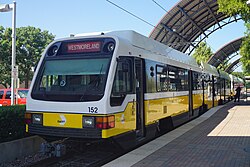
DART rail in Dallas: DART rail in Dallas
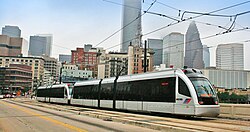
METRORail in Houston: METRORail in Houston
Summary of Texas State Profile
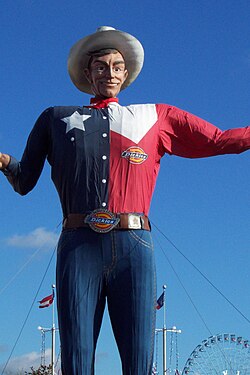
Big Tex presided over every Texas State Fair since 1952 until it was destroyed by a fire in 2012. Since then a new Big Tex was created.
Quick Reference Guide to Texas
Category
Details
Total Area
268,597 sq mi
Highest Point
Guadalupe Peak (8,751 ft)
Median Household Income
$75,800 (2023)
Major Industries
Energy, Agriculture, Technology, Healthcare
Primary Time Zone
Central Time (with Mountain Time in El Paso)
Frequently Asked Questions
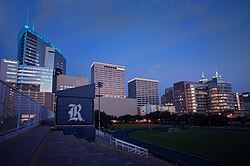
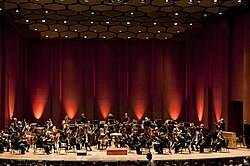
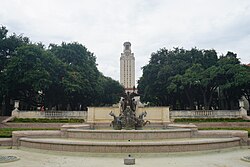
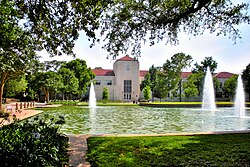
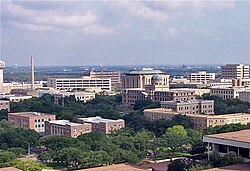
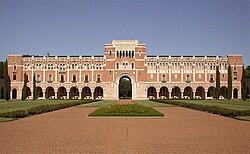
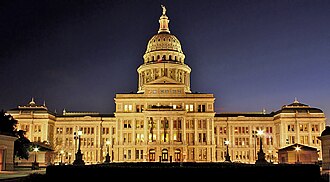
Houston Symphony at the Jones HallThe University of Texas at AustinUniversity of HoustonTexas A&M UniversityRice UniversityThe Texas State Capitol at nightLyndon B. Johnson of Texas, 36th president of the United StatesGeorge W. Bush of Texas, 43rd president of the United States
What is the capital of Texas?
The capital city of Texas is Austin.
What are the largest cities in Texas?
Houston is the largest city in the state, followed by San Antonio, Dallas, Austin, and Fort Worth.
What is the official state sport of Texas?
The official state sport of Texas is the rodeo.
How many people live in Texas?
As of 2025 estimates, the population of Texas is approximately 31,709,821.
What is the highest point in Texas?
The highest elevation in the state is Guadalupe Peak, which stands at 8,751 feet.
References
Mean of density in 1mi radii circles around each person
Cabeza de Vaca wrote, "They went about with a firebrand, setting fire to the plains and timber so as to drive off the mosquitos, and also to get lizards and similar things which they eat, to come out of the soil. In the same manner they kill deer, encircling them with fires, and they do it also to deprive the animals of pasture, compelling them to go for food where the Indians want."[42]
![Nicolas de La Fora's 1771 map of the northern frontier of New Spain clearly shows the Provincia de los Tejas.[53]](/images/c2/5c/c25cfe7d6c41d0675408372d697d45496895618d1c70c60c2a24989c77a8b1a8.jpg)
![Largest alone or in any combination ethnic origin by county in Texas, per the 2020 census[216]](/images/1a/57/1a573001603c6b18de65dd1fad2d6b9be88c19ef4a2c394556d963e8f04f9e0f.jpg)