Terrestrial Television: The Evolution of Over-the-Air Broadcasting
Terrestrial television, commonly known as over-the-air (OTA) television, is a method of broadcasting where content is transmitted via radio waves from an Earth-based transmitter to a receiver equipped with an antenna. While modern viewers often turn to satellite, cable, or Internet Protocol (IP) television, terrestrial broadcasting remains a foundational technology in the global media landscape.
These broadcasts typically operate on frequencies between 52 and 600 MHz, utilizing the VHF (Very High Frequency) and UHF (Ultra High Frequency) bands. Because these radio waves travel via line of sight, reception is generally limited by the visual horizon to distances of 64–97 kilometers (40–60 miles). However, under specific atmospheric conditions like tropospheric ducting, signals can occasionally reach hundreds of kilometers away.
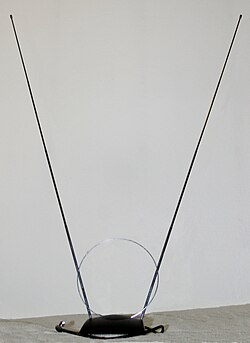
Key Facts
- Terrestrial television uses Earth-based transmitters to send signals via radio waves.
- It operates primarily within the VHF and UHF frequency bands.
- As of 2020, an estimated 1.6 billion people worldwide receive television via terrestrial means.
- The transition from analog to digital has significantly changed how signals are processed and received.
- Modern standards like ATSC 3.0 support 4K UHD and immersive audio.
The History of Broadcasting
Terrestrial television was the first technology used for television broadcasting. Early experiments began as early as 1929 with the BBC, but these systems relied on mechanical scan technology, which resulted in insufficient picture quality for widespread public use. It was not until after World War II that the advent of electronic scan television allowed the medium to become a household staple.
Initially, broadcasts were presented in greyscale, or black and white, until the transition to color television began in the 1960s. The business model mirrored radio networks, featuring local stations affiliated with either commercial networks (common in the US) or government-controlled networks (common in Europe).
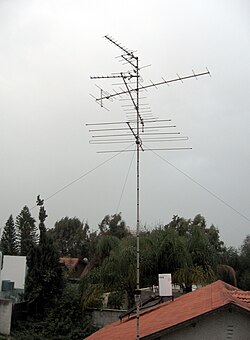
Regional Standards and Evolution
As television technology matured, different regions developed unique standards for transmission.
The Americas
The first National Television System Committee (NTSC) standard was introduced in 1941, defining a black-and-white scheme with 525 lines of vertical resolution. This was later updated to support color. While the United States and Canada have largely shut down analog stations, the NTSC standard continues to be used in much of Latin America, with exceptions like Argentina, Paraguay, and Uruguay which utilize the PAL-N standard.
In the late 1990s, the Advanced Television Systems Committee (ATSC) developed a standard for digital high-definition transmission. While many countries adopted ATSC, others, such as El Salvador, Guatemala, and Honduras, eventually opted for the ISDB-Tb standard.
Europe and Asia
In Europe, the transition to digital was a coordinated effort. The UK introduced UHF frequencies in 1964, and by 2012, most EU member states had completed the switchover from analog to digital (DVB-T) signals.
Asia saw significant early developments, with Japan conducting experiments as early as 1939. By 1953, NHK began regular broadcasting, followed shortly by Nippon TV, the first commercial broadcaster in Asia. In Southeast Asia, the Philippines' ABS-CBN launched its first commercial terrestrial station in late 1953.
The Digital Revolution
The shift from analog to Digital Terrestrial Television (DTT) has revolutionized the viewing experience. In North America, the ATSC standard governs digital transmission. The latest iteration, ATSC 3.0, launched in select markets in 2020 and is gradually replacing ATSC 1.0.
Unlike its predecessor, ATSC 3.0 is IP-based, meaning it functions more like an internet stream. This allows for advanced features such as:
- 4K Ultra High Definition (UHD) resolution
- High Dynamic Range (HDR) and wide color gamut
- Immersive audio (e.g., Dolby AC-4)
- Enhanced emergency alerts and mobile reception
Note that ATSC 3.0 is not backward compatible with ATSC 1.0, requiring new hardware or compatible TVs for full access to these features.
Comparison of Television Delivery Methods
| Technology | Transmission Method | Primary Medium |
|---|---|---|
| Terrestrial (OTA) | Radio waves from Earth-based towers | Antenna |
| Satellite (DBS) | Signals from overhead satellites | Satellite Dish |
| Cable | Signals through physical cables | Coaxial/Fiber Cable |
| IPTV | Data packets over a network | Internet Connection |
Frequently Asked Questions
What is the difference between VHF and UHF?
VHF (Very High Frequency) and UHF (Ultra High Frequency) are two different bands of the radio spectrum used for broadcasting. VHF typically covers lower frequencies, while UHF covers higher frequencies.
Why is terrestrial television reception limited by distance?
Terrestrial signals travel via line of sight. This means the curvature of the Earth and physical obstacles can block the signal once it moves beyond the visual horizon, typically between 64 and 97 kilometers.
Do I need a new antenna for ATSC 3.0?
Because ATSC 3.0 is not backward compatible with the older ATSC 1.0 standard, consumers may need to purchase compatible televisions or external tuners to access its advanced features.
Is terrestrial television still widely used?
Yes. While usage has declined in some areas like the US, it remains a primary method of television reception for billions of people globally, particularly in regions like Indonesia.
What are "virtual channels" in digital broadcasting?
In digital standards like ATSC, a virtual channel allows a station to transmit on a specific radio frequency but display a different channel number on your screen, making it easier for viewers to find them.