Terns: Elegant Seabirds of the Charadriiformes Order
Terns are streamlined, graceful seabirds known for their acrobatic flight and long, pointed bills. Belonging to the order Charadriiformes, these birds are often mistaken for gulls, but they possess distinct morphological and behavioral traits that set them apart. From the tiny least tern to the imposing Caspian tern, this diverse group has existed since the Early Miocene.
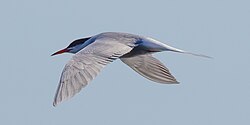
Unlike the heavier-bodied gulls, terns are built for agility. Their narrow wings and long tails allow them to glide and dive with precision, making them some of the most elegant flyers in the avian world.
Key Facts

- Size Range: Varies from the least tern (23 cm) to the Caspian tern (up to 56 cm).
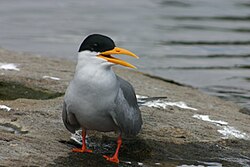
- Distinctive Feature: Long, awl-shaped bills (rostrum subulatum) that distinguish them from gulls.
- Longevity: Generally long-lived, with the Arctic tern recorded up to 34 years of age.
- Flight: Characterized by long narrow wings and typically forked tails.
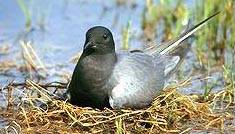
- Habitat: Primarily coastal and marine, though some species, like the black tern, breed in inland marshes.
Physical Characteristics and Morphology
Terns exhibit a wide range of sizes. The least tern is the smallest, weighing between 30–45 g, while the Caspian tern is the largest, reaching weights of 500–700 g. While males and females share identical plumage, males are typically 2–5% larger and often possess a larger bill.
A defining feature of the group is the tail shape. Most sea terns have deeply forked tails, while other species show at least a shallow "V" shape. The noddies (genus Anous) are unique, featuring notched-wedge shaped tails where the middle-outer feathers are the longest.

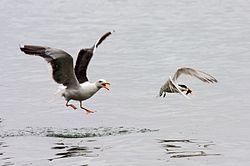
Despite having webbed feet, terns rarely swim, using the water primarily for bathing. However, they are surprisingly capable runners on land despite their short legs.
Taxonomy and Evolution
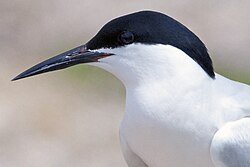
Terns are part of the family Laridae. Historically, they were classified as a subfamily, Sterninae, within the gull family. The distinction was first formally recognized by Linnaeus in 1758, who separated them from gulls based on their "awl-shaped" bills.
Modern genetic research has refined these relationships. While 2007 research once suggested noddies were basal to all Laridae, 2024 updates (IOC World Bird List version 14.1) clarify that noddies are basal specifically to other terns.
Species Diversity
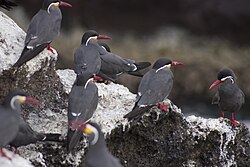
Terns are divided into several genera, each with unique characteristics. These include the Gygis (white terns), Sterna (large white terns), and Chlidonias (marsh terns). The diversity ranges from the highly specialized Inca tern to the wide-ranging Arctic tern.
| Genus | Common Group Name | Example Species |
|---|---|---|
| Sterna | Large white terns | Common tern, Arctic tern |
| Thalasseus | Crested terns | Sandwich tern, Royal tern |
| Anous | Noddies | Brown noddy, Black noddy |
| Chlidonias | Marsh terns | Black tern, Whiskered tern |
| Hydroprogne | Caspian tern | Caspian tern |

Behavior and Life Cycle
Breeding and Development
Breeding habits vary by climate. Tropical species usually lay a single egg, whereas those in cooler regions typically lay two or three. Incubation for temperate species lasts between 21 and 28 days. The eggs are brown with dark splotches, providing camouflage against beach predators.
Chicks are precocial (born in a relatively mature state) and usually fledge within four weeks in temperate zones, though tropical chicks take longer due to limited food supplies. Both parents share duties, though females typically handle more incubation.
Diet and Foraging
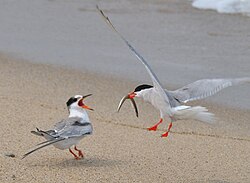
Terns are primarily piscivorous (fish-eating), though some species have specialized diets. For example, the whiskered tern focuses on insects in marshlands. Some terns have a symbiotic yet opportunistic relationship with humans, following fishing boats for easy meals.
Conservation and Human Impact
Terns are highly sensitive to environmental changes, making them useful bioindicators for contamination levels. However, human activity has posed significant threats:
- Pollution: DDT in the 1960s and 70s caused eggshell thinning, while organochlorides led to declines in the US Great Lakes region during the 1980s.
- Overfishing: The depletion of small fish, such as sand eels, directly impacts colony survival.
- Habitat Loss: Coastal development and wetland destruction have severely impacted species like the Peruvian tern.
The Chinese crested tern is currently critically endangered, with fewer than 50 birds remaining due to egg collection and habitat loss. Other species, such as the black-fronted tern in New Zealand, suffer from predation by introduced mammals.
Frequently Asked Questions
How do terns differ from gulls?
Terns are generally lighter-bodied, more streamlined, and have longer, narrower wings and more deeply forked tails than gulls. Most notably, they possess long, pointed "awl-shaped" bills compared to the thicker bills of gulls.
Which tern is the longest-lived?
The Arctic tern is among the longest-lived, with a maximum known age of 34 years, while the sooty tern has been recorded up to 32 years.
Do terns swim in the ocean?
Despite having webbed feet, terns rarely swim. They typically only land on the water's surface to bathe.
Why are terns used as environmental indicators?
Because they are highly sensitive to pollutants—such as DDT and organochlorides—their population health and eggshell thickness can signal the level of contamination in their ecosystem.
What is the status of the Chinese crested tern?
It is classified as critically endangered by BirdLife International, with a population of fewer than 50 birds and a very limited breeding range of approximately 9 square kilometers.