Telephone Operator History: From Manual Switchboards to Mechanization
Long before the era of smartphones and digital routing, every single phone call required a human intermediary. The telephone operator served as the essential link in the early telecommunications network, manually connecting callers through a complex system of plugs and cords known as a switchboard. This role not only shaped the technical evolution of communication but also mirrored the shifting social and economic dynamics of the workforce.
The Dawn of the Operator
The profession began in January 1878, when George Willard Croy became the world's first telephone operator while working for the Boston Telephone Dispatch company. However, the early days of the industry were marked by instability; the teenage boys initially hired for these roles often exhibited unacceptable behavior and attitudes.
This led to a pivotal shift in the workforce on September 1, 1878, when Alexander Graham Bell hired Emma Nutt, the first female telephone operator. Nutt was reportedly capable of memorizing every number in the New England Telephone Company directory. Her success paved the way for a broader transition toward female employment in the sector.
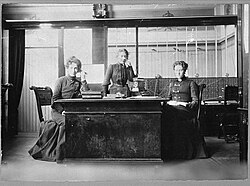
Why Women Dominated the Switchboard
Companies quickly observed that women were generally more courteous to callers than their male predecessors. Beyond professionalism, there was a significant economic incentive: women's labor was considerably cheaper. At the time, women were paid between one-quarter and one-half of a man's salary. This wage gap persisted for decades; notably, the Equal Pay Act of 1963 excluded switchboard operators employed by independently owned public telephone companies with 750 or fewer stations.
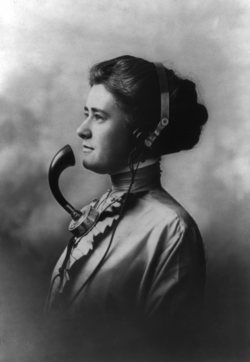
Expansion and Labor Struggles
As the telephone network expanded, the role of the operator became integrated into the highest levels of government. In 1898, Harriot Daley became the first telephone switchboard operator at the United States Capitol.
By the early 20th century, the demanding nature of the work and the disparity in pay led to organized labor movements. Julia O'Connor, a former operator, led two significant strikes against the New England Telephone Company on behalf of the IBEW (International Brotherhood of Electrical Workers) Telephone Operators' Department.
- The 1919 Strike: After five days, Postmaster General Burleson agreed to negotiations, resulting in increased pay and the recognition of the right to bargain collectively.
- The 1923 Strike: This effort was less successful and was called off in less than a month without achieving its goals.
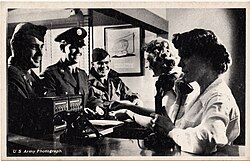
The Transition to Automation
The era of manual connection gradually faded as technology evolved. International direct dialing—which allows callers to place international calls without an operator—eventually replaced the need for manual international exchanges.
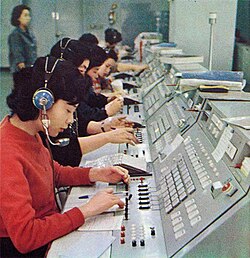
The decline of the manual switchboard happened in stages. On October 11, 1983, Susan Glines became the last operator for a hand-crank phone (a system using a magneto to signal the operator) in Bryant Pond, Maine. While hand-cranked systems vanished, central-battery manual switchboards persisted in rural areas, such as Kerman, California, and Wanaaring, New South Wales, until as late as 1991.
Key Facts
- First Operator: George Willard Croy (January 1878).
- First Female Operator: Emma Nutt (September 1, 1878).
- Wage Gap: Early female operators earned 25% to 50% of what men earned.
- Labor Milestone: The 1919 strike secured collective bargaining rights and higher pay.
- Last Hand-Crank Operator: Susan Glines (October 11, 1983).
Summary of Historical Milestones
| Year | Event/Person | Significance |
|---|---|---|
| 1878 | George Willard Croy | World's first telephone operator. |
| 1878 | Emma Nutt | First female operator; shifted workforce demographics. |
| 1898 | Harriot Daley | First operator at the U.S. Capitol. |
| 1919 | Julia O'Connor | Led successful strike for better wages and bargaining rights. |
| 1983 | Susan Glines | Last operator for a hand-crank phone exchange. |
| 1991 | Rural Exchanges | Final operation of central-battery manual switchboards. |
Economic Impact of Mechanization
The shift from human operators to automated systems had complex economic effects. A 2024 study indicates that while the mechanization of switchboards negatively impacted the economic outcomes for those already employed as operators, it did not hinder the overall employment prospects for young women. Instead, subsequent generations of women transitioned into other expanding economic sectors.
Frequently Asked Questions
Who was the first telephone operator?
George Willard Croy became the world's first telephone operator in January 1878 while working for the Boston Telephone Dispatch company.
Why were women hired as telephone operators?
Women were hired because they were generally more courteous to callers than the teenage boys previously employed, and their labor was significantly cheaper, often earning only one-quarter to one-half of a man's salary.
What was the result of the 1919 Telephone Operators' Strike?
The strike led to an agreement between the union and the telephone company that increased pay for operators and recognized their right to bargain collectively.
When did manual switchboards finally disappear?
While hand-cranked systems ended in Maine in 1983, some central-battery manual switchboards remained in operation in rural areas of California and New South Wales until 1991.
Did automation destroy job opportunities for women?
According to a 2024 study, mechanization harmed the economic outcomes of incumbent operators, but it did not harm the general employment prospects of young women, who moved into other growing sectors of the economy.