Telecommunications History: From the Telegraph to Optical Fiber
Telecommunication systems, the backbone of the modern global economy, evolved from 19th-century breakthroughs in telegraphy and early 20th-century advancements in radio and telephony. Today, these systems encompass a vast array of devices—including televisions, radios, and smartphones—connected via complex networks such as the Public Switched Telephone Network (PSTN) and the Internet. The scale of this industry is immense, with revenues accounting for nearly 3% of the gross world product.
Key Facts
- Samuel Morse and Alfred Vail successfully demonstrated the electrical telegraph in the 1830s and 1840s.
- The first successful transatlantic telegraph cable was completed in 1866.
- Alexander Graham Bell held the master patent for the telephone, leading to commercial services in 1878.
- Guglielmo Marconi developed the first commercially successful wireless telegraphy system starting in 1894.
- The ARPANET, established in 1969, laid the foundation for the modern Internet through packet switching.
- Optical fiber, developed for communication in 1970, allows for long-distance data transmission with minimal signal loss.
The Era of Telegraphy and Telephony
The journey of long-distance communication began with Samuel Morse, who developed a version of the electrical telegraph. While his first attempt in 1837 failed, he later partnered with Alfred Vail, who created the register—a terminal that recorded messages on paper tape. By May 24, 1844, they successfully transmitted messages between Washington, D.C. and Baltimore. The technology expanded rapidly, with U.S. telegraph lines exceeding 20,000 miles by 1851.
Global connectivity followed with the first successful transatlantic telegraph cable in July 1866, after several failed attempts in 1857 and 1858. This era of international telegraphy was so transformative it is often referred to as the "Victorian Internet."
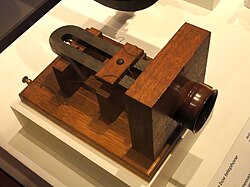
The telephone emerged shortly after, with commercial services launching in New Haven and London in 1878 and 1879. Alexander Graham Bell held the essential patents for this technology. While inter-city lines became common in the U.S. by the mid-1880s, transatlantic voice calls required radio technology, first established on January 7, 1927. A physical cable connection, TAT-1, did not arrive until September 25, 1956, providing 36 telephone circuits.
Notably, in 1880, Bell and Charles Sumner Tainter achieved the first wireless telephone call using photophones, which transmitted sound via modulated lightbeams. This concept served as a precursor to modern fiber-optic communications.
The Rise of Radio and Television
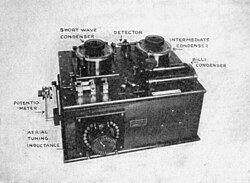
Wireless communication took a leap forward in 1894 when Guglielmo Marconi built a commercially successful wireless telegraphy system using airborne electromagnetic waves. In 1901, he established communication between Britain and Newfoundland, a feat that contributed to his 1909 Nobel Prize in Physics. By 1900, Reginald Fessenden had successfully transmitted the human voice wirelessly.
Television followed a similar trajectory of innovation. In 1925, John Logie Baird demonstrated the transmission of moving silhouette pictures, later achieving halftone shades—the first true television pictures. Baird's mechanical television utilized the Nipkow disk and provided the basis for early British Broadcasting Corporation (BBC) broadcasts starting in 1929.
Satellite Communications
The space age introduced new possibilities for relaying data. Project SCORE (1958) was the first U.S. communications satellite, using a tape recorder to store and forward voice messages. This was followed by NASA's Echo satellite in 1960, a passive reflector, and Courier 1B, the first active repeater satellite.
Telstar, launched on July 10, 1962, became the first active, direct relay commercial communications satellite. By November 22, 1963, Relay 1 became the first satellite to broadcast across the Pacific.
Initially, satellites were critical for intercontinental telephony, relaying calls from the PSTN to earth stations and then to geostationary satellites. While fiber-optic cables reduced the reliance on satellites for fixed telephony in the late 20th century, satellites remain essential for remote regions like Antarctica, Greenland, and various islands (e.g., Easter Island) where cables cannot reach. Since 1979, this technology has expanded to include satellite radio, television, and Internet access.
Computer Networks and the Internet
Early computer communication relied on a centralized mainframe with remote "dumb terminals," as demonstrated by George Stibitz in 1940. However, the 1960s saw the development of packet switching—a method of sending data chunks between computers without a central mainframe.
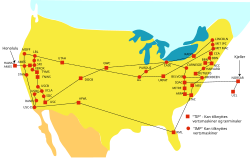
This led to the creation of the ARPANET, which grew from a four-node network in 1969 to 213 nodes by 1981. The development of the Internet was guided by the Request for Comment (RFC) process. Key milestones included RFC 791 (IPv4) and RFC 793 (TCP) in 1981, which established the TCP/IP protocol suite that powers the modern Internet.
The Optical Fiber Revolution
Optical fiber uses light to transmit data, offering a flexible medium with far less attenuation (signal loss) than electrical cables. This allows data to travel longer distances with fewer repeaters.
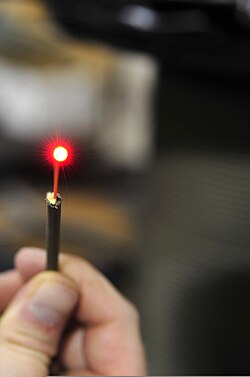
In 1966, Charles K. Kao and George Hockham identified that glass contaminants caused high signal loss and proposed that removing them would make fiber viable. By 1970, Corning Glass Works developed fiber with low enough attenuation for communication, coinciding with the development of compact Gallium arsenide (GaAs) semiconductor lasers.
The first commercial fiber-optic system emerged around 1975, and by April 22, 1977, General Telephone and Electronics transmitted live telephone traffic in California. The first wide area network fiber system was installed by Rediffusion in the UK in 1978 for television transmission. In 1988, TAT-8 became the first transatlantic telephone cable to utilize optical fiber.
| Technology | Key Milestone | Year | Significance |
|---|---|---|---|
| Electrical Telegraph | Washington to Baltimore line | 1844 | First long-distance electrical communication |
| Telephone | Commercial services launch | 1878-1879 | Introduction of voice telecommunication |
| Wireless Telegraphy | Britain to Newfoundland link | 1901 | First successful long-distance radio link |
| Satellite | Telstar launch | 1962 | First active commercial relay satellite |
| Computer Networks | ARPANET inception | 1969 | Introduction of packet switching |
| Optical Fiber | TAT-8 cable | 1988 | First transatlantic fiber-optic telephone cable |
Frequently Asked Questions
What was the "Victorian Internet"?
The "Victorian Internet" is a term used to describe the international use of the telegraph during the 19th century, as it provided the first rapid, long-distance communication network.
How does optical fiber differ from electrical cables?
Optical fiber transmits data as light rather than electrical signals. This results in much lower attenuation, meaning signals can travel longer distances without needing to be boosted by repeaters.
What is packet switching and why was it important?
Packet switching is a technology that allows data to be broken into small chunks (packets) and sent independently between computers. This removed the need for a centralized mainframe, enabling the scalable architecture of the ARPANET and the modern Internet.
Why are satellites still used if fiber-optic cables are more efficient?
Satellites are essential for providing communication to remote or geographically isolated areas—such as Antarctica, remote islands, and vast regions of Africa or South America—where installing submarine or land-based cables is impractical.
Who invented the first true television pictures?
Scottish inventor John Logie Baird is credited with obtaining the first true television pictures with halftone shades in October 1925, using a device known as mechanical television.