Teatro Coliseo: A Historic Landmark of Buenos Aires Culture
Located in the elegant Retiro neighbourhood of Buenos Aires, Argentina, the Teatro Coliseo stands as a testament to the city's rich artistic and diplomatic history. Since its inception in the early 20th century, this venue has evolved from a circus hall into a prestigious center for music, theater, and international relations.
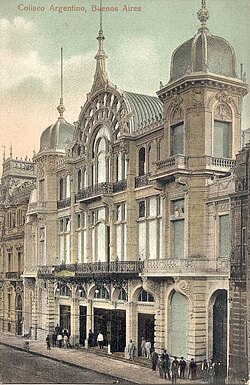
The theater first opened its doors on July 8, 1905. It was established by Frank Brown, a British clown who played a pivotal role in the development of the Creole circus (the localized traditional circus style of Argentina) and theater within the country.
Key Facts
- Opening Date: July 8, 1905.
- Location: Retiro, Buenos Aires, Argentina.
- Founder: Frank Brown, a British clown and circus pioneer.
- Historical Milestone: Site of one of the first radio broadcasts in history (1920).
- Diplomatic Link: Integrated with the Italian Consulate and the Italian Institute of Culture.
A Turbulent History of Transformation
The Teatro Coliseo has weathered significant changes over the decades. Beyond its early years as a circus venue, it became a site of technological innovation. On August 27, 1920, Enrique Telémaco Susini utilized the theater's terrace to conduct one of the first radio broadcasts in history, marking the inauguration of LOR Radio Argentina.
However, the venue faced a period of decline and destruction. The theater closed in 1937, and the building was subsequently purchased by the Italian government. While there were initial plans to transform the space into a cultural center for exhibitions and events, the outbreak of World War II halted these ambitions. In 1938, the building was partially demolished, leaving the ruins as a vacant lot behind a wall for several years.
The Modern Era and Reconstruction
The Italian government eventually decided to construct a new facility to house part of the Consulate General of Italy in Buenos Aires, while ensuring the theater was preserved. The remodeling process was led by architects Mario Bigongiari, Maurizio Mazzocchi, and brothers Luis and Alberto Morea. This project integrated the Italian Consulate and the Italian Institute of Culture into the theater's complex.
The current iteration of the theater was officially inaugurated in 1961. The reopening was celebrated with a performance of The Saint of Bleecker Street by Giancarlo Menotti, performed by the Teatro Argentino of La Plata.
Musical Legacy and Notable Performances
The Teatro Coliseo has hosted a diverse array of international and local talent, spanning genres from jazz and classical to pop and rock. The venue's acoustics and prestige have attracted world-renowned artists.
| Category | Featured Artists / Works |
|---|---|
| International Performers | Tony Bennett, Dizzy Gillespie, Yehudi Menuhin, Tears For Fears, Men at Work, Level 42, Tate McRae, Dido, and The Cardigans. |
| Jazz & Soul | Maceo Parker, Dee Dee Bridgewater, Cat Power, and Fish. |
| Historic Recordings | Serú Girán (Yo no quiero volverme tan loco, 1981), David Lebon (En vivo, en el Teatro Coliseo, 1999). |
| Comedy & Music | Les Luthiers (Mastropiero que nunca and Muchas gracias de nada). |
Frequently Asked Questions
When did the Teatro Coliseo first open?
The theater originally opened on July 8, 1905, as a circus hall founded by Frank Brown.
What is the significance of the theater in radio history?
On August 27, 1920, Enrique Telémaco Susini performed one of the first radio broadcasts in history from the theater's terrace, launching LOR Radio Argentina.
Why was the building partially demolished in 1938?
After the Italian government purchased the building in 1937, plans for a cultural center were interrupted by the start of World War II, leading to partial demolition in 1938.
Who were the architects responsible for the modern theater?
The remodeling and construction of the current building were handled by architects Mario Bigongiari, Maurizio Mazzocchi, and brothers Luis and Alberto Morea.
Which famous Argentine bands have recorded there?
The influential band Serú Girán recorded Yo no quiero volverme tan loco there in 1981, and singer David Lebon recorded a live album in 1999.