Tampon Tax: Global Progress and Regional Legal Battles
For decades, many governments around the world have applied sales taxes to menstrual products, often categorizing them as non-essential or luxury items. This phenomenon, commonly known as the tampon tax, has sparked global movements for menstrual equity, arguing that taxing biological necessities constitutes gender-based discrimination. From grassroots petitions to high-court rulings, the legal landscape is shifting as nations recognize that access to sanitary products is a matter of public health and human rights.
Key Facts
- Kenya was the first country to abolish sales tax on menstrual products in 2004.
- Scotland became the first country to implement a government-sponsored initiative to provide free sanitary products to anyone who needs them.
- In the United States, tax laws vary by state, with some providing full exemptions and others maintaining sales taxes.
- India has implemented the 'Suvidha' program, providing biodegradable pads at a highly subsidized rate of Rs. 1/- per pad.
- The United Kingdom abolished its tampon tax on January 1, 2021, following its departure from the European Union.
Global Trends in Tax Abolition
The movement to eliminate taxes on feminine hygiene products has seen significant momentum across diverse jurisdictions. Many countries have shifted their tax codes to reflect that these products are essential for health and dignity.
Africa and Asia
Kenya led the way globally in 2004 by exempting menstrual products from Value Added Tax (VAT). The country further expanded this in 2011 by exempting imported products from excise tax and in 2016 by removing VAT and excise taxes from raw materials used in manufacturing. To combat period poverty, Kenya's National Sanitary Towel Programme has provided free pads to girls in public schools, though funding has fluctuated over the years.
In India, the 12% Goods and Service Tax (GST) on sanitary napkins was scrapped in 2018 following intense lobbying and increased public awareness. To address the fact that approximately 88% of Indian women lack access to safe products due to financial constraints, the government established over 16,000 Janaushidhi Kendras to distribute affordable, oxo-biodegradable 'Suvidha' napkins.
The Americas
Canada removed its tampon tax in July 2015 after an online petition by the group Canadian Menstruators. The government recognized these products as essential items. Discussions have since evolved toward providing free products in federally regulated workplaces to improve productivity and reduce stigma.
In Colombia, the Constitutional Court took a legal approach in 2018, unanimously striking down a 5% tax on pads and tampons on the grounds of gender equality.
Europe and the UK
The United Kingdom's journey to a zero-rate VAT was complex due to European Union (EU) regulations. While the UK reduced the tax to 5% in 2000, EU law prevented a full reduction to zero. Following Brexit, the UK finally abolished the tax on January 1, 2021. However, research from 2022 suggests that some retailers may have retained these savings rather than lowering prices for consumers.
Within the EU, Directive 2022/542/EC now allows member states to zero-rate absorbent hygiene products. Germany, for example, reduced its tax rate from 19% to 7% on January 1, 2020.
The Scottish Model: Beyond Tax Exemption
Scotland has moved beyond mere tax removal to address period poverty—the inability to afford menstrual products. Starting with a pilot program in Aberdeen in 2017, Scotland eventually passed The Period Products (Free Provision) (Scotland) Act in November 2020. This law mandates that local authorities ensure free tampons and pads are available in schools, colleges, universities, and various public venues like restaurants and pubs.
The United States Landscape
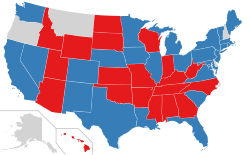
In the U.S., the taxation of menstrual products is handled at the state level. While five states (Alaska, Delaware, Montana, New Hampshire, and Oregon) have no state sales tax, others have specifically passed exemptions.
State-Level Battles
California's path to exemption was marked by political struggle. After an initial veto by Governor Jerry Brown, the state eventually passed a permanent exemption via AB 150 in July 2021. California also requires public schools (grades 6–12) and community colleges to provide free products.
New York exempted these products in 2016, though courts denied requests for retroactive refunds to consumers. In New Jersey, a study on the 2005 tax break revealed that the repeal significantly benefited low-income consumers, who saw a 12.4% decrease in prices compared to a 3.9% decrease for high-income consumers.
Other states, including Washington (2020) and Michigan (2022), have also joined the list of jurisdictions that have repealed the tax.
Summary of Global Tax Changes
| Country/Region | Year of Change | Action Taken | Key Driver/Detail |
|---|---|---|---|
| Kenya | 2004 | Abolished Sales Tax | First country to do so globally |
| Canada | 2015 | Repealed GST | Online petition by Canadian Menstruators |
| India | 2018 | Scrapped 12% GST | Lobbying and public awareness campaigns |
| United Kingdom | 2021 | Zero-rated VAT | Post-EU transition period |
| Scotland | 2020 | Free Provision Act | Legal duty to provide free products |
| California (US) | 2021 | Permanent Exemption | AB 150 legislation |
Frequently Asked Questions
What is the "tampon tax"?
The tampon tax refers to the application of sales tax (such as VAT or GST) to menstrual hygiene products, often based on the legal classification of these items as non-essential or luxury goods.
Which country was the first to remove the tax?
Kenya was the first country to abolish sales tax for menstrual products in 2004.
How does Scotland's approach differ from other countries?
While many countries focus on removing taxes to lower prices, Scotland has passed legislation making menstrual products free of charge for anyone who needs them in various public and educational settings.
Why did the UK wait until 2021 to abolish the tax?
The UK was limited by European Union VAT laws that prevented a reduction to a zero rate. The tax was only fully abolished after the UK left the EU and the transition period ended.
Does removing the tax always lower the price for consumers?
Not necessarily. Research in the UK suggested that some retailers retained the tax savings, and a study in New Jersey showed that the benefits of tax repeal were distributed unevenly, with low-income consumers benefiting more than high-income consumers.