Understanding the Taiga: A Guide to the World's Boreal Forest
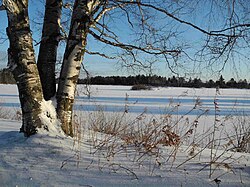
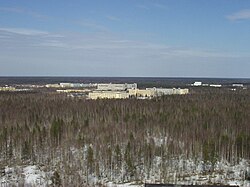
Spanning vast stretches of the Northern Hemisphere, the taiga—also known as the boreal forest—is one of the Earth's most significant terrestrial biomes. Characterized by its immense scale and harsh, subarctic conditions, this humid ecosystem serves as a critical component of the planet's ecological health. From the rugged mountains of North America to the endless expanses of Siberia, the taiga is a landscape defined by resilience and specialized life.
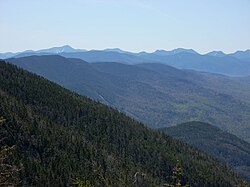
Geography and Global Distribution
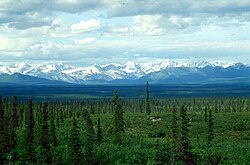
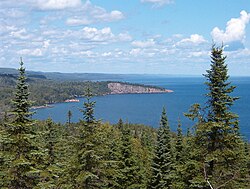
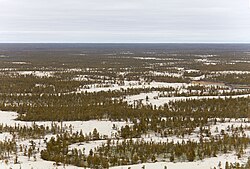
The taiga is a massive biome that occupies high-latitude regions across several continents. It is primarily found in the northern reaches of the United States, Canada, Russia, Mongolia, Japan, Norway, Sweden, Finland, and Iceland, as well as the French territory of Saint-Pierre-et-Miquelon.
Because of its vastness, the taiga is divided into various ecoregions. These include the East Siberian taiga, the West Siberian taiga, the Scandinavian and Russian taiga, and the Kamchatka–Kurile taiga. In North America, the landscape is defined by massive river systems and diverse forest types, ranging from the Taiga Plains to the Taiga Shield in Canada.
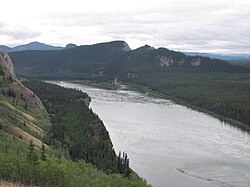
Climate and Growing Seasons
The climate of the taiga is categorized by several subarctic types (such as Dfc, Dwc, and Dfd). The environment is defined by its temperature fluctuations and the length of its growing season—the period during which the 24-hour average temperature remains at or above +5 °C (41 °F).
- In Canada and Scandinavia: Growing seasons vary significantly. The Taiga Plains in Canada see 80 to 150 days, while the Taiga Shield ranges from 100 to 140 days.
- Oceanic Influences: Coastal areas in Scandinavia and Finland enjoy longer seasons, sometimes lasting between 145 and 180 days.
- The Tundra Transition: At the northern ecotone (a transition zone between two biological communities), the growing season can drop to just 50–70 days, where the taiga gives way to the tundra.
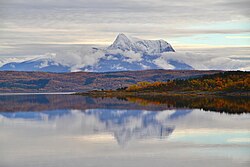
Precipitation and Temperature Limits
The southern boundary of the taiga is largely determined by temperature isotherms—lines on a map connecting points with the same temperature. Generally, the taiga grows south of the 10 °C (50 °F) July isotherm. In areas with higher rainfall, such as eastern Siberia, the forest can extend as far south as the 20 °C (68 °F) July isotherm. However, in very dry regions, the taiga may be replaced by forest steppe.
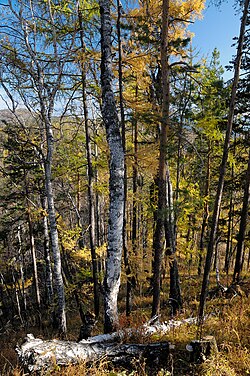
Flora and Fauna: Life in the Boreal Forest
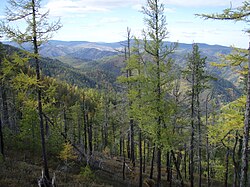
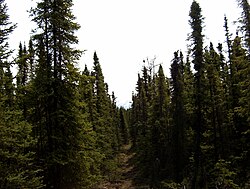
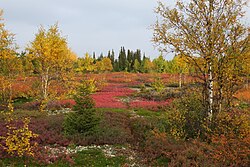
The harsh climate of the taiga means that the species living here must be highly specialized. The flora is dominated by coniferous trees, and the forest floor is often covered in thick layers of moss.
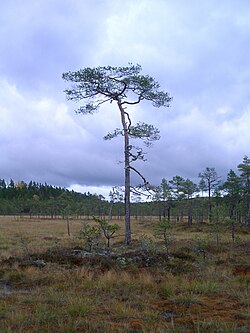
The fauna, while less diverse than in tropical biomes, includes highly adapted animals. In Canada's boreal forest alone, there are approximately 85 species of mammals, 130 species of fish, and an estimated 32,000 species of insects. These insects are vital to the ecosystem, serving as pollinators, decomposers, and a primary food source for birds, rodents, and small carnivores.
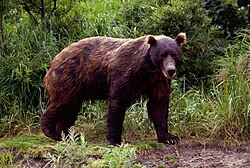
Specialized Tree Growth
Environmental conditions can even alter the physical shape of the trees. In certain regions, such as the Kenai National Wildlife Refuge in Alaska, spruce trees tend to grow closer to the trunk rather than "bush out" as they might in more temperate environments.
Natural Disturbances: The Role of Fire
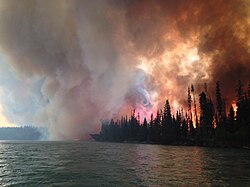
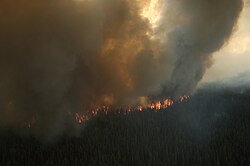
Fire is a dominant and natural part of the taiga's ecology. The biome is characterized by high-intensity crown fires (fires that spread through the tops of trees) or severe surface fires. These fires can be massive, often exceeding 10,000 hectares, and sometimes covering more than 400,000 hectares.
Fire cycles—the time between major fire events—vary by region:
- Western Canada and Alaska: Drier regions average fire rotations of 50–100 years.
- Eastern Canada: Moister climates see longer cycles, often averaging 200 years or more.
- Floodplain White Spruce: The longest cycles, potentially reaching 300 years, occur in these western boreal areas.
Climate Change and Future Threats
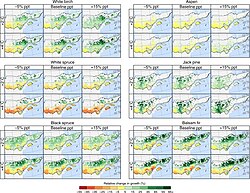
The taiga is one of the forest types most strongly affected by climate change. Research has shown complex responses to warming: while some studies suggest warming can increase tree growth, others indicate that water availability is a much more critical factor. Without sufficient precipitation, even moderate warming can lead to substantial declines in forest health.
Current projections suggest a "tipping point" for many eastern Canadian boreal forests around the year 2080 under high-emission scenarios. While some models predict a worldwide increase in biomass by the end of the century, this may be offset by significant biomass declines in tropical regions.
Summary of Taiga Characteristics
| Feature | Description |
|---|---|
| Primary Climate | Subarctic, humid (Dfc, Dwc, Dsd, etc.) |
| Key Vegetation | Coniferous trees, moss, and peatlands |
| Major Disturbance | High-intensity crown and surface fires |
| Growing Season | 50 to 180 days (depending on latitude/oceanic influence) |
| Key Fauna | Specialized mammals, fish, and high insect diversity |
Key Facts
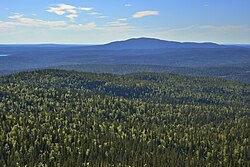
- The taiga is a massive subarctic biome found across the Northern Hemisphere.
- It is characterized by a short growing season, often limited by temperature.
- Fire is a natural and essential part of the ecosystem, though it can be devastatingly large.
- The biome plays a massive role in carbon storage, particularly in its widespread peatlands and bogs.
- Climate change poses a significant threat, with water availability being a primary driver of forest health.
Frequently Asked Questions
What is the difference between taiga and tundra?
The main difference is the presence of trees. The taiga is a forested biome, whereas the tundra is a treeless landscape. The boundary where the taiga ends and the tundra begins is known as the taiga–tundra ecotone.
How does fire affect the taiga?
Fire is a natural part of the taiga's cycle. While high-intensity fires can kill entire stands of trees, they are a dominant regime that helps shape the forest's composition and regeneration patterns over long cycles.
Why are insects so important in the boreal forest?
Despite the harsh climate, insects are vital because they act as pollinators, decomposers, and a fundamental part of the food web, providing food for many nesting birds and small mammals.
Is the taiga growing or shrinking due to climate change?
The response is complex. While some areas may see increased growth due to warming, many regions face drought-induced tree loss. The long-term health of the forest depends heavily on whether increased temperatures are accompanied by increased precipitation.
Where can I find the largest taiga regions?
The largest continuous stretches of taiga are found in Russia (Siberia) and Canada.