Tadej Pogačar Triumphs in the 113th Tour de France
The 2026 Tour de France, the 113th edition of cycling's most prestigious race, delivered a masterclass in endurance and strategy. Spanning 3,245 kilometers (2,016 mi) over 21 grueling stages, the event saw a clash of titans across the landscapes of Spain and France. From a sunny start in Barcelona to the iconic finish on the Champs-Élysées in Paris, the race was defined by record-breaking climbs and dramatic shifts in momentum.
Race Overview and Route
The competition took place from July 4 to July 26, 2026. The route was designed as a "crescendo," intended to challenge the riders increasingly as the race progressed. The event began with a Grand Départ—the traditional opening stages of the Tour—in Barcelona, Spain, before moving through the Pyrenees, the Massif Central, the Vosges, and finally the formidable French Alps.
To understand the results, it is essential to recognize the different classifications used to determine the winners:
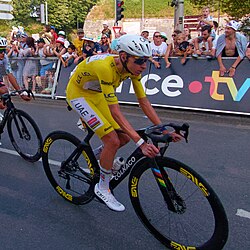
- General Classification (GC): The primary ranking based on the lowest cumulative time across all stages. The leader wears the yellow jersey.
- Points Classification: Awarded to the most consistent finisher and sprinter, identified by the green jersey.
- Mountains Classification: Awarded to the best climber, identified by the polka-dot jersey.
- Young Rider Classification: Awarded to the best-placed rider under the age of 26, identified by the white jersey.
The Journey from Barcelona to Paris
The Grand Départ and Early Dominance
The race opened on July 4 with a Team Time Trial (TTT)—a race where teammates ride together to achieve the fastest collective time—won by Visma–Lease a Bike. The early stages in Spain provided immediate fireworks, with Isaac del Toro claiming victory on Stage 2. However, the narrative quickly shifted toward Tadej Pogačar, who seized the yellow jersey on Stage 3 after a dominant performance at Les Angles.
Mid-Race Drama and the Battle for the Jerseys
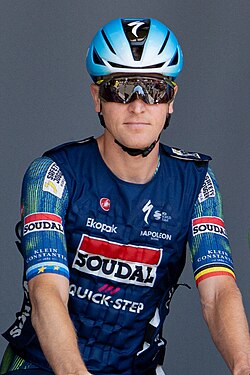
As the peloton moved into the flat stages, the sprinters took center stage. Tim Merlier of Soudal–Quick-Step proved to be a force of nature, securing a hat-trick of victories on stages 7, 8, and 12.
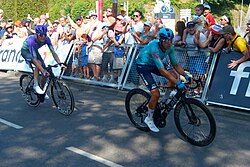
The second week introduced more varied terrain. Stage 13 saw a thrilling finish in Belfort, where Mauro Schmid outdueled Harold Tejada to take the win.
While Pogačar continued to extend his lead in the General Classification, the race was not without tragedy. On Stage 15, a major crash resulted in Jonas Vingegaard suffering a broken collarbone, forcing him to abandon the race. This opened the door for Remco Evenepoel, who won Stage 15 and followed it up with a victory in the Stage 16 Individual Time Trial (ITT)—a race against the clock where riders start separately.
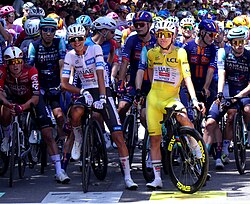
By Stage 17, the strength of UAE Team Emirates XRG was evident, with teammates Isaac del Toro and Tadej Pogačar dominating the standings.
The Alpine Climax and the Road to Paris
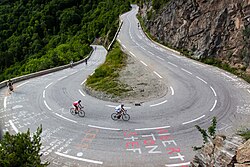
The final week in the Alps provided the most legendary moments of the 2026 edition. On Stage 19, Tadej Pogačar conquered Alpe d'Huez, smashing a 30-year-old climbing record previously held by Marco Pantani.
Richard Carapaz emerged as the king of the mountains, securing stunning victories on Stage 18 and Stage 20, the latter of which was described as one of the most brutal "queen stages" in the history of the Tour.
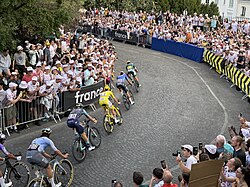
The final stage in Paris was unexpectedly shortened due to wildfires, but the excitement remained. The race concluded with a thrilling sprint on the Montmartre climb, won by Mathieu van der Poel.
Final Classifications and Standings
Tadej Pogačar finished the race with a total time of 73h 56' 26", equaling the record for the most Tour de France titles with his fifth overall victory. He was followed in the General Classification by Remco Evenepoel and the young standout Isaac del Toro.
| Classification | Winner | Team |
|---|---|---|
| General Classification | Tadej Pogačar | UAE Team Emirates XRG |
| Points | Mads Pedersen | Lidl–Trek |
| Mountains | Richard Carapaz | EF Education–EasyPost |
| Young Rider | Isaac del Toro | UAE Team Emirates XRG |
| Team Classification | Lidl–Trek | N/A |
| Combativity | Richard Carapaz | EF Education–EasyPost |
General Classification Top 10
- Tadej Pogačar (UAE Team Emirates XRG) – 73h 56' 26"
- Remco Evenepoel (Red Bull–Bora–Hansgrohe) – + 6' 26"
- Isaac del Toro (UAE Team Emirates XRG) – + 9' 42"
- Paul Seixas (Decathlon CMA CGM) – + 11' 56"
- Lenny Martinez (Team Bahrain Victorious) – + 13' 02"
- Mattias Skjelmose (Lidl–Trek) – + 14' 59"
- Juan Ayuso (Lidl–Trek) – + 17' 48"
- Richard Carapaz (EF Education–EasyPost) – + 20' 00"
- Tom Pidcock (Pinarello–Q36.5 Pro Cycling Team) – + 29' 28"
- Jordan Jegat (Team TotalEnergies) – + 33' 21"