T-Mobile: The Global Evolution of Deutsche Telekom's Mobile Brand
T-Mobile is the primary brand for telecommunications services provided by Deutsche Telekom. Since its introduction in 1989, the brand has evolved from a regional German service into a global powerhouse, spanning multiple continents and integrating various local operators through strategic acquisitions and mergers.
The organizational structure of the brand has shifted significantly over the decades. In 1999, Deutsche Telekom established T-Mobile International AG to manage its mobile subsidiaries. By 2009, the company transitioned to a regional setup focusing on Germany, Europe, and the United States, eventually merging T-Mobile International back into Deutsche Telekom AG to create integrated local businesses that combine fixed and mobile services.

Key Facts

- Parent Company: Deutsche Telekom.
- Major Markets: United States, Poland, Germany, and the Czech Republic.
- US Presence: T-Mobile US is a major carrier formed through the acquisition of VoiceStream and mergers with MetroPCS and Sprint.
- Technological Milestones: Early adoption of GSM (Global System for Mobile Communications) and UMTS (Universal Mobile Telecommunications System).
- Brand Identity: Strongly associated with the color magenta.
Global Market Operations
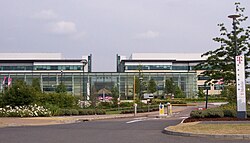
T-Mobile's footprint varies by country, often operating under different names or through majority ownership of local entities. In the United States, T-Mobile US is one of the largest carriers, while in Europe, the brand has seen various transitions, such as the shift to Magenta Telekom in Austria.

European Market Highlights
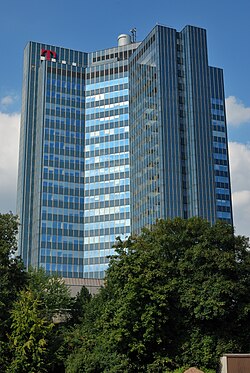
- Germany: The foundation of the brand began with the D-Netz (GSM 900 MHz) and the "D1" brand in 1992.
- Poland: Formerly known as Era, T-Mobile Polska rebranded in 2011 and currently serves over 13 million customers.
- Czech Republic: Operating since 1996 (formerly Paegas), it was the first to launch 3G technology (Internet 4G) in the country in 2005.
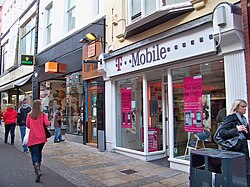
- United Kingdom: Originally Mercury One2One, it became T-Mobile in 2002 before merging with Orange to form EE, which was later sold to the BT Group in 2015.
The North American Expansion
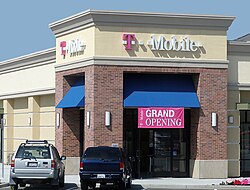
T-Mobile's entry into the US market began with the 2001 purchase of VoiceStream Wireless for $35 billion. Renamed T-Mobile USA in 2002, the company grew through aggressive expansion and strategic mergers. A pivotal moment occurred in 2013 with the merger with MetroPCS, followed by a massive $26 billion merger with Sprint in 2020.
Operational Summary by Country
| Country | Operator | Customers (Millions) |
|---|---|---|
| United States | T-Mobile US | 104.79 |
| Germany | Telekom Deutschland GmbH | 50.27 |
| Poland | T-Mobile Polska | 11.29 |
| Greece | Cosmote | 6.94 |
| Czech Republic | T-Mobile Czech Republic | 6.21 |
| Austria | Magenta Telekom | 5.07 |
Brand Evolution and Marketing
The T-Mobile brand is recognized globally for its distinct visual identity. Beyond telecommunications, Deutsche Telekom has leveraged the brand for high-profile sports sponsorships. Since 2002, it has been the kit sponsor for the German football club Bayern Munich. In the UK, the brand previously sponsored clubs including West Bromwich Albion, Rangers, and Celtic.

Frequently Asked Questions
What is the relationship between T-Mobile and Deutsche Telekom?
T-Mobile is the brand name used for the mobile telecommunications services provided by the parent company, Deutsche Telekom.
How did T-Mobile enter the US market?
Deutsche Telekom entered the US market by purchasing VoiceStream Wireless in 2001 for $35 billion, which was subsequently rebranded as T-Mobile USA in 2002.
What happened to T-Mobile in the United Kingdom?
T-Mobile UK merged with Orange UK to form EE. In 2015, EE was sold to the BT Group for £12.5 billion.
What was the result of the T-Mobile and Sprint merger?
Completed on April 1, 2020, the $26 billion merger resulted in a combined company operating under the T-Mobile name, with ownership split between Deutsche Telekom (43%), SoftBank (24%), and public shareholders (33%).
Why do some T-Mobile services differ between the US and Germany?
Differences arise from the company's origins; T-Mobile US grew from VoiceStream, leading to frequency mismatches that can make some phones inoperative when moving between the two countries.