Articles/Syria: A Journey Through Ancient History and Modern Transformation
Syrian Arab RepublicDamascus historySyrian political transitionMiddle Eastern historyUmayyad Caliphate
Syria: A Journey Through Ancient History and Modern Transformation
Understanding the Syrian Arab Republic: History, Culture, and Modern Transition The Syrian Arab Republic is a nation situated at a historic crossroads of the Middle East. With a landscape...
Understanding the Syrian Arab Republic: History, Culture, and Modern Transition
The Syrian Arab Republic is a nation situated at a historic crossroads of the Middle East. With a landscape that has hosted some of the world's earliest civilizations, Syria possesses a complex identity shaped by millennia of diverse cultures, religious traditions, and significant political shifts. Today, the nation is navigating a profound period of transition following major political changes in late 2024.
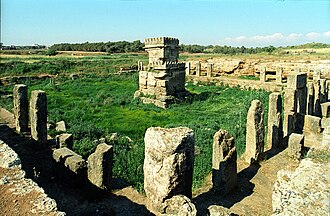
Amrit Phoenician Temple: Amrit Phoenician Temple
Key Facts
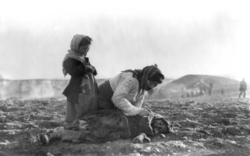
Armenian deportees near Aleppo during the Armenian genocide, 1915
Capital: Damascus
Official Language: Arabic (with Kurdish also recognized as a national language)
Population: Estimated at 26,657,437 for 2026
Government: Unitary presidential republic under a provisional government
Current President: Ahmed al-Sharaa
Major Religions: Islam (predominantly Sunni, followed by Shia and Alawite) and Christianity
Historical Evolution
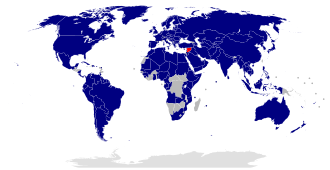
Diplomatic relations of Syria
Ancient and Classical Antiquity
Syria's history is deeply rooted in antiquity. The region has been home to various ancient civilizations, including the Phoenicians and the prosperous cities of the classical era, such as Palmyra and Apamea. These ancient sites serve as a testament to the region's long-standing role in trade and cultural exchange.
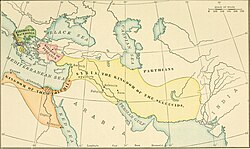
Antioch in Syria became the capital of the Hellenistic Seleucid Empire in 240 BC: Antioch in Syria became the capital of the Hellenistic Seleucid Empire in 240 BC
The Middle Ages and Ottoman Rule
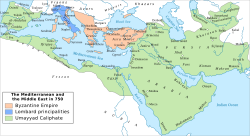
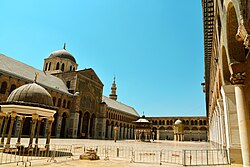
During the Middle Ages, the region saw the rise of significant Islamic influence. A landmark of this era is the Umayyad Mosque in Damascus, which served as a standard for future congregational mosques. The Umayyad Caliphate, with its capital in Damascus, represented a period of vast territorial reach and cultural flowering.
The Umayyad Mosque in Damascus built by Caliph Al-Walid I followed the plan of the Prophet's Mosque in Medina, and became the earliest example of a congregational mosque that served as standard for future mosques[65]: The Umayyad Mosque in Damascus built by Caliph Al-Walid I followed the plan of the Prophet's Mosque in Medina, and became the earliest example of a congregational mosque that served as standard for future mosques[65]
Umayyad Caliphate (green) with its capital in Damascus around 740: Umayyad Caliphate (green) with its capital in Damascus around 740
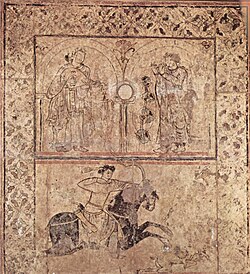
Umayyad fresco from Qasr al-Hayr al-Gharbî, built in the early 7th century: Umayyad fresco from Qasr al-Hayr al-Gharbî, built in the early 7th century
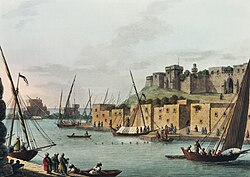
Later, the region became part of the Ottoman Empire, a period reflected in the historical architecture and urban layouts of cities like Tartus.
Tartus in Ottoman Syria, from an 1810 illustration by Luigi Mayer: Tartus in Ottoman Syria, from an 1810 illustration by Luigi Mayer
The Modern Era: Mandates and Independence
The 20th century brought significant upheaval. Following the collapse of the Ottoman Empire, Syria underwent a French Mandate. This period was marked by struggles for sovereignty, leading to the establishment of the First Syrian Republic and eventually full independence in 1946. The mid-20th century also saw Syria join the United Arab Republic, a short-lived union with Egypt.
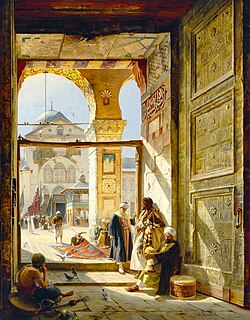
"The Gate Of The Great Umayyad Mosque, Damascus" by Gustav Bauernfeind, 1890: "The Gate Of The Great Umayyad Mosque, Damascus" by Gustav Bauernfeind, 1890
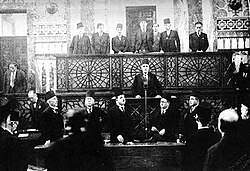
The inauguration of President Hashim al-Atassi in 1936: The inauguration of President Hashim al-Atassi in 1936
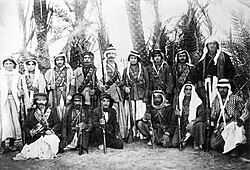
Syrian rebels in Ghouta during the Great Syrian Revolt against French colonial rule in the 1920s: Syrian rebels in Ghouta during the Great Syrian Revolt against French colonial rule in the 1920s
The Ba'athist Era and Civil War
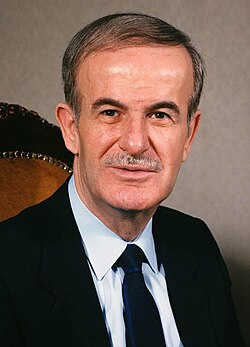
From 1963 until late 2024, Syria was governed by the Ba'ath Party. This era was characterized by centralized rule under leaders such as Hafez al-Assad and his son, Bashar al-Assad. However, the country was later plunged into a devastating civil war, which led to massive internal displacement, humanitarian crises, and shifts in territorial control involving various factions and international actors.
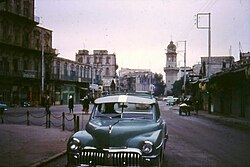
Aleppo in 1961: Aleppo in 1961
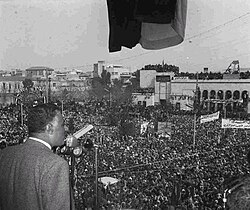
Gamal Abdel Nasser at Aleppo, 1960: Gamal Abdel Nasser at Aleppo, 1960
Hafez al-Assad, president of Syria from 1971 until his death in 2000: Hafez al-Assad, president of Syria from 1971 until his death in 2000
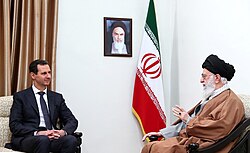
Syrian president Bashar al-Assad with Ayatollah Ali Khamenei in Tehran, Iran, 25 February 2019: Syrian president Bashar al-Assad with Ayatollah Ali Khamenei in Tehran, Iran, 25 February 2019
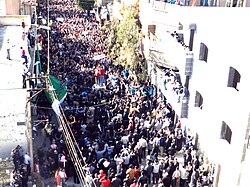
Protest against the Assad regime in the city of Homs, 3 February 2012: Protest against the Assad regime in the city of Homs, 3 February 2012
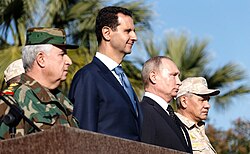
Syrian president Bashar al-Assad, Russian president Vladimir Putin, and defence minister Sergei Shoigu at Khmeimim Air Base, December 2017: Syrian president Bashar al-Assad, Russian president Vladimir Putin, and defence minister Sergei Shoigu at Khmeimim Air Base, December 2017
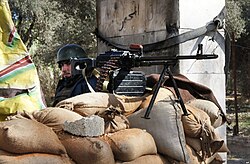
A Syrian Army soldier manning a checkpoint outside of Damascus shortly after the outbreak of the Syrian civil war, 2012: A Syrian Army soldier manning a checkpoint outside of Damascus shortly after the outbreak of the Syrian civil war, 2012
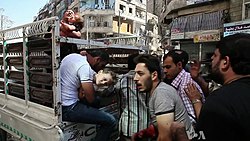
Wounded civilians arrive at a hospital in Aleppo, October 2012: Wounded civilians arrive at a hospital in Aleppo, October 2012
The 2024 Transition and Post-Ba'athist Period
In December 2024, the Ba'athist regime fell following a major rebel offensive. This led to the establishment of a transitional government. As of 2025, the nation is working through a period of reconstruction and political restructuring under a provisional government led by President Ahmed al-Sharaa.
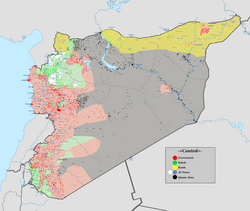
Military situation in December 2015. Islamic State-controlled territory is in grey.: Military situation in December 2015. Islamic State-controlled territory is in grey.
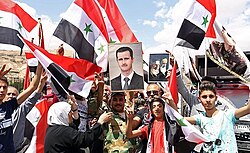
Pro-Assad demonstration in the capital Damascus after US-led missile strikes in April 2018: Pro-Assad demonstration in the capital Damascus after US-led missile strikes in April 2018
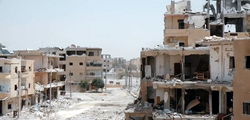
IS's capital Raqqa suffered extensive damage during the battle of Raqqa in June–October 2017: IS's capital Raqqa suffered extensive damage during the battle of Raqqa in June–October 2017
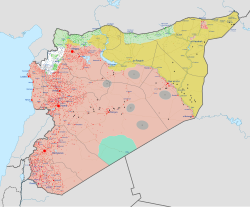
Military situation before the opposition offensives in late 2024.Territories controlled by the SDF and the United States (yellow), IS (grey), the Syrian Arab Armed Forces, Russia and Iran (red), SNA and Turkey (light green), Hay'at Tahrir al-Sham (white), SFA and the United States (teal), Israeli-occupied Golan Heights (not shown as part of Syria) .: Military situation before the opposition offensives in late 2024.Territories controlled by the SDF and the United States (yellow), IS (grey), the Syrian Arab Armed Forces, Russia and Iran (red), SNA and Turkey (light green), Hay'at Tahrir al-Sham (white), SFA and the United States (teal), Israeli-occupied Golan Heights (not shown as part of Syria) .
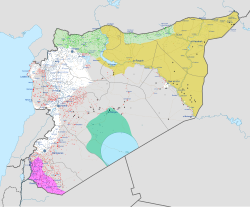
Military situation after the fall of the Assad regime in December 2024.Territories controlled by the Hay'at Tahrir al-Sham (white) and SOR (pink), Turkey and SNA (light green), the United States and SDF (yellow), IS (grey), the Syrian uncertain/mixed (red/light grey), the United States and SFA (teal), Israeli occupation (blue).: Military situation after the fall of the Assad regime in December 2024.Territories controlled by the Hay'at Tahrir al-Sham (white) and SOR (pink), Turkey and SNA (light green), the United States and SDF (yellow), IS (grey), the Syrian uncertain/mixed (red/light grey), the United States and SFA (teal), Israeli occupation (blue).
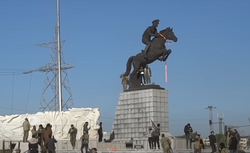
Syrian revolutionaries toppling a statue of Bassel al-Assad in New Aleppo, 30 November 2024: Syrian revolutionaries toppling a statue of Bassel al-Assad in New Aleppo, 30 November 2024
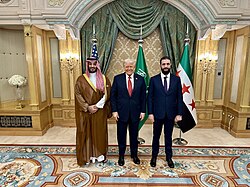
Syrian President Ahmed al-Sharaa with U.S. President Donald Trump and Saudi Crown Prince Mohammed bin Salman in Riyadh, Saudi Arabia, 14 May 2025: Syrian President Ahmed al-Sharaa with U.S. President Donald Trump and Saudi Crown Prince Mohammed bin Salman in Riyadh, Saudi Arabia, 14 May 2025
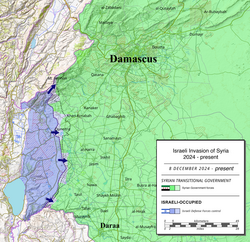
Israeli-occupied Golan Heights and Israeli invasion of Syria in December 2024.: Israeli-occupied Golan Heights and Israeli invasion of Syria in December 2024.
Geography and Demographics
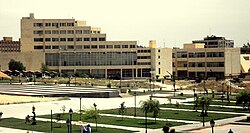
Faculty of Arts and Humanities in Aleppo University
Land and Resources
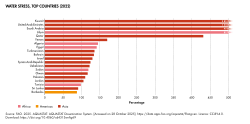
Syria covers a total area of 185,180 km². The geography is diverse, ranging from coastal areas in Latakia to the fertile plains and the desert regions. Water resources are a critical concern; the Euphrates River is one of the longest and oldest rivers in Western Asia, yet Syria was ranked as the twelfth most water-stressed country in the world in 2022.
Syria was the twelfth most water-stressed country in the world in 2022.: Syria was the twelfth most water-stressed country in the world in 2022.
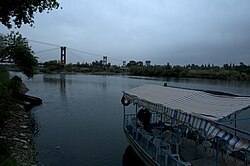
The Euphrates is the longest and one of the oldest rivers in Western Asia: The Euphrates is the longest and one of the oldest rivers in Western Asia
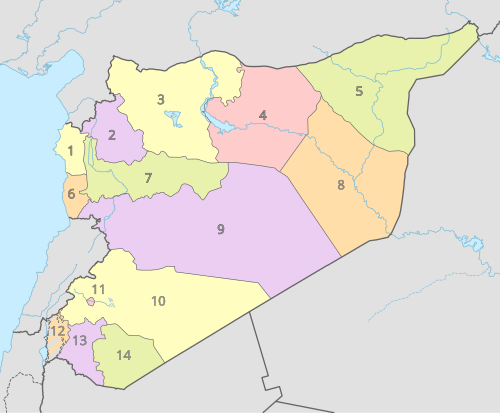
Governorates of Syria: Governorates of Syria
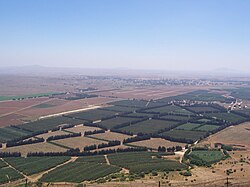
Golan Heights was occupied by Israel since the Six-Day War.: Golan Heights was occupied by Israel since the Six-Day War.
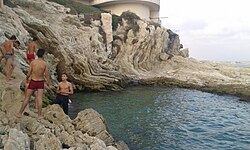
A cove in Latakia in 2014: A cove in Latakia in 2014
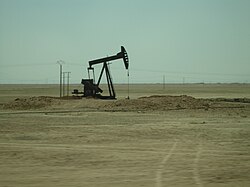
Pumpjack: Pumpjack
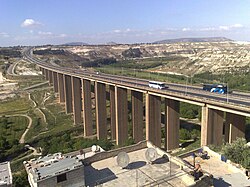
Expressway M5 near Al-Rastan, Homs: Expressway M5 near Al-Rastan, Homs
People and Culture
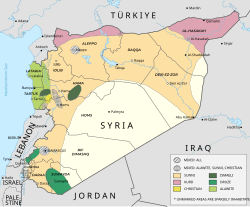
The population is ethnically diverse, with Arabs making up 80–90% of the population, followed by Kurds (9–10%) and other groups. While Arabic is the official language, several other languages are spoken, including Kurdish, Turkish, and Neo-Aramaic. The religious landscape is predominantly Muslim, with Sunni, Shia, and Alawite communities, alongside a Christian minority.
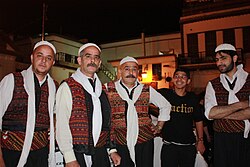
Damascus traditional clothing: Damascus traditional clothing
The ethno-religious composition of Syria: The ethno-religious composition of Syria
Umayyad Mosque: Umayyad Mosque
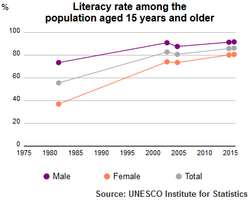
UIS adult literacy rate of Syria: UIS adult literacy rate of Syria
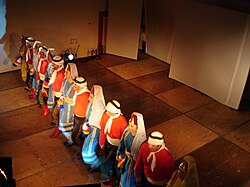
Dabke combines circle dance and line dancing and is widely performed at weddings and other joyous occasions.: Dabke combines circle dance and line dancing and is widely performed at weddings and other joyous occasions.
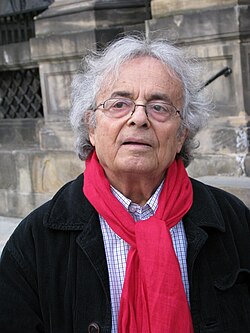
Poet, essayist and translator Adunis: Poet, essayist and translator Adunis
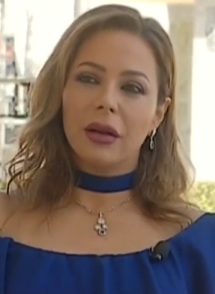
Suzan Najm Aldeen, Syrian actress: Suzan Najm Aldeen, Syrian actress
Economic Overview
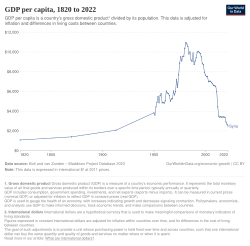
The Syrian economy has faced immense challenges due to decades of conflict. While there are efforts toward reconstruction and seeking international investment, the GDP per capita remains low. The economy relies on various sectors, including agriculture and energy, though stability remains a primary goal for the transitional government.
Syria: Key Economic and Demographic Indicators (Estimates)
Indicator
Value/Detail
Total Area
185,180 km²
Population (2026 Est.)
26,657,437
GDP (PPP) (2026 Est.)
$127.5 billion
GDP (Nominal) (2026 Est.)
$65 billion
Currency
Syrian pound (SYP)
HDI (2023)
0.564 (Medium)
Historical development of real GDP per capita in Syria since 1820: Historical development of real GDP per capita in Syria since 1820
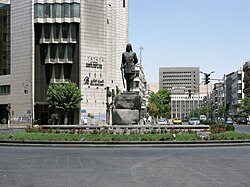
Damascus before the war, 2008: Damascus before the war, 2008
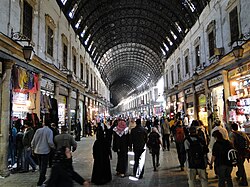
Al-Hamidiyah Souq in Damascus in 2010: Al-Hamidiyah Souq in Damascus in 2010
Frequently Asked Questions
What is the current political status of Syria?
As of 2025, Syria is under a transitional government following the fall of the Ba'athist regime in December 2024. The current President is Ahmed al-Sharaa.
What are the main ethnic groups in Syria?
The majority of the population is Arab (80–90%), with Kurds making up approximately 9–10%. Other groups include various smaller minorities.
What languages are spoken in Syria?
Arabic is the official language. However, Kurdish is recognized as a national language, and other spoken languages include Turkish, Neo-Aramaic, Syriac, Armenian, and Greek.
What is the significance of the Umayyad Mosque?
Located in Damascus, the Umayyad Mosque is a major historical and religious site. It was built by Caliph Al-Walid I and served as the earliest example of a congregational mosque, setting a standard for future Islamic architecture.
How has the population changed recently?
The population saw a decline during the height of the civil war (dropping from over 21 million in 2011 to approximately 18.5 million in 2019) but has seen a significant estimated increase to over 26 million by 2026.
![The Umayyad Mosque in Damascus built by Caliph Al-Walid I followed the plan of the Prophet's Mosque in Medina, and became the earliest example of a congregational mosque that served as standard for future mosques[65]](/images/02/e8/02e8ba86b3fae75b944b6c488a572403f348c39e0fdc13c097f3b34cfb574085.jpg)