Symantec History: From AI Research to Gen Digital
The journey of Symantec is a fascinating study in corporate evolution, beginning not as a security giant, but as an ambitious venture into artificial intelligence. Over four decades, the company pivoted through various software markets, navigated complex mergers, and eventually transformed into a cornerstone of the global cybersecurity landscape under the name Gen Digital.
The Formative Years (1982–1989)
Founded in 1982 by Gary Hendrix via a National Science Foundation grant, Symantec initially focused on artificial intelligence and database programs, employing natural language processing researchers from Stanford University. However, by 1984, the company faced a technical hurdle: its advanced systems could not be ported from DEC minicomputers to the PC.
This challenge led to an acquisition by C&E Software, founded by Denis Coleman and Gordon Eubanks. The merged entity retained the Symantec name and launched its flagship product, Q&A, in November 1985. Q&A combined file management and word processing with "The Intelligent Assistant," a natural language query system that set new industry standards for report generation.
To survive early sales slumps, executive Rod Turner implemented the "Six Pack Program," an aggressive grassroots sales strategy where employees worked six days a week, visiting six dealerships daily. To achieve cash flow break-even and attract venture capital from Kleiner, Perkins, Caufield & Byers, the company underwent drastic cost-cutting, including salary reductions for executives and staff.
Symantec further diversified through the creation of Turner Hall Publishing, a division that released utilities like NoteIt (for Lotus 1-2-3) and the Turner Hall Card (a 256k RAM memory card). This diversification, alongside the 1987 acquisition of Breakthrough Software (makers of TimeLine project management software), provided the scale necessary for Symantec to go public on NASDAQ as "SYMC" on June 23, 1989.
The Rise of the Norton Brand (1990–1999)
The 1990s marked Symantec's pivot toward the utilities and security markets. In August 1990, the company acquired Peter Norton Computing. While Symantec already had success with Macintosh antivirus (SAM) and utilities (SUM), the Norton merger provided a powerful brand for the DOS market. This led to the 1991 launch of Norton Antivirus.
The strategic shift was remarkably successful; by 1993, the Norton product group accounted for approximately 82% of Symantec's total revenues. During this era, Symantec also ventured into development tools—such as THINK Pascal and THINK C—though these remained largely unprofitable and were eventually exited in the late 1990s as competitors like Microsoft and Borland took the lead.
Despite its growth, the company faced turbulence in 1996, when it was accused of misleading financial statements in violation of Generally Accepted Accounting Principles (GAAP).
Corporate Transition and Leadership Shifts (2000–2014)
From 1999 to 2009, Symantec was led by John W. Thompson, who was the only African-American leading a major US technology company at the time. He was succeeded by Enrique Salem, who expanded the company's market share by acquiring Verisign's Certificate Authority business.
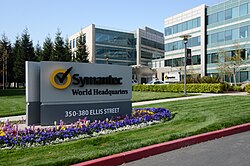
The following years were marked by leadership instability. Steve Bennett took over in 2012 but was fired in 2014 after attempting a major corporate reorganization to fix a "broken" system. Michael A. Brown subsequently stepped in as CEO, having previously served on the board following the acquisition of Veritas Software.
The Great Split and Strategic Pivot (2014–2019)
In October 2014, Symantec announced a plan to split into two independent companies to separate its security and information management interests. The information management arm became Veritas Technologies, which was sold to a private equity group led by The Carlyle Group for $8 billion in 2016.
The remaining security-focused Symantec continued to evolve, launching IoT security for connected vehicles in 2016 and acquiring identity theft protection firm LifeLock for $2.3 billion in November 2016.

By 2018, the company faced pressure from the hedge fund Starboard Value, which eventually placed three nominees on the board. This period of transition culminated in August 2019, when Broadcom acquired Symantec's Enterprise software division for $10.7 billion. The consumer-facing Norton products remained separate, and the company rebranded as NortonLifeLock, moving its headquarters to Tempe, Arizona.
The Era of Gen Digital (2020–Present)
In a move to create a global cybersecurity powerhouse, NortonLifeLock merged with the Czech-based Avast in a deal completed in September 2022. The resulting multinational entity was named Gen Digital.
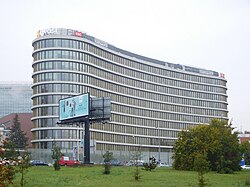
Recent years have seen Gen Digital expand its ecosystem. In April 2025, the company completed a $1 billion all-cash acquisition of MoneyLion. Additionally, the Norton product line has integrated modern technology, such as the short-lived Norton Crypto (disabled in 2022) and the 2025 introduction of Genie AI for fraud protection.
Key Facts
- Founded: 1982 by Gary Hendrix.
- First Major Product: Q&A (released November 1985).
- Defining Acquisition: Peter Norton Computing (1990), which established the Norton brand.
- Major Spin-off: Veritas Technologies (sold for $8 billion in 2016).
- Current Identity: Gen Digital (formed via the 2022 merger of NortonLifeLock and Avast).
- Recent Expansion: Acquired MoneyLion for $1 billion in 2025.
| Era | Primary Focus | Key Milestone |
|---|---|---|
| 1980s | AI & Database Software | IPO on NASDAQ (1989) |
| 1990s | Utilities & Antivirus | Acquisition of Peter Norton Computing |
| 2000s-2014 | Enterprise Security | Acquisition of Verisign CA business |
| 2014-2019 | Security Specialization | Split of Veritas; Broadcom acquisition |
| 2020-Present | Consumer Cybersecurity | Merger with Avast to form Gen Digital |
Frequently Asked Questions
What was Symantec's original purpose?
Symantec was founded in 1982 to focus on artificial intelligence-related projects and database programs, utilizing natural language processing research.
How did the Norton brand become part of Symantec?
Symantec acquired Peter Norton Computing in 1990. The company leveraged the Norton name to launch Norton Antivirus in 1991, which eventually became the dominant revenue driver for the company.
What happened to the Veritas business?
Symantec spun off its information management business as Veritas Technologies in 2015 and subsequently sold it to a private equity group led by The Carlyle Group for $8 billion in 2016.
What is Gen Digital?
Gen Digital is the multinational cybersecurity company formed in September 2022 following the merger of NortonLifeLock and Avast.
Who acquired Symantec's enterprise division?
Broadcom acquired the Enterprise software division of Symantec for $10.7 billion in a deal that closed on November 4, 2019.