Swiss Military Service: Conscription, Recruitment, and Alternatives
Switzerland maintains a unique approach to national security through a militia system, where civilian tasks are performed on a part-time basis. Central to this system is mandatory service for all able-bodied male citizens, who are conscripted upon reaching the age of majority. While men are required to serve, women have the option to volunteer for any position within the armed forces.
The Swiss public has shown strong support for this system. In September 2013, a referendum to abolish conscription failed, with over 73% of voters opposing the change. More recently, on November 30, 2025, the "Civic Duty Initiative"—which proposed replacing male military service with compulsory civic duty for all genders—was rejected by more than 84% of the electorate.
Key Facts
- Mandatory for Men: All able-bodied male citizens must serve in the Army or Civilian Service.
- Voluntary for Women: Women may volunteer for any military role.
- Recruitment Age: Typically begins at 20, though preparatory courses start at 16.
- Exemption Tax: Men unfit for service pay an additional 3% income tax (up to age 37).
- Alternative Paths: Conscientious objectors can opt for Civilian Service, while those partially unfit may enter Civil Protection.
The Recruitment Process
Recruitment generally begins at age 20, although those interested in specific sectors may start preparatory courses as early as 16. The process begins with an information day (Orientierungstag), held near the recruit's municipality. During this event, candidates receive an overview of Switzerland's security policy, their legal rights and duties, and administrative guidelines.
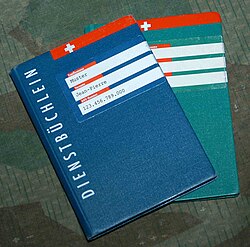
At this stage, conscripts are issued a service record book to track the fulfillment of their obligations.
Recruits may postpone their service for up to four years for valid reasons, such as studying abroad, though further delays may result in fines. The actual recruitment takes place over two to three days at one of six centers: Windisch, Payerne, Sumiswald, Monte Ceneri, Rüti, or Mels. Assignments are based on intellectual capabilities, physical fitness, and aptitude.
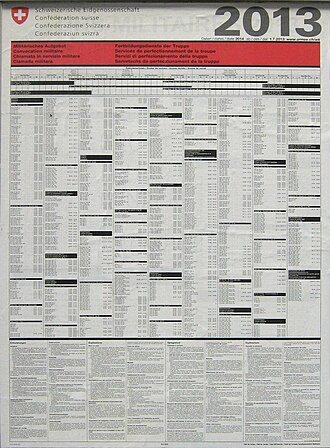
Exemptions and Alternative Service
Not every citizen is suited for military duty. Men deemed unfit—meaning they cannot meet physical, intellectual, or mental requirements without harming themselves or others—are exempted. Unless they have a severe disability, these individuals pay an additional 3% annual income tax until age 37, for a maximum of 11 years. In 2008, nearly 20% of conscripts were found unfit, with higher rates in urban centers like Geneva and Zurich.
For those who are physically fit but object to military service on moral grounds, Civilian Service is available. This involves social work, such as assisting the elderly or restoring cultural sites. This service lasts 340 days, which is 50% longer than standard military service.
Those who are partially unfit (not eligible for full exemption but not fit for the army) enter Civil Protection. They serve 245 days (maximum 66 per year) assisting police, fire, and health departments, or providing disaster relief. Each day served reduces the annual exemption tax by 4%.
Army Service and Training
Boot Camp
Standard boot camp lasts 18 or 21 weeks and is divided into three phases:
- General Basic Instructions: The first seven weeks.
- Function-Specific Basic Instructions: Six weeks of job-specific skill training.
- Instruction in Formation: The final phase where battalions and battlegroups are organized.
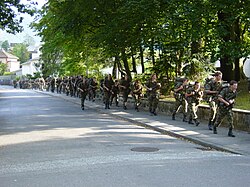
While soldiers previously carried sealed ammunition boxes, this practice ended in 2008. Those with moral objections to carrying weapons may apply for weaponless service.
Rank Advancement
Higher ranks require additional specialized training. For example, a sergeant requires four weeks of rank-specific instruction and 18 weeks of practical service. Lieutenants must complete sergeant training, followed by 15 weeks of rank-specific instruction and 18 weeks of practical service. Military obligations end at different ages depending on rank, ranging from 12 years for enlisted personnel to age 50 for staff officers.
Long Service Option
A limited number of conscripts (maximum 15% of an age class) may choose "long service." This allows them to complete their entire obligation in one continuous 300-day stretch, after which they enter the reserve for seven years.
Compensation and Financial Support
Personnel receive basic daily compensation, which as of 2017 ranged from CHF 4 for recruits to CHF 30 for lieutenant generals. Officers and NCOs in training receive additional supplements between CHF 23 and CHF 80.
To mitigate financial loss, the income-loss insurance (Erwerbsersatzordnung or EO) provides 80% of a regular salary for employees. Many employers pay the full salary and claim the EO compensation themselves. By law, employers cannot fire a person while they are in service. Students and unemployed persons receive a fixed compensation of CHF 62 (CHF 97 for officers in training), which can increase to CHF 174 for those with children.
| Service Type | Eligibility | Duration | Primary Focus |
|---|---|---|---|
| Military Service | Able-bodied males / Female volunteers | Standard (approx. 200 days) | National Defense |
| Civilian Service | Fit males (conscientious objectors) | 340 days | Social & Cultural Services |
| Civil Protection | Partially unfit males | 245 days | Emergency & Disaster Relief |
Frequently Asked Questions
Can women serve in the Swiss Army?
Yes, women may volunteer for any position within the Swiss Army, although service is not mandatory for them.
What happens if a man is found unfit for service?
Men determined unfit for both military and civilian service are exempted but must pay an additional 3% income tax until age 37, for a maximum of 11 years, unless they have a severe disability.
Is there an alternative for those who object to carrying weapons?
Yes, conscripts who object to carrying weapons on moral grounds may apply for weaponless service.
How does the income-loss insurance (EO) work?
The EO provides 80% of a regular salary for employees during service. If an employer pays the full salary, the EO compensation is paid to the employer instead.
Can I postpone my military recruitment?
Yes, it is possible to postpone service for up to four years for adequate reasons, such as studying abroad. Further delays may result in fines.