Sveriges Television: A History of Swedish Public Broadcasting
For decades, Sveriges Television (SVT) has been the cornerstone of the Swedish media landscape. As a public service broadcaster, its mission—encapsulated in the motto "Hela Sveriges Television" (Television for all of Sweden)—is to provide reliable, diverse, and engaging content to the nation. From its early days of experimental transmissions to its current status as a multi-channel digital powerhouse, SVT has shaped the cultural and informational fabric of Sweden.

The Evolution of Swedish Television
The journey of Swedish television began with test transmissions in June 1954, with the first official broadcasts originating from the Royal Institute of Technology in Stockholm on October 29, 1954. Originally operating under the name Radiotjänst, the service was part of Sveriges Radio (SR). By 1957, regular programming commenced, and the organization transitioned into Sveriges Radio TV.
During the mid-20th century, SVT held a domestic monopoly on terrestrial broadcasting. This changed in the late 1980s with the arrival of satellite television like TV3, and more significantly in 1992, when the commercial broadcaster TV4 began terrestrial broadcasting. Despite this increased competition, SVT remains a dominant force in the Swedish market.

Expanding Channels and Competition
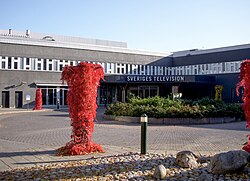
In the 1960s, the concept of a second channel gained momentum, leading to the launch of TV2 on December 5, 1969. At the time, the original channel was known as TV1, and the two were designed to exist in a state of "stimulating competition" within the same company. This era also saw the inauguration of the massive TV-huset studios in Stockholm, which were among the largest in Europe at the time.

Technological Milestones
SVT has consistently led the way in adopting new broadcasting technologies to improve the viewer experience:
- Color Broadcasting: The first color broadcast occurred in 1966, with regular color programming introduced in 1970.
- Teletext: Launched in 1978, providing text-based information to viewers.
- Digital Terrestrial Television (DTT): The first digital broadcasts began in 1999, paving the way for specialized channels like SVT24.
- High Definition (HD): SVT made its first HD broadcasts during the 2006 FIFA World Cup, with regular HD services following in October 2006.
- Surround Sound: The first 5.1 sound broadcast on DTT was the popular program Allsång på Skansen in 2003.
News and Regional Programming
News is a fundamental pillar of SVT's service. For much of its history, the network relied on two primary news programs: Rapport and Aktuellt. While they once operated as entirely separate organizations, they were merged into a single central news desk in 2000 to streamline coverage.
Today, Rapport serves as the main news program with bulletins at 18:00 and 19:30, while Aktuellt provides in-depth reporting at 21:00. Beyond national news, SVT maintains a strong commitment to regionality through 18 distinct news programs covering areas such as Malmö, Gothenburg, Stockholm, and Luleå.

Regional Presence
To ensure all citizens are represented, SVT operates through several regional hubs:
- SVT Syd: Serving Malmö and Växjö.
- SVT Väst: Serving Gothenburg.
- SVT Mellansverige: Serving Norrköping, Falun, Karlstad, Örebro, and Leksand.
- SVT Nord: Serving Umeå, Luleå, and Sundsvall.


Entertainment and Cultural Impact
SVT has been responsible for introducing many iconic formats to Swedish audiences. Notably, the network aired the first season of Expedition Robinson (the original Swedish version of Survivor) in 1997, which became a massive cultural phenomenon. The network has also been a frequent host for the Eurovision Song Contest, hosting the event in 1975, 1985, 1992, 2000, 2013, 2016, and 2024.

Key Facts
- Founded: 1956 (originally as Radiotjänst).
- Current Channels: SVT1, SVT2, SVT24, SVT Barn, and Kunskapskanalen.
- Market Position: Remains Sweden's largest TV network with an audience share of approximately 36.4%.
- Language Diversity: Provides news in Northern Sámi, Finnish, and Swedish Sign Language.
- Ownership: Managed by the Foundation Management for SR, SVT, and UR.
Data Overview: Market Share and Channels
| Category | Details |
|---|---|
| Primary Channels | SVT1, SVT2, SVT24, SVT Barn, Kunskapskanalen |
| Main News Programs | Rapport, Aktuellt, SVT Nyheter |
| 2006 Audience Share | 38.3% (Largest network in Sweden) |
| Major News Slots | 18:00, 19:30 (Rapport); 21:00 (Aktuellt) |

Frequently Asked Questions
What is the difference between SVT1 and SVT2?
Following a reorganization in 2001, SVT1 was positioned as the broader, mainstream channel with higher ratings, while SVT2 was designed as a narrower channel for more specialized content.
Does SVT show advertisements?
As a public service broadcaster, SVT is barred from accepting advertisements, with the exception of specific sponsors for sporting events.
How does SVT serve minority languages in Sweden?
SVT provides news and content in other broadcast languages, including Northern Sámi (Ođđasat), Finnish (Uutiset), and Swedish Sign Language (Nyhetstecken).
What is Kunskapskanalen?
Kunskapskanalen is a knowledge-oriented channel launched by SVT in September 2004.
Who manages SVT?
SVT is part of a group managed by the Foundation Management for SR (Sveriges Radio), SVT, and UR (Sveriges Utbildningsradio).