Svetlana Alliluyeva: The Extraordinary Life of Stalin's Daughter
Svetlana Alliluyeva, later known as Lana Peters, lived a life defined by the towering shadow of her father, the Soviet leader Joseph Stalin. Born into the heart of Soviet power, she eventually transitioned from the privileged yet restrictive environment of the Kremlin to become an international sensation by defecting to the United States. Her journey was one of constant reinvention, spanning multiple citizenships, marriages, and spiritual awakenings.
As the youngest child and only daughter of Stalin and his second wife, Nadezhda Alliluyeva, Svetlana was the last surviving child of the Soviet dictator. Her life story is not merely a footnote to political history but a complex narrative of a woman seeking autonomy from one of the 20th century's most formidable figures.
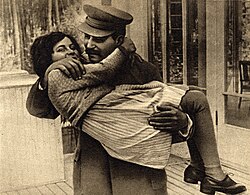
Key Facts
- Birth Name: Svetlana Iosifovna Stalina.
- Defection: Became an international sensation after defecting to the U.S. in 1967.
- Citizenships: Held Soviet, American, and British citizenships throughout her life.
- Notable Works: Authored Twenty Letters to a Friend and Only One Year.
- Family: Only daughter of Joseph Stalin and Nadezhda Alliluyeva.
- Death: Passed away on November 22, 2011, at age 85 due to colon cancer.
Early Life and Family Dynamics
Born on February 28, 1926, in Moscow, Svetlana's early years were shaped by a blend of extreme privilege and personal loss. Because her mother pursued a professional career, Svetlana and her brother Vasily were largely raised by their nanny, Alexandra Bychokova, with whom Svetlana maintained a close friendship for 30 years.
Tragedy struck on November 9, 1932, when her mother committed suicide. To protect the children, the family claimed she had died of peritonitis (inflammation of the peritoneum, often a complication of appendicitis). The children did not learn the truth about their mother's death for another decade.
Svetlana attended Moscow School No. 25, where she was notably treated as an ordinary student without special privileges. Despite this, her status was evident to foreign dignitaries; in 1942, Winston Churchill described her as a "handsome red-haired girl" during a visit to the Kremlin, noting that Stalin used her presence to demonstrate that even Bolsheviks had a family life.
Complex Relationships and Marriages
Svetlana's personal life was often fraught with conflict, particularly regarding her father's disapproval. At 16, she fell in love with Aleksei Kapler, a Jewish Soviet filmmaker. Stalin's vehement opposition led to Kapler being sentenced to exile in Vorkuta in 1943 and later to labor camps in Inta in 1948.
Over the following decades, Svetlana entered several marriages, often reflecting the political and social pressures of her environment:
- Grigory Morozov (1944–1947): A Jewish student whom Stalin disliked. They had a son, Iosif.
- Yuri Zhdanov (1949–1952): An arranged marriage to the son of Andrei Zhdanov. They had a daughter, Yekaterina.
- Ivan Svanidze (1962–1963): The nephew of Stalin's first wife. They defied Soviet policy by marrying in a church.
- Brajesh Singh (1965–1966): An Indian Communist. Though they were not officially allowed to marry, Svetlana referred to him as her husband. Following his death, she traveled to India to scatter his ashes in the Ganges.
- William Wesley Peters (1970–1973): An American architect and son-in-law of Frank Lloyd Wright. They had a daughter, Olga.
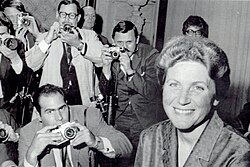
Life After Stalin and Defection
Following Joseph Stalin's death in 1953, Svetlana worked as a translator and lecturer in Moscow. Although she was forced by her father to study History and Political Thought, her true passion lay in literature. In later interviews, she described her father as "rude" and "cruel," stating that his refusal to let her study arts and his treatment of Aleksei Kapler "broke" her life.
In 1967, Svetlana defected to the United States, a move that shocked the world. She eventually became a naturalized American citizen in 1978 under the name Lana Peters. She briefly returned to the Soviet Union from 1984 to 1986, during which time her Soviet citizenship was reinstated.
Literary Contributions and Financial Struggles
Svetlana's memoir, Twenty Letters to a Friend, was published in 1967 and became a global bestseller, earning her an estimated $2.5 million. However, she gave much of this money to charity and later faced debt and failed investments, leading to a period of impoverishment by 1986.
Spiritual Journey
Svetlana's later years were marked by a deep exploration of faith. Initially baptized into the Russian Orthodox Church in 1963, she experimented with various denominations while in exile. After spending time with Catholics in Switzerland and the U.S., she officially converted to Catholicism on December 13, 1982, the feast of Saint Lucy of Syracuse.
Final Years and Legacy
Svetlana spent her final years between Cambridge, England, and southern Wisconsin, specifically in Richland Center and Spring Green. She died on November 22, 2011, from complications of colon cancer.
Her children's lives took divergent paths: her daughter Yekaterina became a volcanologist in Siberia, her son Iosif became a cardiologist (dying in 2008), and her daughter Olga (now Chrese Evans) settled in Portland, Oregon.
| Category | Details |
|---|---|
| Known As | Svetlana Stalina, Svetlana Alliluyeva, Lana Peters |
| Key Relationships | Joseph Stalin (Father), Nadezhda Alliluyeva (Mother) |
| Major Works | Twenty Letters to a Friend, Only One Year, Faraway Music |
| Citizenships | Soviet, Stateless, American, British |
| Final Faith | Catholicism |
Frequently Asked Questions
Why did Svetlana Alliluyeva change her name to Lana Peters?
She adopted the name Lana Peters following her defection to the United States and her marriage to American architect William Wesley Peters, seeking a new identity away from her father's legacy.
What was the controversy surrounding her book 'Twenty Letters to a Friend'?
While the book was a commercial success, some critics, such as Raymond Pearson, argued it was a naïve attempt to whitewash her father's life by shifting the blame for Stalinist crimes onto Lavrentiy Beria.
Did Svetlana maintain a relationship with her children after defecting?
Her children who remained in the Soviet Union did not maintain contact with her for many years. While some suspected KGB interference, her children attributed the estrangement to her complex character.
How did Svetlana describe her relationship with Joseph Stalin?
She acknowledged that he loved her but described him as a "very simple man" who was also "very rude" and "very cruel," particularly regarding his control over her education and romantic life.
What was her connection to Frank Lloyd Wright?
Svetlana was invited by Frank Lloyd Wright's widow, Olgivanna Lloyd Wright, to visit his winter studio, Taliesin West, in Arizona. She later married Wright's son-in-law, William Wesley Peters.