Svalbard History: From Terra Nullius to Norwegian Sovereignty
The remote Arctic archipelago of Svalbard has evolved from a lawless frontier of whaling and mining into a unique geopolitical territory. For centuries, these frozen lands were the subject of international disputes, governed by the principle of terra nullius—a Latin term meaning "land belonging to no one." Today, while under the sovereignty of Norway, Svalbard remains one of the most unusual administrative zones in the world.
The Era of Whaling and International Conflict
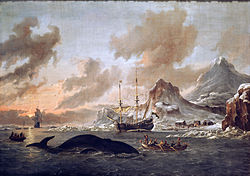
While Norsemen or Pomors may have sighted the islands earlier, the Dutch explorer Willem Barentsz is credited with spotting Svalbard in 1596. By the early 17th century, the region became a magnet for European powers seeking the lucrative profits of walrus hunting and whaling. The English Muscovy Company began operations on Bjørnøya in 1604 and expanded to Spitsbergen by 1611.
This economic boom quickly led to conflict. England claimed exclusive rights to the area, using armed ships to expel Dutch, Spanish, and French competitors. However, the Dutch countered with the principle of mare liberum (the free sea), arguing that no single nation could claim sovereignty over the open ocean. Meanwhile, Denmark-Norway claimed the region based on the belief that Spitsbergen was part of Greenland, an old Norwegian tax-land.
Despite these clashes, a political deadlock ensued. Neither the English nor the Danish-Norwegian claims were universally accepted, and the archipelago remained a terra nullius. By 1614, the English and Dutch partitioned the islands to maintain profitability, with the Dutch Noordsche Compagnie eventually dominating the northwestern region. This era of exploitation lasted until the end of the 18th century, when the bowhead whale reached local extinction and whaling ceased.
Establishing Jurisdiction and the Svalbard Treaty
The transition from a lawless zone to an administered territory began in the late 19th century. In 1871, Adolf Erik Nordenskiöld initiated work to establish an administration, while explorer Fridtjof Nansen increased Norwegian public interest in the Arctic. The catalyst for formal jurisdiction, however, was the industrialization of the early 1900s.
The introduction of coal mining created an urgent need for legal frameworks. Without a governing body, there was no way to legalize mining claims or resolve labor disputes between workers and companies of different nationalities. After several failed multilateral conferences between 1910 and 1914, a resolution was reached during the Paris Peace Conference following World War I.
On February 9, 1920, the Svalbard Treaty granted Norway full sovereignty over the archipelago. This agreement included two critical caveats: all signatory parties maintained equal rights to economic resources, and the islands could not be used for "warlike purposes." The Svalbard Act of 1925 formally integrated the islands into the Kingdom of Norway, though they were not designated as a county. It was during this period that the name "Svalbard" officially replaced "Spitsbergen Archipelago."
Cold War Tensions and Industrial Shifts
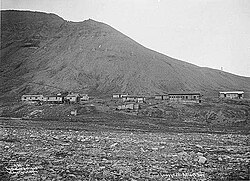
The interwar period saw a decline in mining, leaving only two major players: the Norwegian Store Norske Spitsbergen Kulkompani and the Soviet state-owned Arktikugol. This created a bilateral political dynamic. During World War II, the islands were evacuated and major settlements were destroyed by Germany during Operation Zitronella.
Post-war relations were strained. In 1944, the Soviet Union proposed a joint condominium rule over Svalbard, which Norway rejected in 1947. Tensions escalated further after Norway joined NATO in 1949. The Soviet Union protested various developments, including a proposed private airport at Ny-Ålesund and the establishment of the European Space Research Organization's Kongsfjord Telemetry Station.
Internal Norwegian politics were also shaken by the Kings Bay Affair in 1962. A mining accident that killed 21 miners led to a vote of no confidence in Parliament, resulting in the fall of Prime Minister Einar Gerhardsen's third cabinet. This event, along with disputes over oil drilling claims by Caltex, prompted Norway to increase funding for local administration and tighten control over Soviet settlements.
Normalization and Modern Governance
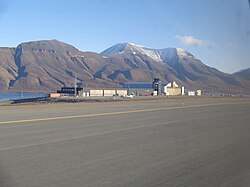
The late 20th century focused on "normalizing" the archipelago, particularly the main settlement of Longyearbyen. For decades, Longyearbyen operated as a company town under Store Norske. In 1989, Svalbard Samfunnsdrift (SSD) was created to manage public infrastructure, including healthcare, power, and education. By 1993, the Norwegian Ministry of Trade and Industry took ownership of SSD.
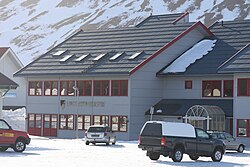
The goal was to move away from the company town model toward a diversified economy and local democracy. The Svalbard Council was evolved into the Longyearbyen Community Council in 2002. This transition coincided with a demographic shift: between 1990 and 2011, the Russian and Ukrainian population dropped from 2,300 to 370, while the Norwegian population grew from 1,100 to 2,000.
Key Facts
- Sovereignty: Granted to Norway via the Svalbard Treaty of February 9, 1920.
- Legal Status: Formerly terra nullius (land belonging to no one).
- Economic Rights: All treaty signatories have equal rights to economic resources.
- Demilitarization: The archipelago cannot be used for warlike purposes.
- Primary Industries: Historically dominated by whaling (17th-18th century) and coal mining (20th century).
- Environmental Protection: Over half of the archipelago was protected by 1972 through national parks and sanctuaries.
| Period | Legal Status | Primary Activity | Governing Influence |
|---|---|---|---|
| 1596 - 1920 | Terra Nullius | Whaling / Hunting | Dutch, English, Danish-Norwegian |
| 1920 - 1945 | Norwegian Sovereignty | Coal Mining | Norway / Soviet Union |
| 1945 - 1990 | Norwegian Sovereignty | Mining / Research | Norway (NATO) / Soviet Union |
| 1990 - Present | Norwegian Sovereignty | Tourism / Research | Longyearbyen Community Council |
Frequently Asked Questions
What is the significance of the Svalbard Treaty?
The 1920 treaty ended the status of Svalbard as terra nullius by granting Norway full sovereignty. However, it uniquely allows all signatory nations equal access to the islands' natural resources and prohibits the territory from being used for military purposes.
Why was Svalbard considered terra nullius for so long?
It was considered terra nullius because multiple European powers—primarily England, the Netherlands, and Denmark-Norway—claimed the land or the rights to its waters, but none could establish a universally recognized government or sovereignty.
What was the Kings Bay Affair?
The Kings Bay Affair was a political crisis in Norway triggered by a 1962 mining accident in Ny-Ålesund. It revealed that unsafe mining practices had been overlooked to maintain a Norwegian presence on the islands, leading to the resignation of Prime Minister Einar Gerhardsen's government.
How has the population of Longyearbyen changed?
The population has shifted from a heavy Soviet and Ukrainian presence to a predominantly Norwegian one. Between 1990 and 2011, the Russian and Ukrainian population decreased from 2,300 to 370, while the Norwegian population rose from 1,100 to 2,000.
What does "normalization" mean in the context of Longyearbyen?
Normalization refers to the process of transforming Longyearbyen from a "company town" run by the mining firm Store Norske into a modern community with a diversified economy, local democratic governance, and a full range of public services.