Susilo Bambang Yudhoyono: The Legacy of Indonesia's 6th President
Susilo Bambang Yudhoyono, widely known as SBY, served as the 6th President of Indonesia from 2004 to 2014. A former military general and seasoned politician, Yudhoyono's tenure was marked by a commitment to political stability, economic growth, and the strengthening of democratic institutions during the Reformation era.
From his early days in the Indonesian Army to his rise through the ministerial ranks, Yudhoyono's career reflects a transition from military leadership to civilian governance, making him a pivotal figure in Indonesia's modern history.
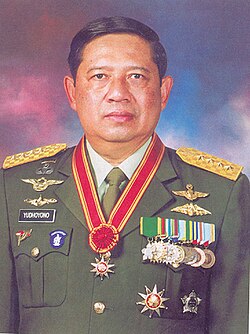
Key Facts
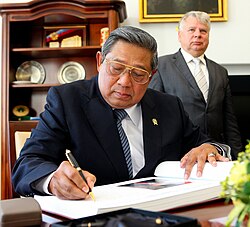
- Presidency: Served two terms from October 20, 2004, to October 20, 2014.
- Military Rank: General (Honorary) in the Indonesian Army.
- Political Party: Founder and former Chairman of the Democratic Party.
- Key Achievement: Facilitated the Aceh Peace Agreement.
- Education: Holds a PhD from Bogor Agricultural University and an MA from Webster University.
Early Life and Military Career
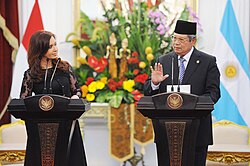
Born on September 9, 1949, in Patjitan, East Java, Yudhoyono was the son of Raden Soekotjo and Siti Habibah. He pursued a military education at the Indonesian Military Academy, where he began his ascent through the ranks of the Indonesian Army.
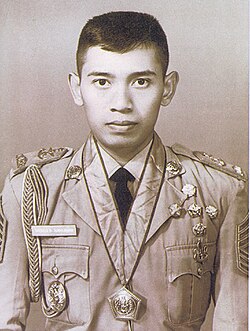
Yudhoyono served in the Kostrad (Army Strategic Reserve Command) and held several critical commands, including serving as the Commander of Kodam II/Sriwijaya from 1996 to 1997. His military service included deployments in East Timor, Aceh, and the Bosnian War as part of the Garuda Contingent XIV.
Transition to Political Leadership
Yudhoyono's transition into civilian politics began in the late 1990s. He served as the Minister of Mining and Energy under President Abdurrahman Wahid in 1999. His role expanded rapidly as he became the Coordinating Minister for Political, Social, and Security Affairs under both President Wahid and President Megawati Sukarnoputri.
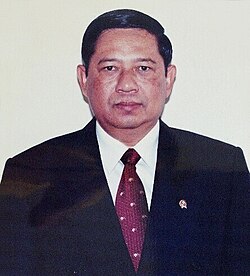
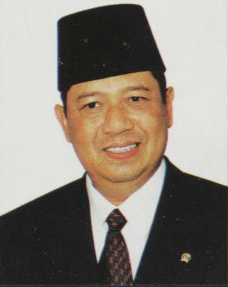
To establish a stronger political base, Yudhoyono founded the Democratic Party. His rising popularity was evident during the April 2004 legislative elections, where the party garnered 7.45% of the votes, paving the way for his successful presidential bid.

![The rapid rise of Yudhoyono's (centre) popularity helped the Democratic Party garner 7.45% of votes during the April 2004 legislative election.[36]](/images/85/41/85411532f35c73a02eafd276426931a6f959de70a271f9cc9f7e53606db2fd70.jpg)
The Presidency (2004–2014)
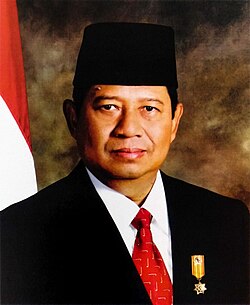
Yudhoyono assumed office on October 20, 2004, succeeding Megawati Sukarnoputri. He served two terms, with Jusuf Kalla as Vice President during his first term (2004–2009) and Boediono during his second (2009–2014).
Foreign Policy and Peace Initiatives
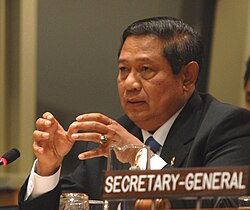
On the international stage, Yudhoyono focused on restoring Indonesia's image and strengthening diplomatic ties. He engaged extensively with the United Nations and global leaders to promote stability.
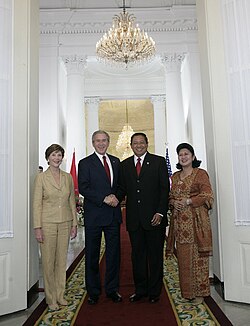
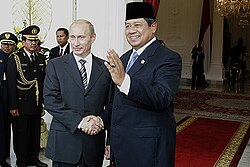
One of his most significant domestic achievements was the Aceh Peace Agreement, which ended decades of conflict in the Aceh province. He also worked to ensure political stability during the volatile Reformation era, acting as a role model for law enforcement and democratic governance.
Economic Performance and Social Welfare
Yudhoyono's presidency saw consistent economic growth, peaking at 6.3% in 2007. His administration focused on social protection and education, including the establishment of BPJS Kesehatan (the national health insurance agency).

| Year | GDP Growth (%) |
|---|---|
| 2005 | 5.6% |
| 2006 | 5.5% |
| 2007 | 6.3% |
| 2008 | 6.0% |
| 2009 | 4.6% |
| 2010 | 6.2% |
| 2011 | 6.2% |
| 2012 | 6.0% |
| 2013 | 5.6% |
| 2014 | 5.2% |
Post-Presidency and Personal Life
After completing his second term in October 2014, Yudhoyono handed over power to his successor, Joko Widodo.
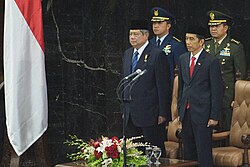
Beyond politics, Yudhoyono is an accomplished artist and musician, known for his paintings and pop music albums. He remains active in public life through the Yudhoyono Institute and social media, where he shares views and inspiration.
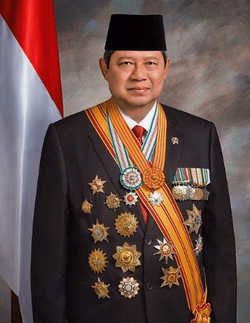
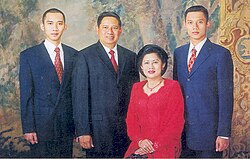
He was married to Kristiani Herrawati, with whom he had two sons, Agus Harimurti Yudhoyono and Edhie Baskoro Yudhoyono.
Frequently Asked Questions
Who succeeded Susilo Bambang Yudhoyono as President?
Susilo Bambang Yudhoyono was succeeded by Joko Widodo on October 20, 2014.
What was SBY's role before becoming President?
Before his presidency, he served as the Coordinating Minister for Political, Social, and Security Affairs, the Minister of Mining and Energy, and held high-ranking positions in the Indonesian Army.
What is the significance of the Aceh Peace Agreement?
The Aceh Peace Agreement was a landmark achievement of Yudhoyono's administration that brought an end to the long-standing insurgency in the Aceh province.
Which political party did SBY lead?
SBY founded and served as the Chairman of the Democratic Party (Partai Demokrat).
What are SBY's academic qualifications?
He holds a Master's degree from Webster University and a PhD from Bogor Agricultural University.