Sunshine Duration: Measuring the World's Sunniest and Cloudiest Places
Sunshine duration, often referred to as sunshine hours, is a critical climatological indicator that measures the amount of time the Sun shines on a specific location over a given period, such as a day or a year. While it is frequently used to describe the general "sunniness" of a region, it is distinct from insolation, which measures the total solar energy delivered to the Earth's surface.
Climatologists use sunshine duration to assess cloudiness and characterize local climates. Beyond scientific data, these measurements are vital for the tourism industry and health resorts, as strong solar light is known to have a positive psychological effect on human well-being.
Key Facts
- Definition: Bright sunshine is officially defined as periods where direct solar irradiance exceeds 120 W/m² (watts per square meter).
- Measurement: The Campbell-Stokes recorder is a traditional tool that uses a glass lens to burn a trace on a tape.
- Global Peaks: Subtropical latitudes (25° to 35° N/S) generally experience the highest sunshine duration.
- Extreme Highs: Yuma, Arizona, and parts of the Sahara Desert can exceed 4,000 sunshine hours annually.
- Extreme Lows: Some polar ocean regions and isolated basins, such as Bellingshausen Station, record fewer than 600 annual sunshine hours.
Daytime Duration and Astronomical Effects
To understand sunshine duration, one must first distinguish it from daytime duration—the total time the Sun is above the horizon. In a standard year of 8,760 hours, a simple 50% split would suggest 4,380 hours of daylight. However, physical phenomena alter this reality.
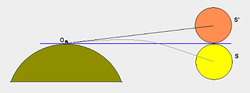
One such phenomenon is atmospheric refraction, which bends sunlight and allows the Sun to remain visible even after it has physically dipped below the horizon. This effect is most pronounced in polar regions. Consequently, the Arctic Circle sees the longest total annual daytime at 4,647 hours, while the North Pole receives 4,575 hours. Due to the elliptical nature of Earth's orbit, the Southern Hemisphere is slightly asymmetrical; the Antarctic Circle receives 4,530 hours, which is five days less than its northern counterpart. The Equator averages 4,422 hours of daytime per year.
Defining and Measuring "Bright" Sunshine
Not all daylight is equal. Climatologists distinguish between "visible" sunshine—which occurs during the dim light of sunrise and sunset—and "bright" sunshine. Bright sunshine occurs only when the light is strong enough to trigger a standardized sensor.
Measurement Tools
- Campbell-Stokes Recorders: These devices use a spherical glass lens to focus solar rays onto a specially designed tape. When the intensity hits a specific threshold, the tape burns; the length of the burn trace indicates the number of bright hours.
- Jordan Sunshine Recorders: An alternative mechanical recording method.
- Electronic Recorders: Modern instruments that offer more stable sensitivity than traditional paper tapes.
To ensure global consistency, the World Meteorological Organization (WMO) introduced the Interim Reference Sunshine Recorder (IRSR) in 1962. By 2003, the WMO standardized the definition of sunshine duration as the period when direct solar irradiance exceeds 120 W/m².
Geographic Distribution of Sunshine
The distribution of sunshine is largely driven by atmospheric pressure systems. The highest values are typically found in subtropical latitudes (25° to 35° north and south). These areas sit on the eastern sides of subtropical high pressure systems, where descending air from the upper-level tropopause creates stable conditions with minimal moisture and cloud cover.
The Sunniest Regions
Desert regions like North Africa, the Southwestern United States, Western Australia, and the southern Middle East are prime examples of high-sunshine climates. The central and eastern Sahara (including Egypt, Sudan, Libya, Chad, and Niger) and the Southwestern US (Arizona, California, Nevada) are the most prominent. Yuma, Arizona, is often cited as the sunniest city, with over 4,000 annual hours (roughly 91% of possible daylight). Similarly, the Tibesti Mountains and parts of the Arabian Peninsula report extremely high values, with the latter seeing 3,600–3,800 hours.
The Cloudiest Regions
Conversely, latitudes above 50° N/S are often dominated by stormy westerlies, leading to unstable, rainy, and cloudy weather. Temperate oceanic climates—such as those in northwestern Europe, the northwestern coast of Canada, and New Zealand's South Island—record very low sunshine durations. The lowest values are found over polar oceans and in specific basins where mountains trap cool air, creating persistent fog, such as the Sichuan and Taipei Basins.
| Location Type | Example Location | Approx. Annual Sunshine Hours | Primary Cause |
|---|---|---|---|
| Extreme Sunny | Yuma, Arizona / Sahara | > 4,000 | Subtropical High Pressure |
| Moderate Sunny | Arabian Peninsula | 3,600 – 3,800 | Arid Desert Climate |
| Cloudy Basin | Sichuan/Taipei Basins | ~ 1,000 | Mountain-trapped fog |
| Extreme Cloudy | Bellingshausen Station | 591 | Polar Oceanic Climate |
Frequently Asked Questions
What is the difference between sunshine duration and insolation?
Sunshine duration measures the time (in hours) that the Sun is bright enough to be recorded, whereas insolation measures the total amount of solar energy delivered to a surface over a specific period.
Why do polar regions have longer total daytime than the Equator?
This is primarily due to atmospheric refraction, which allows the Sun to remain visible even when it is physically below the horizon. This effect is most significant in polar areas, where the Sun spends more time near the horizon.
How does a Campbell-Stokes recorder work?
It uses a spherical glass lens to focus sunlight into a concentrated beam. When the sunlight exceeds a specific intensity threshold, it burns a mark into a calibrated paper tape. The total length of these burns is then measured to determine the sunshine hours.
Which city is considered the sunniest in the world?
Yuma, Arizona, is frequently ranked as the sunniest city, recording over 4,000 hours of bright sunshine annually. However, some climatological data suggests that certain uninhabited areas in North Africa may be even sunnier.
Why are subtropical latitudes the sunniest?
These regions are influenced by subtropical high pressure systems. The descending air in these systems inhibits the formation of clouds and precipitation, leading to clear skies and high sunshine duration.