Sun Microsystems Software Legacy: From Solaris to Java
While Sun Microsystems was initially recognized as a hardware powerhouse, its influence on the software landscape was profound and immediate. Founded in 1982, the company was steered by visionaries like co-founder Bill Joy, a pivotal figure in the development of the vi editor, the C shell, and the foundational protocols of TCP/IP and the BSD Unix OS. Sun's trajectory evolved from providing the software necessary to run its workstations to creating some of the most ubiquitous programming languages and database systems in existence.
Key Facts
- Open Source Leadership: A 2006 UNU-MERIT report identified Sun as the world's largest corporate contributor to open source, exceeding the next five largest commercial contributors combined.
- Java Innovation: Developed by James Gosling, Java introduced the "Write once, run anywhere" (WORA) philosophy.
- OS Dominance: Sun is best known for Solaris, a Unix-based system praised for its stability and consistent design.
- Strategic Acquisitions: Key software acquisitions included MySQL (for $1 billion), VirtualBox, and StarOffice.
- Industry Impact: Sun played a critical role in developing UNIX System V Release 4 (SVR4) in collaboration with AT&T.
The Evolution of Solaris and Unix Systems
Sun's reputation for system stability was built on its Unix offerings. The company's first workstations utilized UniSoft V7 Unix, followed by SunOS in 1982, a customized 4.2BSD Unix that featured suntools, an early graphical user interface (GUI) window system.
In the late 1980s, Sun partnered with AT&T to develop UNIX System V Release 4 (SVR4). This collaboration served as the bedrock for Solaris 2.x, the successor to SunOS 4.1.x. As the "Unix wars" of the 1990s subsided, Sun continued to iterate, releasing the 64-bit Solaris 7 in 1997 to support UltraSPARC CPUs based on the SPARC V9 architecture, followed by Solaris 8 and 9.
By 2002, facing stiff competition from Linux-based systems, Sun integrated Linux into its strategy, supporting Red Hat Enterprise Linux and SUSE Linux Enterprise Server on x64 systems. In 2005, the company released Solaris 10, which introduced novel industry features and eventually integrated the security capabilities of Trusted Solaris through "Trusted Extensions."
Sun later embraced the open-source community by releasing the Solaris source code under the Common Development and Distribution License (CDDL) via the OpenSolaris project. Following Oracle's acquisition of Sun, this effort continued through the illumos community, though Oracle eventually returned Solaris to a proprietary licensing model with Oracle Solaris 11.
The Java Platform: A Global Standard
Created by James Gosling in the early 1990s, the Java platform was designed to be hardware- and operating system-independent. This capability was summarized by the slogan "Write once, run anywhere" (WORA).
The platform is comprised of three core elements: the Java programming language, the Java Virtual Machine (JVM)—which executes compiled bytecode—and various Application Programming Interfaces (APIs). To manage its evolution, Sun established the Java Community Process (JCP).
Java evolved into three primary editions to serve different markets:
- Java SE (Standard Edition): Provides basic infrastructure and GUI functionality.
- Java EE (Enterprise Edition): Designed for large-scale enterprise application servers.
- Java ME (Micro Edition): Tailored for resource-constrained devices like mobile phones.
In 2006, Sun further committed to the open-source movement by licensing its Java implementation under the GNU General Public License.
Enterprise Software and Strategic Acquisitions
Sun expanded its portfolio through aggressive acquisitions and internal development to provide a full stack of enterprise solutions.
Office Productivity and Databases
In 1999, Sun acquired Star Division, bringing StarOffice into its fold. This was later released as the open-source OpenOffice.org, which supported the OpenDocument format and served as the ancestor to modern suites like LibreOffice and Apache OpenOffice.
In 2008, Sun acquired MySQL AB for $1 billion, focusing on optimizing the performance of the MySQL database. The company also contributed to the PostgreSQL project and supported Java DB.
Virtualization and Datacenter Automation
Sun developed the xVM suite for commodity hardware and acquired VirtualBox in 2008.
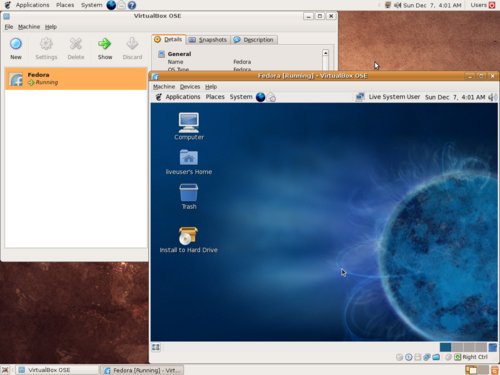
For high-end SPARC servers, Sun utilized Dynamic System Domains and Logical Domains. To manage these environments, they offered Sun Ops Center for automation and a variety of virtual desktop solutions, including Sun Ray virtual display clients, which allowed users to access hosted environments via LAN, WAN, or the Internet.
Middleware and Infrastructure
Sun's middleware, branded as the Java Enterprise System (JES), handled communication, identity management, and service-oriented architecture. Other critical infrastructure tools included Solaris Cluster for high availability, Sun Grid Engine for grid management, and SunScreen for firewall security.
Software Summary Table
| Category | Key Product/Technology | Primary Purpose | Licensing/Nature |
|---|---|---|---|
| Operating System | Solaris / OpenSolaris | Enterprise Unix Workstations/Servers | Proprietary / CDDL |
| Programming | Java | Cross-platform Application Development | Proprietary / GPL |
| Database | MySQL | Relational Database Management | Open Source / Commercial |
| Virtualization | VirtualBox / xVM | Hardware Virtualization | Acquired / Proprietary |
| Office Suite | StarOffice / OpenOffice.org | Productivity Software | Commercial / LGPL |
Frequently Asked Questions
What was the significance of the "Write once, run anywhere" slogan?
This slogan described Java's primary goal: allowing developers to write code that could run on any device or operating system without modification, achieved by compiling code into bytecode that runs on a Java Virtual Machine (JVM).
How did Sun contribute to the open-source movement?
Sun was one of the world's largest corporate contributors to open source. It released the source code for Solaris via OpenSolaris under the CDDL and licensed its Java implementation under the GNU General Public License.
What is the relationship between SunOS and Solaris?
SunOS was the early customized 4.2BSD Unix used by Sun. Solaris 2.x was later developed using SVR4 as a foundation, eventually succeeding SunOS. Later, Sun retroactively named the SunOS 4.1.x series as Solaris 1.x.
What happened to StarOffice after Sun acquired it?
Sun released a version of StarOffice as the open-source project OpenOffice.org. While StarOffice remained a paid product with more templates and commercial support, OpenOffice.org provided a free alternative that led to the creation of LibreOffice.
What was the purpose of the Java Community Process (JCP)?
The JCP was established to allow both the vendor (Sun) and the user community to collaboratively control the design and evolution of the Java platform.