Suicide Attacks: History, Tactics, and Global Impact
A suicide attack is a deliberate act of violence in which the perpetrator intentionally ends their own life as a central component of the assault. While often categorized as a form of murder-suicide, these events are frequently linked to broader contexts of war or terrorism. When carried out by individuals labeled as terrorists, the act is specifically termed suicide terrorism.
These attacks are not governed by a single set of international laws, though they may violate prohibitions against perfidy (deception in warfare) or the targeting of non-combatants. Historically, suicide attacks have spanned a vast ideological spectrum, from the far-right military campaigns of Imperial Japan and Nazi Germany to far-left insurgencies such as those led by the PKK and JRA.
Key Facts
![Plaque marking the location of the assassination of Benazir Bhutto, written in Urdu. Translation: Place of Martyrdom, Ms. Benazir Bhutto martyred. Benazir Bhutto was killed by a suicide terrorist in 2007.[b]](/images/70/4a/704aaf4f7d7ab6b11154b1606dbe6f3295feb1d830f9f3f35596428550e82c72.jpg)
- Definition: A deliberate attack where the perpetrator's death is an intentional part of the operation.
- Ideological Range: Used by diverse groups including far-right, far-left, and religious extremists.
- Historical Precedents: Includes the Japanese Kamikaze of WWII and the Sicarii of the first century AD.
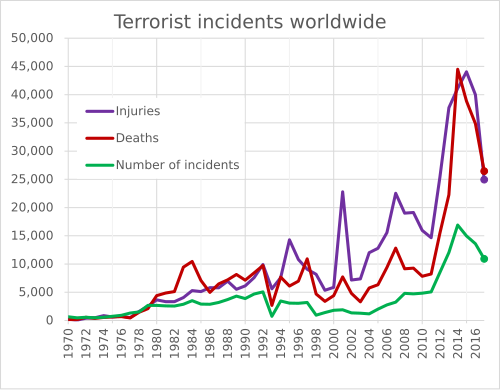
- Modern Trends: A massive surge in frequency and lethality occurred after the year 2000.
- Primary Groups: Major perpetrators in recent decades include the Islamic State, Al-Qaeda, and the Taliban.
Historical Evolution of Suicide Attacks
![Illustration of Samson by Gustave Doré.[d]](/images/f9/24/f9248abe3a8ad2a581ee8466ca2c67d4e3ddcc4831dd006d994db01ed9fa3dc9.jpg)
Early Precedents and Ancient History
The practice of self-sacrifice in combat is not a modern phenomenon. Early examples include the Sicarii in the first century AD and the Order of Assassins (1090–1275). Other historical instances include the Moro juramentado and the resistance efforts during the Aceh War (1873–1904).
World War II and the Kamikaze
One of the most documented military uses of suicide attacks was the Japanese Kamikaze (Special Attack Units) between 1944 and 1945, where pilots deliberately crashed aircraft into Allied ships.
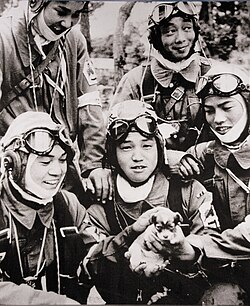
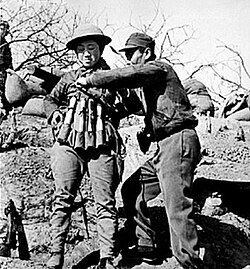
During the same era, other nations employed similar tactics. Germany utilized suicide-based destruction, such as the attack on the Auschwitz crematorium IV in 1944, and China deployed suicide squads to target Japanese tanks during the Battle of Taierzhuang.
The Cold War and the Rise of Modern Bombing
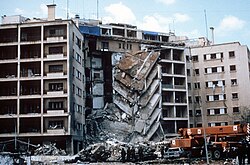
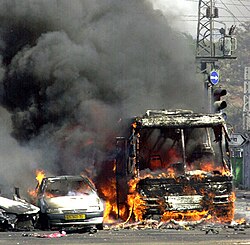
Following WWII, suicide attacks decreased but resurfaced in various regional conflicts. The 1970s and 80s saw a shift toward homicide bombing—the use of explosives to kill others and the attacker simultaneously. Groups like Hezbollah and the Liberation Tigers of Tamil Eelam (LTTE) began integrating these tactics into their insurgencies.
The 21st Century and the War on Terror

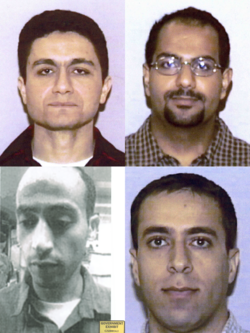
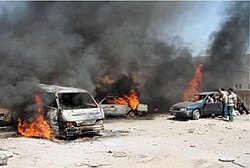
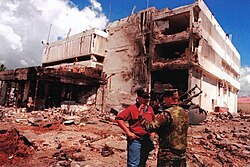
The turn of the millennium marked a dramatic increase in the scale and frequency of suicide attacks. The September 11 attacks in 2001, carried out by Al-Qaeda, redefined the global perception of suicide terrorism by using aircraft as weapons.
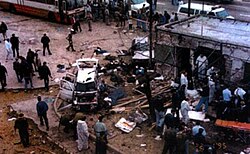
In the following decades, the rise of the Islamic State (ISIS) and the Taliban in Afghanistan and Pakistan led to a surge in explosive belts and car bombings. These attacks often targeted both military personnel and civilians in an effort to achieve strategic political goals.
Demographics and Motivations
While often associated with young men, attacker demographics have expanded to include women and, in some tragic instances, children. Motivations vary from nationalist resistance and religious interpretations of martyrdom to personal disputes or extreme political coercion.

Statistical Overview of Suicide Attacks

Data from 1982 to mid-2015 highlights the disproportionate impact of these attacks in specific regions and by specific organizations.
| Country/Group | Number of Attacks | Estimated Deaths |
|---|---|---|
| Iraq | 1,938 | 20,084 |
| Pakistan | 490 | 6,287 |
| Afghanistan | 1,059 | 4,748 |
| USA | 4 | 2,997 |
| Islamic State (Group) | 424 | 4,949 |
| Al-Qaeda Central (Group) | 20 | 3,391 |
| Taliban Afghanistan (Group) | 665 | 2,925 |
Frequently Asked Questions
![The number of suicide attacks grew enormously after 2000. Number of suicide attacks and deaths from attacks 1982–2014.[328]](/images/54/45/5445686e201aadcbb397d4212eee7e76428c2966105f0a84ef921cde2337c5f5.jpg)
What is the difference between a suicide attack and a murder-suicide?
While both involve the death of the perpetrator and others, a suicide attack is typically a strategic act associated with political, military, or terrorist goals, whereas a murder-suicide is often the result of personal or domestic disputes.
Are suicide attacks regulated by international law?
Military suicide is not directly regulated by a specific international law, but such attacks often violate laws of war regarding perfidy (using deceptive means to kill) and the prohibition against targeting civilians.
Which groups have most frequently used suicide tactics?
In recent history, the Islamic State, Al-Qaeda, and the Taliban have been among the most prolific. Historically, the Japanese military in WWII and the LTTE in Sri Lanka also made extensive use of these tactics.
What are the most common weapons used in these attacks?
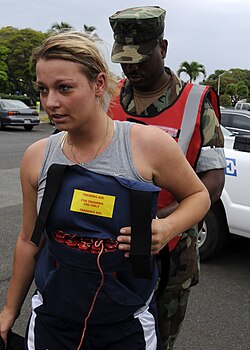
The most common devices include explosive belts (worn by the attacker), car bombs (vehicle-borne improvised explosive devices), and, in rare high-profile cases, aircraft.
What is the concept of "martyrdom" in this context?
Some groups use religious terminology to frame the attacker as a martyr (shaheed), suggesting that the act of self-sacrifice for a cause provides spiritual rewards, though this is often contested by various religious scholars.