Steaua București: The Legacy and Evolution of Romania's Most Successful Club
Steaua București, officially known as Clubul Sportiv al Armatei Steaua București, stands as a titan of Romanian football. From its origins as a military sports club to its ascent as a European powerhouse, the team has a history defined by record-breaking domestic dominance and historic international triumphs. Known affectionately as Roș-albaștrii (The Red and Blues), the club continues to navigate a complex modern era while striving to return to the pinnacle of the Romanian game.
Key Facts
- Founded: June 7, 1947, by the Royal Army.
- Major International Honors: European Cup (1986) and European Super Cup (1987).
- Domestic Record: 20 Liga I titles and 20 Cupa României trophies.
- World Record: A historic 104-match undefeated streak in the championship (1986–1989).
- Current Status: Competing in Liga II under the ownership of the Ministry of National Defence.
The Golden Era and European Glory
While the club spent its early decades establishing itself—earning the nickname "cup specialists" for winning nine national cups between 1947 and 1984—it was the mid-1980s that catapulted Steaua to global fame. Under the guidance of coaches Emerich Jenei and Anghel Iordănescu, the team embarked on an unprecedented run of success.
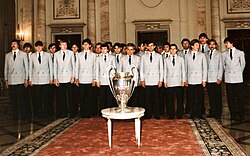
The crowning achievement came in 1986 when Steaua became the first Eastern European team to win the European Cup. In a legendary final against Barcelona, goalkeeper Helmut Duckadam saved all four Spanish penalties to secure a 2–0 victory after a goalless draw. This victory was followed by a European Super Cup win in 1987 against Dynamo Kyiv.
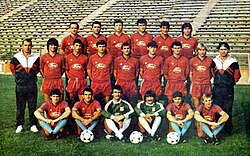
The dominance of the 1980s was not limited to Europe. Between June 1986 and September 1989, Steaua set a then-world record and a still-standing European record by remaining undefeated for 104 consecutive league matches.
Identity and Evolution
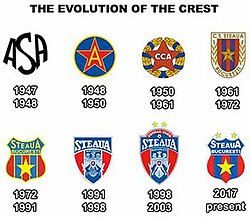
The club's identity is deeply tied to its military roots. Originally founded as Asociația Sportivă a Armatei (ASA) București, it underwent several name changes before adopting the name Steaua (The Star) in 1961, reflecting the red star symbol common to East European Army clubs.
This identity extends to the club's honors and traditions. In 2021, the club retired shirt number 7 as a tribute to the legendary Marius Lăcătuș, who played for the team across two stints between 1983 and 2000.

The Legal Dispute: Steaua vs. FCSB
In recent years, the club has been embroiled in a high-profile legal battle over its brand and history. Following a separation in 1998, a dispute arose between the parent club, CSA Steaua, and the entity backed by Gigi Becali. In December 2014, legal action resulted in the Becali-backed club losing the right to use the "Steaua" trademark, leading to its renaming as FCSB.
The conflict centers on the ownership of the club's historical honors (palmares). While UEFA has attributed the original history to FCSB, Romanian court orders in 2019 and 2021 have favored CSA Steaua, asserting that the brand and titles were never legally relinquished.
Modern Era and the Road Back
In 2017, the parent club reactivated its football section, starting from the bottom of the pyramid in Liga IV. This "new start" saw an incredible surge of support; a 2018 match against AS Academia Rapid București at the Arena Națională attracted 36,277 spectators, setting a national record for lower-league football.
Today, the club plays at the newly inaugurated Steaua Stadium (opened July 2021), which has a capacity of 31,254. The team is currently competing in Liga II, managed by head coach Daniel Oprița.
Club Overview and Honors
| Category | Details |
|---|---|
| Full Name | Clubul Sportiv al Armatei Steaua București |
| Owner | Ministry of National Defence |
| Stadium | Steaua (Capacity: 31,254) |
| Major Titles | 20 Liga I, 20 Cupa României, 1 European Cup |
| Primary Rival | Dinamo București (The Eternal Derby) |
The Eternal Derby
The rivalry between Steaua and Dinamo București, known as Eternul derby, is the most significant in Romanian football. This clash represents more than just sport; it is a historical confrontation between the former clubs of the Romanian Army (Steaua) and the Ministry of Internal Affairs (Dinamo). Together, these two clubs have dominated the domestic scene, winning a combined 39 league titles.
Frequently Asked Questions
What is the difference between CSA Steaua and FCSB?
CSA Steaua is the original military sports club and current owner of the Steaua brand. FCSB is the entity that previously used the Steaua name and currently competes in Liga I, following a legal dispute over the trademark and historical honors.
Who is Helmut Duckadam?
Helmut Duckadam is the legendary goalkeeper who became a national hero by saving all four penalties in the 1986 European Cup final, securing Steaua's victory over Barcelona.
What is the significance of the 104-match streak?
Between 1986 and 1989, Steaua went 104 matches without a defeat in the Romanian championship, setting a world record at the time and a European record that still stands today.
Where does Steaua București play its home matches?
The club plays at the Steaua Stadium in Bucharest, which was officially inaugurated in July 2021 and has a capacity of 31,254.
Which league does the club currently compete in?
As of the 2025–26 period, the club competes in Liga II, the second tier of the Romanian football league system.