Steatoda nobilis: The Global Spread of the Noble False Widow
The Steatoda nobilis, commonly known as the noble false widow, is a spider species that has gained significant attention due to its status as one of the world's most successful invasive arachnids. Originally native to the Canary Islands and Madeira, this spider has demonstrated a remarkable ability to colonize new territories, spreading across Europe, North Africa, the Americas, and more recently, into New Zealand.
While often sensationalized in media reports, understanding the biology, habitat, and actual risks associated with this species is essential for accurate identification and ecological awareness.
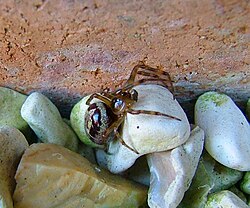
Key Facts
- Common Name: Noble false widow
- Scientific Name: Steatoda nobilis
- Status: Considered a highly invasive species
- Native Range: Madeira and the Canary Islands
- Lifespan: Up to five years
- Diet: Both vertebrates and invertebrates
Physical Description and Identification
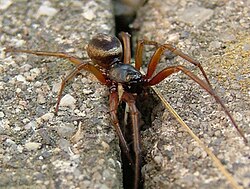
The noble false widow is characterized by its distinctive appearance. It possesses a brown, bulbous abdomen often marked with cream-colored patterns that can resemble the shape of a skull. Its legs are typically a reddish-orange hue. Members of the Steatoda genus can be distinguished from others by their relatively large size and specific coloration.
Size and Sexual Dimorphism
There is notable variation in size and markings between individuals, even among siblings from the same egg sac. Females are generally larger, ranging from approximately 9.5 mm to 14 mm, while males are smaller, typically measuring between 7 mm and 11 mm. Males can be identified by the specific conformation of their palps (reproductive organs) and their ventral abdominal markings, whereas females are distinguished by their epigyne (external female reproductive structure).
Global Distribution and Invasive Patterns
The spread of S. nobilis has followed a pattern often seen in invasive species, characterized by a long "lag phase" followed by rapid, accelerated expansion. Between 1985 and 2010, large-scale reporting was minimal; however, the species has since established itself globally.
Key milestones in its expansion include:
- Europe: Reported in England (expanding northwards), Germany (first recorded in Cologne in 2011), and Ireland.
- North America: Established in the United States, with records in California as early as 2011.
- South America: Recorded in Chile (2016), Colombia, and Ecuador (where they have been found at altitudes up to 2800 meters).
- Oceania: Present in New Zealand since at least 2023.
The species thrives particularly well in urban environments and seaside cities with temperate climates.
Diet and Hunting Behavior
Steatoda nobilis is an opportunistic predator capable of consuming both invertebrates and vertebrates. In Ireland, they have been observed eating woodlice, and in southern England, an adult female was recorded consuming a pygmy shrew—a prey item ten times its own size. Interestingly, they appear to derive all their liquid requirements from their prey, allowing them to thrive in extremely dry conditions without direct access to water.
Reproduction and Life Cycle
The reproductive cycle of the noble false widow is highly efficient and temperature-dependent. Females create irregular, silky brooding chambers that lack an entrance to protect their offspring. Inside these chambers, they produce spherical or pear-shaped egg sacs, typically 5–12 mm in diameter.
An average egg sac contains approximately 94 eggs, though counts can range from 34 to 208. Spiderlings emerge from their chorion (egg shell) 18 days after production, remaining in the sac until their first moult, at which point they emerge to hunt small prey. A single female can produce multiple egg sacs in a single season; one study noted a female producing four sacs within just four months.
Venom and Human Health Concerns
The venom of S. nobilis is complex, consisting of approximately 49% toxins, 15% enzymes, and 36% proteins. A significant portion of the venom contains latrotoxin-like components, specifically alpha-latrotoxin and delta-latroinsectotoxin. These toxins work by creating pores in neurons, causing an influx of calcium ions (Ca2+), which triggers a massive release of neurotransmitters and can lead to neuromuscular paralysis.
Symptoms of a Bite
Bites often present symptoms similar to a bee or wasp sting. However, some individuals experience steatodism, a set of symptoms including:
While media reports often suggest extreme danger, experts note that such events are relatively rare. However, complications can arise. A 2020 study by NUI Galway found that these spiders can act as vectors for pathogenic, sometimes antibiotic-resistant, bacteria (such as Pseudomonas putida) carried on their bodies and chelicerae (mouthparts). This can lead to bacterial ulceration, which, if untreated, may result in serious infections.
Summary Table of Steatoda nobilis
| Feature | Details |
|---|---|
| Scientific Classification | Araneae: Theridiidae |
| Average Female Size | 9.5 mm – 14 mm |
| Average Male Size | 7 mm – 11 mm |
| Primary Venom Components | Alpha-latrotoxin, delta-latroinsectotoxin, peptidases |
| Typical Lifespan | Up to 5 years |
| Conservation Status | Data Deficient (IUCN) |
Frequently Asked Questions
Is the noble false widow bite dangerous to humans?
Symptoms are typically similar to a wasp or bee sting, but can include intense pain and swelling (steatodism). While severe reactions are rare, there is a risk of secondary bacterial infections from bacteria carried by the spider.
How can I tell a noble false widow apart from other spiders?
Look for a bulbous brown abdomen with cream-colored markings (often skull-shaped) and reddish-orange legs. They are generally larger than many other spiders in the same genus.
Where is this spider most commonly found?
They are highly invasive and found in many parts of the world, including Europe, the United States, Chile, Colombia, and New Zealand, particularly in urban and temperate seaside areas.
What do noble false widow spiders eat?
They are opportunistic predators that eat both invertebrates (like woodlice) and vertebrates (such as small mammals like pygmy shrews or even bats).
How long do these spiders live?
They are relatively long-lived for spiders, with a lifespan that can reach up to five years.