Steamboat Safety and Maritime Disasters of the Early 20th Century
During the era of steam-powered navigation, the promise of efficient travel was often shadowed by significant risks. While some later steel-hulled vessels maintained flawless safety records, many others operated under conditions that endangered both passengers and crew. From the inherent volatility of wooden superstructures to the perils of navigating without modern aids, the history of steamboating is a sobering study in the evolution of maritime safety.
Key Facts
- Fire Hazards: Wooden steamboats were essentially "piles of kindling" due to resinous wood, oil-soaked paint, and the presence of massive furnaces.
- Collision Risks: The absence of radar and reliance on unlicensed crew members often led to sudden, catastrophic collisions.
- Regulatory Failures: Despite laws enforced by the U.S. Steamboat Inspection Service, many vessels operated with missing or broken safety equipment.
- Major Tragedies: The General Slocum fire (1904) killed over 1,000 people, highlighting the extreme danger of overcrowded wooden vessels.
The Perils of Crew Safety
Safety for the crew was frequently overlooked. Unlike modern riverine vessels, crew members in the early 20th century did not wear life preservers. This lack of basic protection led to numerous drowning incidents. For instance, the engineer of the Mizpah drowned after slipping and falling overboard. Similarly, in December 1912, Captain O.A. Anderson, a Port Townsend pilot, fell from a ladder into rough seas while attempting to board the steamship Setos from a pilot launch.
The Constant Threat of Fire
Fire represented the greatest danger to wooden boats. The construction of these vessels—featuring thin floors, light framing, and soft, resinous woods—was further compromised by exposure to sun, wind, and the application of oil and turpentine-based paints. This created a highly flammable environment.
The danger was magnified by the placement of massive furnaces and enormous smokestacks designed for maximum draft, all situated within this flammable superstructure. Before the advent of electric lighting, the use of kerosene and oil lanterns provided further ignition sources. This volatility led to the destruction of vessels like the Mizpah and Urania.
The most catastrophic example occurred on June 15, 1904, when the General Slocum caught fire in New York harbor, resulting in more than 1,000 deaths. Historians note that similar wooden vessels on the Columbia River and Puget Sound, such as the Alaskan, Olympian, and the Yosemite (which often carried over 1,000 passengers), were susceptible to similar death tolls during crowded excursions.
Collisions and Navigational Failures
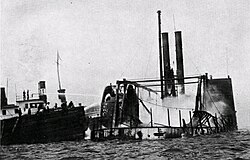
Collisions were often more lethal than fires because they occurred suddenly, leaving no time for evacuation. Without radar or modern navigation aids, ships frequently collided during the night or in heavy fog. The severity of the impact often depended on the materials involved; steel hulls could easily crush wooden ones.
On November 18, 1906, the 130-ton passenger steamer Dix collided with the larger steam schooner Jeanie in Elliott Bay. The accident was attributed to an error by the Dix's unlicensed mate, who was steering while the captain collected fares. Because the Dix was top-heavy and lightly built, it sank rapidly in 103 fathoms, killing 45 people. In a similar but less fatal event on October 28, 1911, the steel-hulled Iroquois rammed the wooden sternwheeler Multnomah in Elliott Bay, sinking it in 240 feet of water without any loss of life.
The Loss of the Clallam and Regulatory Crackdowns
By 1904, the U.S. Steamboat Inspection Service had established laws requiring specific numbers of lifeboats and fire axes. However, the tragedy of the Clallam on January 8, 1904, revealed the gap between law and practice. While traveling from Seattle to Victoria, the Clallam encountered a storm and began taking on water. When the pumps failed—actually bringing water into the ship—the boiler fire was extinguished, leaving the vessel without power.
Although Captain George Roberts launched three lifeboats for women and children, no officers accompanied them to navigate the rough seas. All three boats were lost. In total, 54 people died. The disaster led to the suspension of Captain Roberts' license and the revocation of the chief engineer's license, with investigators citing mechanical defects and insufficient signaling rockets.
Enforcing Safety Standards
The Clallam disaster sparked a rigorous crackdown on safety violations. Surprise inspections in Port Townsend revealed systemic negligence. For example, the steamer Garland was found to have:
- No relieving tackle on the tiller for emergency steering.
- No ladders or stairs leading to the hurricane deck where lifeboats and fire buckets were stored.
- Insufficient fire buckets, many of which were empty.
- Fewer fire axes than required by its certificate.
- Lifeboats and launching gear in poor condition.
Similar deficiencies were found on the Prosper, Alice Gertude, and Whatcom. By mid-February 1904, 16 more vessels, including the George E. Starr, Rosalie, and Athlon, were fined for lacking adequate fog horns, missing life preserver instructions, and other equipment failures.
Summary of Maritime Safety Issues
| Hazard Category | Primary Causes | Typical Consequences |
|---|---|---|
| Fire | Resinous wood, oil-based paints, kerosene lamps, large furnaces | Rapid vessel destruction; mass casualties (e.g., General Slocum) |
| Collision | Lack of radar, night/fog navigation, unlicensed crew errors | Sudden sinking; high fatality rates for wooden hulls |
| Mechanical | Pump failure, boiler extinction, steering gear defects | Loss of power; inability to evacuate (e.g., Clallam) |
| Regulatory | Lax inspections, missing safety gear, inadequate crew training | Increased risk during emergencies; failure of life-saving equipment |
Frequently Asked Questions
Why were wooden steamboats so prone to fire?
Wooden steamboats were built with light framing and resinous woods that dried out in the sun and wind. When combined with oil-based paints and turpentine, the superstructure became highly flammable, essentially acting as a pile of kindling placed directly above a massive furnace.
What caused the high death toll on the General Slocum?
The General Slocum disaster was caused by a fire on a vessel that was packed with a large crowd for an excursion, combined with the inherent flammability of the wooden ship and lax safety standards of the era.
How did the loss of the Clallam change safety enforcement?
The Clallam disaster led to a strict crackdown by the U.S. Steamboat Inspection Service. Inspectors began conducting surprise inspections and issuing fines for missing safety equipment, such as fire axes and functioning lifeboats, and stopped remitting fines for owners who had previously avoided penalties.
Why were collisions often more deadly than fires?
While fires could sometimes be fought long enough for a ship to reach a beach for evacuation, collisions happened suddenly. This was especially true when a large steel-hulled ship struck a smaller, lightly built wooden vessel, causing it to sink almost instantly.
What were some common safety violations found during inspections?
Common violations included missing relieving tackle for steering, a lack of access to the hurricane deck, insufficient or empty fire buckets, and a failure to provide passengers with written instructions on where to find life preservers.