Stealthing Laws and Court Verdicts: A Global Legal Overview
In recent years, legal systems worldwide have begun to address the practice of stealthing—the non-consensual removal or tampering of a condom during sexual intercourse. At its core, this issue centers on the nature of consent: whether agreeing to sexual activity with a condom constitutes consent to activity without one. As courts and legislatures grapple with this question, a patchwork of criminal and civil laws has emerged across different continents.
While some jurisdictions view stealthing as a violation of the terms of consent that elevates the act to sexual assault or rape, others treat it as a civil offense or find it falls outside existing criminal definitions. The following analysis details how various countries and states are handling these cases.
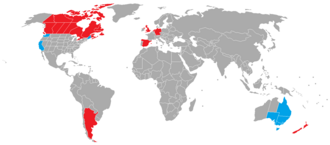
Key Facts
- Legal Interpretation: Many courts now argue that stealthing changes the terms of consent, rendering the act non-consensual.
- Criminal vs. Civil: Some regions, like several Australian states, have criminalized the act, while some US states treat it as a civil offense allowing for lawsuits.
- Severe Penalties: In countries like New Zealand and Spain, stealthing has resulted in convictions for rape and prison sentences.
- Diverse Methods: Legal cases cover not only the removal of condoms but also the intentional perforation (poking holes) of the device.
Legal Status by Country and Region
Australia
Australia has been a leader in codifying stealthing as a crime. The Law Society of New South Wales has highlighted that the practice alters the terms of consent, effectively making it sexual assault.
- Australian Capital Territory: In October 2021, the territory amended its Crimes Act to state that consent is negated if it was obtained through intentional misrepresentation regarding condom use.
- Victoria: A law outlawing non-consensual condom removal received royal assent in September 2022 and took effect in 2023.
- Tasmania and New South Wales: Both states implemented laws outlawing the practice in June 2022.
- South Australia: A ban went into effect in March 2023.
- Queensland: Passed legislation criminalizing stealthing in March 2024.
Canada
The Supreme Court of Canada has established significant precedents through case law. In the 2014 case R v. Hutchinson, the court upheld a sexual assault conviction for a man who poked holes in his condom. Eight years later, the court expanded this interpretation, ruling that failing to wear a condom despite a partner's request can also lead to a sexual assault conviction.
Europe
European nations show a wide variance in how they categorize stealthing, ranging from strict criminal penalties to limited legal recourse.
- Denmark: In July 2025, stealthing was added to the Danish Penal Code, carrying a potential prison sentence of up to two years.
- Germany: The first conviction for stealthing occurred in 2018. Notably, in 2022, a woman was convicted of sexual assault for intentionally perforating condoms to achieve pregnancy without the partner's consent.
- The Netherlands: Initially, the law only allowed for coercion convictions (as seen in a 2023 case resulting in probation and a €1000 fine) because consent for penetration was present. However, a 2024 law now allows for sexual assault convictions, with the first jail sentence issued in 2025.
- Spain: In May 2024, the Supreme Court upheld a four-year prison sentence, declaring non-consensual condom removal to be a crime of rape.
- United Kingdom: While there is no specific legislation, case law since 2017 has established that non-consensual condom removal constitutes rape.
- Switzerland: Legal outcomes have been inconsistent. While a Lausanne court convicted a man of rape in 2017, the Zürich cantonal supreme court disagreed in 2019. In 2022, the Federal Supreme Court ruled it was not punishable under Article 191 (Schändung) because the victim remained capable of defending herself, though it did not rule on whether it constitutes sexual harassment under Article 198.
The Americas
Outside of specific regions, the Americas show a mix of judicial rulings and targeted state legislation.
- Argentina: In May 2024, the Court of Appeals for Buenos Aires ruled that non-consensual condom removal is sexual assault. This follows a May 2022 conviction where a man was extradited from Italy to Argentina for the offense.
- United States: Most states do not have specific laws covering stealthing. However, three states have introduced civil remedies:
- California: A 2021 law makes stealthing a civil offense, allowing victims to sue perpetrators.
- Maine: Enacted civil remedies for victims in June 2023.
- Washington: HB 1958, effective July 1, 2024, makes it a civil offense to remove or tamper with condoms or other sexually protected devices.
New Zealand
New Zealand has taken a strict judicial approach. In April 2021, a man was sentenced to three years and nine months in prison after being convicted of rape for stealthing during an act with a sex worker in 2018.
Summary of Global Legal Approaches
| Country/Region | Legal Classification | Primary Legal Mechanism |
|---|---|---|
| Australia (Multiple States) | Criminal | Statutory Law / Crimes Act |
| Canada | Criminal | Supreme Court Case Law |
| Spain & UK | Criminal | Classified as Rape |
| Denmark | Criminal | Penal Code |
| USA (CA, ME, WA) | Civil | Civil Code / Civil Remedies |
| Switzerland | Mixed/Limited | Federal Supreme Court Rulings |
Frequently Asked Questions
What is the legal definition of stealthing?
Stealthing is the non-consensual removal, tampering, or failure to use a condom during sexual intercourse after the partner has agreed to the act on the condition that protection is used.
Is stealthing considered rape in all countries?
No. While countries like Spain, New Zealand, and the UK have seen it classified as rape through court rulings or laws, other regions treat it as sexual assault, a civil offense, or may not have a specific legal classification for it at all.
Can stealthing be a civil offense instead of a crime?
Yes. In the United States, states such as California, Maine, and Washington have passed laws that make stealthing a civil offense, meaning victims can sue for damages in civil court rather than the perpetrator facing criminal charges.
Does tampering with a condom (like poking holes) count as stealthing?
Yes. Courts in Canada and Germany have specifically ruled that intentionally rendering a condom defective through perforation constitutes a violation of consent and can lead to convictions for sexual assault.
How does stealthing affect the legal concept of consent?
Many legal systems now argue that consent is conditional. If a person consents to sex only with a condom, the removal of that condom changes the terms of the agreement, thereby negating the original consent.