State Fossils of the United States: A Geological Heritage
Across the United States, many states have chosen to honor their prehistoric past by designating an official state fossil. While these designations often occurred during a wave of interest in the 1980s, they serve as a permanent tribute to the ancient life forms that once inhabited the region. Unlike a single specimen, states typically designate a fossilized species to represent their geological legacy.
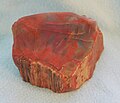
It is important to distinguish state fossils from other official emblems. A state may have a state dinosaur, state stone, state mineral, state gemstone, or state rock, and these are distinct categories. For instance, Arizona recognizes turquoise as its state stone and Sonorasaurus thompsoni as its state dinosaur, while its official state fossil is petrified wood.
Key Facts
- First Adopters: Nebraska and North Dakota were the first states to designate state fossils, both doing so in 1967.
- Commonality: Most states designate a species rather than a specific individual fossil.
- Diversity: State fossils range from massive dinosaurs and mammoths to microscopic shells and petrified plants.
- Gaps: As of March 10, 2026, six states and the District of Columbia have not officially designated a state fossil.
States Without an Official Fossil
Despite the popularity of these symbols, several jurisdictions lack an explicit state fossil for various reasons:
- Arkansas: Has no state fossil, though it recognizes Arkansaurus as its state dinosaur.
- District of Columbia: Recognizes Capitalsaurus as its state dinosaur but lacks a state fossil.
- Florida: Lacks a state fossil, although its state stone is agatised coral (which is fossilized).
- Hawaii: Due to its young geological age and igneous (volcanic) composition, fossils are rare and none have been officially declared.
- Iowa: A crinoid was proposed in 2018 but was not officially accepted.
- New Hampshire: The American mastodon (Mammut americanum) was considered in 2015.
- Texas: Has no state fossil, though its state dinosaur is Sauroposeidon proteles.
Comprehensive List of State Fossils
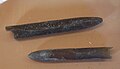
The variety of state fossils reflects the diverse environments of the US, from the ancient seas that left behind trilobites to the ice-age tundras of the mammoths.
| State | Age | Common Name | Binomial Name | Year Adopted |
|---|---|---|---|---|
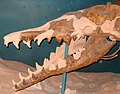
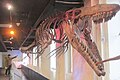
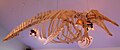
| Alabama | Eocene | Basilosaurus whale | Basilosaurus cetoides | 1984 |
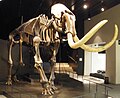
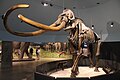
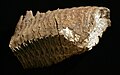
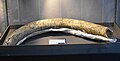
| Alaska | Pleistocene | Woolly mammoth | Mammuthus primigenius | 1986 |
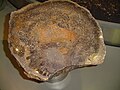
| Arizona | Triassic | Petrified wood | Araucarioxylon arizonicum | 1988 |
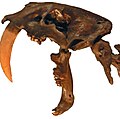
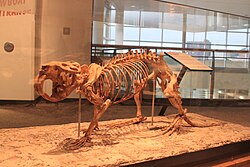
| California | Pleistocene | Saber-toothed cat | Smilodon fatalis | 1974 |
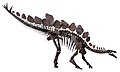
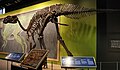
| Colorado | Jurassic | Stegosaurus | Stegosaurus armatus | 1982 |
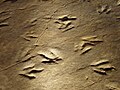
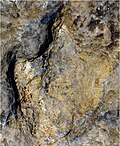
| Connecticut | Jurassic | Dinosaur tracks | Eubrontes giganteus | 1991 |
| Delaware | Cretaceous | Belemnite | Belemnitella americana | - |
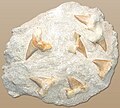
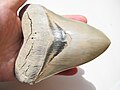
| Georgia | Cretaceous – Miocene | Shark tooth | Carcharocles megalodon | 1976 |
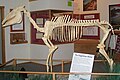
| Idaho | Pliocene | Hagerman horse | Equus simplicidens | 1988 |
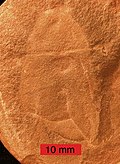
| Illinois | Pennsylvanian | Tully monster | Tullimonstrum gregarium | 1989 |
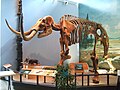
| Indiana | Holocene | American mastodon | Mammut americanum | 2022 |
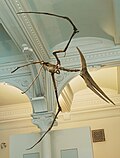
| Kansas | Cretaceous | Pteranodon (flying) / Tylosaurus (marine) | P. longiceps / T. kansasensis | 2014 |
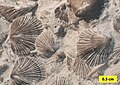
| Kentucky | Ordovician – Pennsylvanian | Brachiopod | undetermined | 1986 |
| Louisiana | Oligocene | Petrified palmwood | Palmoxylon | 1976 |
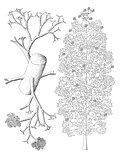
| Maine | Devonian | Pertica plant | Pertica quadrifaria | 1976 |
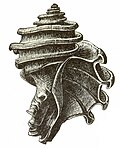
| Maryland | Miocene | Ecphora gardnerae shell | Ecphora gardnerae gardnerae | 1984 |
| Massachusetts | Jurassic | Dinosaur tracks | Eubrontes giganteus | 1980 |
| Michigan | Holocene | American mastodon | Mammut americanum | 2002 |
| Minnesota | Pleistocene | Giant beaver | Castoroides ohioensis | 2025 |
| Mississippi | Eocene | Prehistoric whale | Zygorhiza kochii | 1981 |
| Missouri | Pennsylvanian | Sea lily | Delocrinus missouriensis | 1989 |
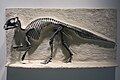
| Montana | Cretaceous | Hadrosaur | Maiasaura peeblesorum | 1985 |
| Nebraska | Pleistocene | Mammoths (Woolly, Columbian, Imperial) | Mammuthus spp. | 1967 |
| New Jersey | Cretaceous | Hadrosaur | Hadrosaurus foulkii | 1991 |
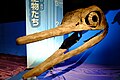
| Nevada | Triassic | Ichthyosaur | Shonisaurus popularis | 1977 |
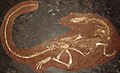
| New Mexico | Triassic | Coelophysis | Coelophysis bauri | 1981 |
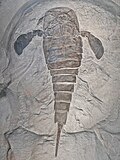
| New York | Silurian | Sea scorpion | Eurypterus remipes | 1984 |
| North Carolina | Miocene - Pliocene | Shark tooth | Otodus megalodon | 2013 |
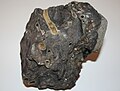
| North Dakota | Paleocene | Shipworm-bored petrified wood | Teredo petrified wood | 1967 |
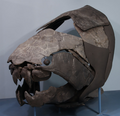
| Ohio | Ordovician / Devonian | Trilobite / Dunkleosteus | I. maximus / D. terrelli | 1985 / 2021 |
| Oklahoma | Jurassic | Saurophaganax | Saurophaganax maximus | 2000 |
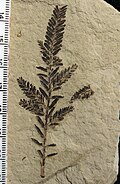
| Oregon | Eocene | Dawn redwood | Metasequoia | 2005 |
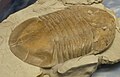
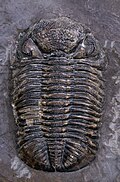
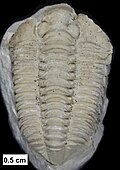
| Pennsylvania | Devonian | Trilobite | Phacops rana | 1988 |
| Rhode Island | Paleozoic | Trilobite | Not stated | 2023 |
| South Carolina | Pleistocene | Columbian mammoth | Mammuthus columbi | 2014 |
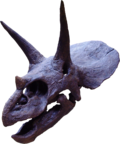
| South Dakota | Cretaceous | Triceratops | Triceratops horridus | 1988 |
| Tennessee | Cretaceous | Bivalve | Pterotrigonia thoracica | 1998 |
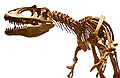
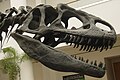
| Utah | Jurassic | Allosaurus | Allosaurus fragilis | 1988 |
| Vermont | Pleistocene | Beluga whale / Woolly mammoth | D. leucas / M. primigenius | 1993 / 2014 |
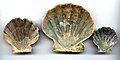
| Virginia | Cenozoic | Scallop | Chesapecten jeffersonius | 1993 |
| Washington | Pleistocene | Columbian mammoth | Mammuthus columbi | 1998 |
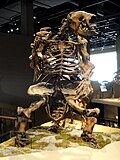
| West Virginia | Late Pleistocene | Jefferson's ground sloth | Megalonyx jeffersonii | 2008 |
| Wisconsin | Silurian | Trilobite | Calymene celebra | 1985 |
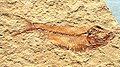
| Wyoming | Eocene | Knightia | Knightia spp. | 1987 |
Frequently Asked Questions
What is the difference between a state fossil and a state dinosaur?
A state fossil is a general designation for any fossilized species (including plants, marine life, or mammals), whereas a state dinosaur specifically designates a dinosaur species. Some states have both, while others have only one or neither.
Which states were the first to adopt a state fossil?
Nebraska and North Dakota were the pioneers in this regard, both designating their official state fossils in 1967.
Why does Hawaii not have a state fossil?
Hawaii is geologically very young and consists primarily of igneous rock (volcanic rock), which makes the preservation and discovery of fossils significantly more difficult than in other states.
Can a state have more than one state fossil?
Yes. For example, Kansas has both a state flying fossil (Pteranodon) and a state marine fossil (Tylosaurus). Similarly, Vermont has both a state terrestrial fossil and a state marine fossil.
What are some of the most common types of state fossils?
Mammoths (such as the Woolly and Columbian mammoths) and Trilobites (ancient marine arthropods) are among the most frequently appearing fossils across various states.