State Arms of the Union: A History of American Heraldry and Banknotes
The history of the United States is etched into the very symbols that represent its individual states. From the earliest days of the American Revolution, state legislatures sought to establish unique identities through coats of arms and seals. These heraldic designs served as more than just decoration; they were visual declarations of a state's character, resources, and aspirations.
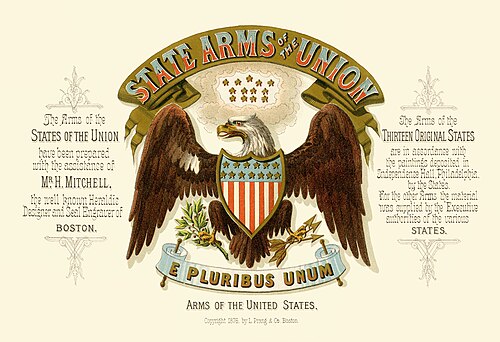
This article examines the historical records of state arms as preserved in the 1876 work State Arms of the Union and the 1882 series of National Bank Notes, highlighting the artistry and the occasional inaccuracies found in these early American symbols.
Key Facts
- Henry Mitchell, a master engraver, produced historically accurate renderings of state arms for the 1876 publication State Arms of the Union.
- Many early state coats of arms were closely modeled after their colonial counterparts.
- The National Bank Act led to the inclusion of state coats of arms on the reverse side of U.S. National Bank Notes.
- Historical designs often included geographical inaccuracies, such as depicting mountains in states with very low elevations.
- The design of the Great Seal of the United States took three different committees and several years to finalize.
The Artistry of Henry Mitchell and Louis Prang
The 1876 publication State Arms of the Union stands as a vital historical record. Published by Louis Prang—often referred to as the father of the lithographic industry—the work features illustrations by Henry Mitchell. Mitchell was a highly accomplished engraver who spent 40 years with the Bureau of Engraving and Printing (BEP).
Mitchell's expertise extended far beyond state arms. He was responsible for engraving official seals for the Secretary of the Navy and the Internal Revenue Service, as well as the seals for several states including Massachusetts, New York, and Rhode Island. His career was marked by high-level contributions, including being invited to a 1891 committee to evaluate new U.S. coin designs alongside Augustus Saint-Gaudens and Charles E. Barber.
State Arms on National Bank Notes
Under the National Bank Act, a national currency was authorized, which included unique historical vignettes and state coats of arms. On these notes, the state arm was typically located on the reverse left side, coordinated with the geographic location of the issuing bank. These arms appeared on the Original and 1875 Series notes, as well as the 1882 Brown Back Series.
| Location | Colonial Currency Era | National Bank Note Era |
|---|---|---|
| Connecticut | 1775 | 1863 |
| Maryland | 1770 | 1864 |
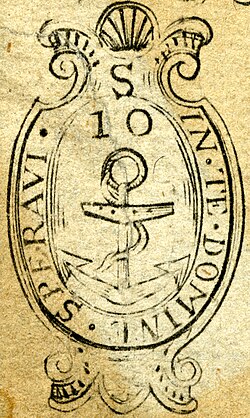
| Rhode Island | 1738 | 1863 |
| South Carolina | 1778 | 1865 |
Design Themes and Historical Inaccuracies
State arms were frequently used to showcase a region's natural and industrial resources. Common motifs included farming, transportation (such as boats and wagons), and landscapes featuring sunsets or mountains. However, these artistic choices sometimes prioritized symbolism over geographical reality.
For instance, the arms of Ohio and Indiana depict substantial mountains in the distance. In reality, the highest point in Ohio is Campbell Hill (1,550 feet) and in Indiana, it is Hoosier Hill (1,257 feet). Even more dramatic is the Florida state arms, which depicts mountains despite the state's highest point being only 345 feet. Beyond geography, the Florida design also contains historical inaccuracies regarding the attire and social interactions of the Seminole people during the 1830s.

The Evolution of the Great Seal
The process of designing the Great Seal of the United States was a lengthy endeavor. The first committee, appointed on July 4, 1776, included Benjamin Franklin, John Adams, and Thomas Jefferson, but their design was rejected. A second committee also failed to reach an agreement. It was not until the third committee—comprising Arthur Middleton, Elias Boudinot, and John Rutledge, with consultation from William Barton—that a design was finally approved on July 20, 1782.
Frequently Asked Questions
What is the difference between a coat of arms and a seal?
While often used interchangeably in casual conversation, a coat of arms is a heraldic design used to identify a person or entity, whereas a seal is a physical tool used to make an impression in wax or paper to authenticate a document.
Who illustrated the State Arms of the Union?
The illustrations were created by Henry Mitchell, a professional engraver, and published by Louis Prang in 1876.
Why do some state arms show mountains in flat states?
Designers often used mountains as a symbolic way to convey the majesty of nature or the abundance of resources, even if the actual topography of the state was relatively flat.
Did all states have coats of arms on national currency?
No. Many territories and later-admitted states, such as Alaska, Hawaii, and Oklahoma, did not have their coats of arms represented on the national currency during the periods discussed.
When was the first committee for the Great Seal appointed?
The first committee was appointed by the Second Continental Congress on July 4, 1776.