St Paul's Secondary School: A History of Education on Synge Street
In the mid-nineteenth century, Ireland experienced a significant movement to expand Catholic education. In Dublin, church officials focused heavily on providing educational opportunities for the poor, specifically targeting poor boys due to the societal norms of the era. This drive for expansion gained momentum following the successful struggle for Catholic emancipation—the movement to remove legal restrictions on Catholics—during the 1820s and 1830s.
The foundation of the school began with Canon Edward McCabe, the parish priest of St Nicholas parish in the Liberties. In 1861, McCabe acquired land between Synge Street and Heytesbury Street, initially erecting a temporary wooden church to establish the new parish of Saint Kevin's.
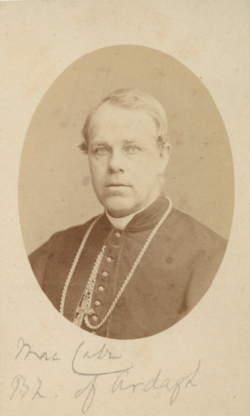
The Founding of the Synge Street School
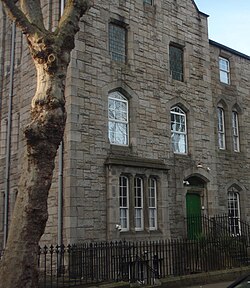
Between 1862 and 1864, Canon McCabe raised the necessary funds to commission the original monastery and school on the Synge Street side of the property. He collaborated closely with Brother Edward O'Flaherty, a teacher at the Christian Brothers' Mill Street school. Their efforts were aided by a fortuitous connection: O'Flaherty had previously taught James Aloysius Hoare, who was appointed the third Superior General of the order in 1862.
The school officially opened its doors on April 12, 1864, with Brother O'Flaherty serving as the first Superior. The very first student enrolled was Paul McSwiney, the son of Dublin's Lord Mayor, Peter Paul McSwiney. The institution grew rapidly, quickly reaching its maximum capacity of 600 pupils taught by 10 Christian Brothers.
Growth and Evolution
Over the next fifty years, the school underwent four major extensions. This growth culminated in the purchase and demolition of three cottages at Nos. 13–15 Synge Street to make room for further expansion. The school, colloquially known as "Synger," continued to evolve its offerings, including the 1931 opening of a gaelscoil (an Irish-language school) called Coláiste Mhuire at Harcourt Street. However, Coláiste Mhuire moved to Parnell Square in 1933 and ceased to be managed from Synge Street.
A pivotal shift occurred in 1925 when the school affiliated with the Irish Free State's Programme for National Schools, ensuring that education remained free of charge from that point forward.
The Modern Secondary School
The current secondary school, officially known as St Paul's Secondary School, Heytesbury Street, replaced a row of houses previously used as classrooms. The new building was blessed by John Charles McQuaid and opened by the Minister of Education, Donogh O'Malley, in January 1967. Further extensions were added during the 1980s.
Key Facts
- Founded: April 12, 1864.
- Founders: Canon Edward McCabe and Brother Edward O'Flaherty.
- Peak Enrollment: Reached 1,500 pupils by 1963; described as the second largest school in Ireland in 1953.
- Financial Status: Education has been provided free of charge since 1925.
- DEIS Status: Part of the Delivering Equality in Schools (DEIS) programme for 20 years as of 2015.
Primary School Network
Under the patronage of the Christian Brothers at Synge Street, several primary schools were established to serve the community:
- Donore Avenue: Opened in 1930.
- Scoil Iosagáin Primary School: Built in 1947 at Aughavanna Road, Dolphin's Barn.
- Sancta Maria CBS: Opened in 1954 on Synge Street.
- Francis Street: A new primary opened in 1961, replacing an 1846 structure.
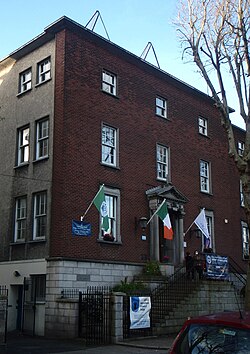
In 2017, Bunscoil Sancta Maria introduced a landmark change by accepting both boys and girls at the Junior Infant level for education through the medium of Irish. This established the first-ever 'sruth' (stream) at the primary level in Ireland.
Summary of School Development
| Year | Event/Milestone | Significance |
|---|---|---|
| 1861 | Land acquisition | Basis for St Kevin's parish and school |
| 1864 | School Opening | First pupil enrolled; 600 capacity |
| 1925 | Free State Affiliation | Education became free of charge |
| 1967 | New Building Opening | Official opening of St Paul's Secondary School |
| 2017 | Bunscoil Sancta Maria Policy | First primary-level Irish 'sruth' established |
Recent Transitions and Challenges
In September 2024, the Edmund Rice Schools Trust, with approval from the Minister for Education, announced that the school would transition to a co-educational basis with an all-Irish educational approach. This decision was notified to the principal and staff only one day before the public announcement, without parental involvement.
The transition has faced challenges, as many staff members were not trained to teach subjects through Irish, and the student body is ethnically and nationally diverse. To manage this, it was clarified that existing pupils would continue their education through Irish under the current principal, while new pupils would be taught solely through Irish under a deputy principal. As of June 2026, only two pupils had enrolled for the 2026-2027 school year.
Frequently Asked Questions
Who founded the school on Synge Street?
The school was founded through the partnership of Canon Edward McCabe, the parish priest of St Nicholas, and Brother Edward O'Flaherty of the Christian Brothers.
What is the colloquial name for the school?
The school is commonly referred to as "Synger" by the local community.
How has the student population changed over time?
The school grew from 600 pupils in 1864 to 1,500 by 1963. However, roll numbers have declined in recent years due to shifting local demographics, including an 11% drop between 2004 and 2010.
What is the significance of the 2017 change at Bunscoil Sancta Maria?
Bunscoil Sancta Maria established the first-ever 'sruth' (Irish-language stream) at the primary level in Ireland, accepting both boys and girls at the Junior Infant level.
What is the current educational approach for new students at St Paul's?
As of the 2024 announcement, new pupils are taught solely through the medium of Irish under the direction of a deputy principal.