Sri Lanka Air Force: A Comprehensive History and Evolution
The aviation history of Sri Lanka is a journey from colonial cooperation to the establishment of a sovereign defense force capable of managing complex internal security and international humanitarian missions. From its origins as a British-supported entity to its role in a decades-long civil war, the Sri Lanka Air Force (SLAF) has evolved its fleet and strategy to meet the changing needs of the nation.
Foundations of the Royal Ceylon Air Force
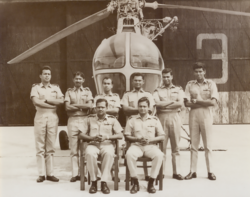
While Ceylonese personnel had previously served in the Royal Air Force (RAF), the formal establishment of a national air arm began after the creation of the Dominion of Ceylon. Under Prime Minister D. S. Senanayake, the government identified the need for a dedicated air force, leading to the passage of the Air Force Act in 1951.
On March 2, 1951, the Royal Ceylon Air Force (RCyAF) was officially formed. In its early years, the force relied heavily on seconded RAF officers for administration and training. The initial fleet consisted of de Havilland Canada DHC-1 Chipmunks for basic training, followed by Boulton Paul Balliol T.Mk.2s and Airspeed Oxford Mk.1s for advanced instruction. Transport capabilities were provided by de Havilland Doves and Herons, all supplied by the British Government.
By 1955, the RCyAF operated two flying squadrons based at RAF Negombo, specializing in training and transport. The service also introduced its first helicopter, the Westland Dragonfly.
Transition to the Sri Lanka Air Force
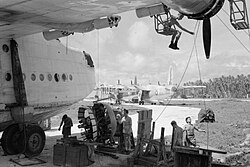
When Ceylon became a republic in 1972, the service was renamed the Sri Lanka Air Force (SLAF), and its insignia were updated. The 1970s were a period of financial constraint, particularly following the 1971 insurrection. To generate revenue, the No. 4 Helicopter Squadron launched Helitours, a commercial transport service for foreign tourists.
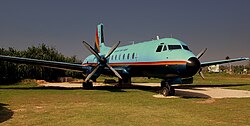
The late 1970s saw the SLAF absorb the Hawker Siddeley HS 748 transport aircraft following the closure of Air Ceylon in 1978. However, by the early 1980s, the force faced a critical gap in combat capability as its Provosts and Soviet-era aircraft were placed in long-term storage.
The Impact of the Sri Lankan Civil War
The outbreak of the civil war against the Liberation Tigers of Tamil Eelam (LTTE) in the mid-1980s triggered a period of rapid expansion. The SLAF reactivated several World War II-era airfields, including those at Batticaloa, Anuradhapura, Koggala, and Sigiriya.
Rapid Fleet Expansion and Improvisation
Due to budget constraints, the SLAF often refitted non-combat aircraft for counter-terrorism roles. Between 1983 and 1985, the force acquired a variety of aircraft from Italy, Britain, and the United States, including SIAI Marchetti SF.260s and Bell 212/412 helicopters. The SF.260TP turboprops became central to security efforts, utilized for strafing and rocket attacks.
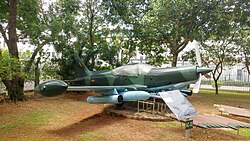
Bombing capabilities were further enhanced by Chinese Harbin Y-12 turboprops equipped with bomb racks for fragmentation and anti-personnel bombs. Shaanxi Y-8s were also used for bombing until 1992, when a fatal crash led to the cessation of bombing missions using transport aircraft.
Advanced Combat Acquisitions
To counter the LTTE, the SLAF sought more powerful platforms in the 1990s. This included F-7 Skybolts and Shenyang J-5s from China, and FMA IA 58 Pucarás from Argentina for ground attack.
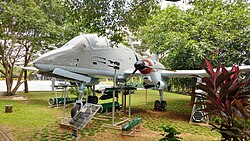
The 1990s and early 2000s saw the introduction of heavy-hitting assets: Mil Mi-24 and Mi-35 gunships for close air support, and IAI Kfirs from Israel for precision strikes. By 2000, the fleet added Mikoyan MiG-27 ground attack aircraft and Lockheed C-130 Hercules for heavy transport.
Major Challenges and Air Defense
The SLAF faced significant setbacks, most notably the July 24, 2001, LTTE attack on the Katunayake air base, which destroyed 13 aircraft, including Kfirs and MiG-27s. This event led to a massive increase in security at international airports, including the construction of protective walls and increased sentry presence.
In 2006, the discovery that the LTTE was operating light aircraft forced the SLAF to urgently modernize its air defense. This resulted in the establishment of an extensive radar network and the acquisition of F-7G interceptors for No. 5 Jet Squadron.
Post-War Evolution and Modernization
Following the end of the civil war, the SLAF shifted its focus toward humanitarian aid and maritime security. The force has participated in international relief efforts in Nepal and Pakistan, and provided resupply missions to UN peacekeeping operations in South Sudan and the Central African Republic.
Fleet Modernization Program
The SLAF is currently upgrading its aging fleet. A significant project involves the refurbishment of five Kfir multirole combat aircraft to a near Block 60 standard (C12 standard) through a US$50 million deal with Israel Aerospace Industries. This upgrade includes advanced cockpits and mission computers.
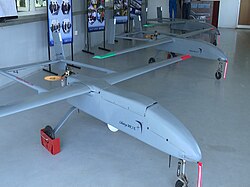
In terms of transport and training, the SLAF has acquired Xian MA60s, PT-6 trainers from China, and is overhauling its Mi-17 and Antonov-32 fleets. To enhance maritime reconnaissance, the SLAF has received Beechcraft 360ER aircraft from the US and Dornier Do228 aircraft from India.
Key Facts
- Established: March 2, 1951, as the Royal Ceylon Air Force.
- Key Combat Aircraft: IAI Kfir, MiG-27, and F-7G interceptors.
- Transport Mainstays: Lockheed C-130 Hercules and Antonov An-32.
- Modernization: US$50 million upgrade of Kfir aircraft to C12 standard.
- Maritime Shift: Recent acquisition of Beechcraft 360ER and Dornier Do228 for patrolling.
| Era | Primary Focus | Key Aircraft Types |
|---|---|---|
| 1951–1970s | Training & Transport | Chipmunk, Balliol, Oxford, Dove |
| 1980s–1990s | Counter-Insurgency | SF.260, Bell 212/412, Harbin Y-12 |
| 1990s–2009 | High-Intensity Conflict | Kfir, MiG-27, Mi-24/35, F-7 |
| 2010–Present | Modernization & Maritime | Upgraded Kfirs, Beechcraft 360ER, MA60 |
Frequently Asked Questions
When was the Sri Lanka Air Force formed?
The force was established on March 2, 1951, originally as the Royal Ceylon Air Force (RCyAF) with significant support and personnel from the British Royal Air Force.
What was the purpose of Helitours?
Helitours was a commercial transport service for foreign tourists operated by the No. 4 Helicopter Squadron to address military expenditure shortages following the 1971 insurrection.
How did the SLAF respond to the LTTE's use of light aircraft?
The SLAF expanded its air defense capabilities by establishing an extensive radar network, strengthening ground-based defenses, and acquiring F-7G interceptors.
What are the current modernization efforts for the Kfir fleet?
The SLAF is investing approximately US$50 million to upgrade five Kfir aircraft to the C12 standard, featuring advanced cockpits, new mission computers, and improved avionics.
Which aircraft are used for maritime reconnaissance?
The SLAF currently utilizes Beechcraft 360ER aircraft (provided by the US) and Dornier Do228 aircraft (provided by India) for maritime patrolling.