Spark New Zealand: The Evolution from Telecom to Digital Services
The landscape of connectivity in New Zealand has undergone a radical transformation over the last few decades. At the center of this shift is Spark, a company that began as a government-run monopoly and evolved into a diversified digital services provider. From the early days of landlines to the rollout of 5G and cloud-based security, the company's journey reflects the broader global transition from traditional telephony to the internet age.
The Birth of Telecom and Privatization
The modern era of New Zealand telecommunications began with the Postal Services Act 1987. This legislation dismantled the New Zealand Post Office, splitting it into three distinct entities: New Zealand Post Limited, Post Office Bank Limited (sold to ANZ in 1989), and the Telecom Corporation of New Zealand Limited. This move initiated a period of progressive deregulation across the industry.
In 1990, Telecom was privatized and sold for NZ$4.25 billion to two US-based firms, Verizon Communications (then Bell Atlantic) and Ameritech. A key part of this transition was the Kiwi Share agreement, which ensured that residential customers continued to enjoy free local calling.
Expansion and the Digital Dawn (1991–1999)
The 1990s were marked by rapid infrastructure growth and the first signs of competition. In 1991, Telecom listed on the New Zealand, Australian, and New York stock exchanges. To strengthen international connectivity, the company implemented a NZ$200 million fibre-optic cable between Australia and New Zealand in 1992.
Competition intensified in 1993 when BellSouth New Zealand Limited (later acquired by Vodafone) launched the first competing mobile network. Telecom responded by diversifying its offerings, creating First Media Ltd in 1995 to develop the First TV cable network in Auckland and Wellington, and launching the Xtra internet service in 1996.
By the end of the decade, Telecom had expanded into Australia by acquiring a majority stake in AAPT and launched JetStream, a broadband service based on ADSL (Asymmetric Digital Subscriber Line) technology, which allows data to be transmitted over traditional copper telephone lines.
Corporate Turbulence and Structural Shifts (2000–2009)
The early 2000s brought both growth and controversy. While Xtra grew to 300,000 customers by 2000, the company faced scrutiny in 2002 over accounting practices related to the FRS38 standard, which allegedly inflated 2001 profits by $263 million through dividends from Southern Cross Cables.
The mid-2000s saw a push toward retail and wholesale expansion. Telecom acquired Gen-i Ltd and Computerland Ltd in 2004, though it also faced public criticism, winning the Roger Award for the Worst Transnational Corporation operating in New Zealand that same year.
A pivotal moment occurred in 2006 when the New Zealand Government forced Telecom to unbundle the local loop. This regulatory move required Telecom to allow competitors to install their own equipment in exchanges, breaking the monopoly on broadband access and fostering a more competitive market.
The Formation of Chorus
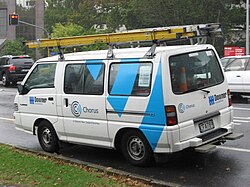
To further separate network infrastructure from retail services, Telecom announced the formation of Chorus in January 2008. By March 31, 2008, the company officially split into three divisions: Chorus (infrastructure), Telecom Wholesale, and Telecom Retail.
The Transition to Spark (2010–Present)
In 2010, the company moved into a new $280 million world headquarters in Auckland CBD. A major structural change followed in December 2011, when Chorus was divested as a separately listed company via a one-for-five share deal.
On August 8, 2014, Telecom officially rebranded as Spark. This change was designed to reflect a shift in direction from a traditional telco to a digital services company. Along with the name change, subsidiaries were rebranded: Telecom Mobile became Spark Mobile and Gen-i became Spark Digital.

Since the rebrand, Spark has expanded into content and smart services, launching the Lightbox streaming service (later sold to Sky Television) and the subscription-based Spark Sport in 2019. In 2015, it introduced Morepork, a cloud-based smart home security service.
Looking toward the future, Spark announced in 2023 an investment of NZ$250–300 million in data centres and NZ$40–60 million in 5G technology. In April 2026, the company restructured into two primary divisions: Connectivity and Digital Services.
Mobile Network Evolution
Spark's mobile journey began in 1987 with AMPS (Advanced Mobile Phone System), transitioning to digital D-AMPS/TDMA in the early 90s. In 1996, the company pioneered CDPD (Cellular Digital Packet Data), enabling some of the region's first Internet of Things (IoT) connections for vending machines and parcel tracking.
The network evolved through several iterations, including the launch of the "XT" network in 2009 and the rollout of 4G in November 2013. Most recently, Spark, along with 2degrees and One NZ, completed the shutdown of 2G and 3G networks by December 2025 to make room for more efficient technologies.
Key Facts
- Founded: Split from NZ Post Office in 1987.
- Privatization: Sold to Verizon and Ameritech in 1990 for NZ$4.25 billion.
- Rebrand: Changed name from Telecom to Spark on August 8, 2014.
- Infrastructure: Divested Chorus as a separate company in 2011.
- Recent Investment: Up to NZ$300 million allocated for data centres (2023-2026).
- Network Milestone: Completed 3G network shutdown by December 2025.
| Year | Event | Significance |
|---|---|---|
| 1987 | Postal Services Act | Creation of Telecom Corporation |
| 1990 | Privatization | Sold to US firms for NZ$4.25 billion |
| 2006 | Local Loop Unbundling | Ended broadband monopoly |
| 2008 | Chorus Formation | Separation of network infrastructure |
| 2014 | Rebranding to Spark | Shift toward digital services identity |
| 2026 | Organizational Restructure | Split into Connectivity and Digital Services |
Frequently Asked Questions
Why did Telecom change its name to Spark?
The company rebranded to Spark on August 8, 2014, to better reflect its new strategic direction and aspirations as a digital services provider rather than just a traditional telecommunications company.
What was the "unbundling of the local loop"?
This was a 2006 government mandate that forced Telecom to allow other internet service providers (ISPs) to install their own equipment in telephone exchanges, which increased competition and improved broadband pricing for consumers.
What is the relationship between Spark and Chorus?
Chorus was originally the network infrastructure division of Telecom. It was formally separated in 2008 and fully divested as a separately listed company in December 2011.
When did Spark shut down its 3G network?
Spark, in coordination with other major NZ telcos, completed the shutdown of its 2G and 3G networks by December 31, 2025.
What are Spark's current investment priorities?
As of 2023, Spark is investing between NZ$250 million and NZ$300 million into data centres and between NZ$40 million and NZ$60 million into its 5G business over a three-year period.