Spanish Open Access Repositories and Digital Scholarship
Spain has developed a robust infrastructure for the dissemination of academic knowledge through open access repositories. These digital collections serve as centralized hubs for scholarship, ensuring that research outputs—including journal articles, book chapters, and raw data—are available to the public free of charge.
The Landscape of Digital Repositories in Spain
The scale of open access in Spain is significant. According to the UK-based Directory of Open Access Repositories, there were approximately 131 repositories active in Spain as of March 2018. These platforms facilitate the global sharing of scientific and humanities research, removing financial barriers to information.
Leading Repositories and Platforms
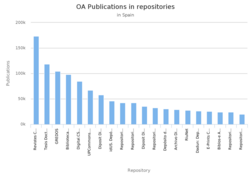
While many institutions host their own data, several major repositories stand out due to the sheer volume of their digital assets. Key examples include:
- Revistes Catalanes amb Accés Obert: A primary source for Catalan open access journals.
- Tesis Doctorals en Xarxa: A specialized repository for doctoral theses.
- GREDOS: The institutional repository of the Universidad de Salamanca.
- Biblioteca Virtual del Patrimonio Bibliográfico: Managed by the Ministry of Culture to preserve bibliographic heritage.
- Digital CSIC: The digital portal for the Spanish National Research Council.
In addition to these repositories, platforms such as SciELO (Scientific Electronic Library Online) and DialNet play critical roles in the indexing and accessibility of Spanish scholarly work.
Institutional Integration and Recolecta
The majority of Spanish universities maintain their own institutional repository—a digital archive specifically designed to collect, preserve, and distribute the intellectual output of a single institution. To prevent these archives from becoming isolated silos, Spain utilizes the Recolecta digital platform.
Recolecta acts as a harvester, allowing users to search across multiple institutional repositories simultaneously, thereby streamlining the discovery of academic research across the entire national university system.
Key Facts
- There were 131 repositories listed in Spain by the Directory of Open Access Repositories as of March 2018.
- Open access materials include journal articles, book chapters, and research data.
- The Recolecta platform provides a collective search interface for university repositories.
- Major contributors include the Spanish National Research Council (Digital CSIC) and the Ministry of Culture.
| Entity/Platform | Type/Affiliation |
|---|---|
| Digital CSIC | Spanish National Research Council |
| GREDOS | Universidad de Salamanca |
| Biblioteca Virtual del Patrimonio Bibliográfico | Ministry of Culture |
| Recolecta | Collective Search Platform |
| Tesis Doctorales en Xarxa | Doctoral Thesis Repository |
Frequently Asked Questions
What is an open access repository?
An open access repository is a digital collection of scholarly work, such as articles and data, that is made available to the public for free.
How many repositories are there in Spain?
As of March 2018, the Directory of Open Access Repositories listed approximately 131 repositories within the country.
What is the purpose of the Recolecta platform?
Recolecta is a digital platform that allows users to search through the various institutional repositories maintained by Spanish universities in one place.
Which organizations manage some of the largest repositories?
Major repositories are managed by entities such as the Spanish National Research Council (Digital CSIC), the Ministry of Culture, and various universities like the Universidad de Salamanca.
What types of content can be found in these repositories?
These repositories contain a variety of research outputs, including journal articles, book chapters, doctoral theses, and research data.