Southeastern United States
The Southeastern United States, often referred to as the American Southeast, is a vast and diverse region characterized by its rich history, rapid economic transformation, and varied landscapes. Spanning a total area of 580,835 square miles, the region encompasses 13 states and several U.S. territories, blending coastal plains with mountainous terrain and bustling metropolitan hubs.
Key Facts
- Total Population: 97,438,243 (as of 2018).
- Most Populous State: Florida, with over 21.5 million residents.
- Largest City: Jacksonville, Florida.
- Largest Metro Area: Metro Atlanta, Georgia.
- Climate: Ranges from cool winters in the north to subtropical warmth in southern Florida.
- Economic Hubs: High concentrations of Fortune 500 headquarters in Virginia, Georgia, and Florida.
History and Evolution
The human history of the Southeast is ancient, with evidence of the Clovis culture dating back to approximately 11,000 BC or 13,000 BC. Before European contact, the region was home to Native Americans during the Woodland period.
European colonization began with Spanish conquistadors; Hernando de Soto crossed the Mississippi River in 1541, and Spain established St. Augustine, Florida, in 1565—the first permanent European settlement in the United States. Later, Georgia, North Carolina, South Carolina, and Virginia became part of the Thirteen Colonies that declared independence from Great Britain.
The region was central to the American Civil War, where the Confederate States of America included Florida, Alabama, Georgia, Mississippi, Tennessee, South Carolina, North Carolina, Virginia, Louisiana, and Arkansas. Following the war and the Reconstruction era of the 1870s, the region entered a period of segregation under Jim Crow laws, which lasted until the mid-1960s.
Economic modernization accelerated in the 1930s through New Deal policies, such as the Tennessee Valley Authority. World War II further shifted the economy from farming to military production. By the late 20th century, a warm climate and business-friendly environment attracted millions of retirees and job seekers, leading to explosive growth in states like Florida, Georgia, and North Carolina.
Geography and Demographics
The Southeast is composed of a mix of land (540,511 sq mi) and water (40,324 sq mi). The population density varies significantly, with Maryland and Florida being among the most densely populated areas.
Florida stands as the most populous state in the region, followed by Georgia and North Carolina. The region also includes the U.S. territories of Puerto Rico and the U.S. Virgin Islands.
| State | 2020 Population | Land Area (sq mi) | Density (per sq mi) |
|---|---|---|---|
| Florida | 21,538,187 | 53,625 | 401.6 |
| Georgia | 10,711,908 | 57,513 | 186.3 |
| North Carolina | 10,439,388 | 48,618 | 214.7 |
| Virginia | 8,631,393 | 39,490 | 218.6 |
| Tennessee | 6,910,840 | 41,235 | 167.6 |
Major Urban Centers
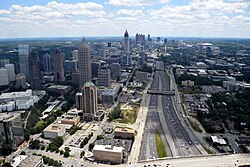
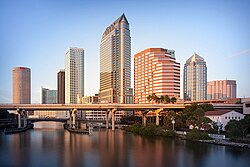
The region is anchored by several massive metropolitan areas. Jacksonville is the largest individual city by population, while Metro Atlanta is the largest metropolitan area overall.
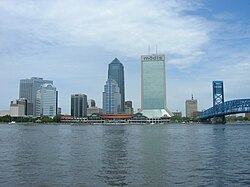
Charlotte serves as a primary hub in the Carolinas, and Washington, D.C. remains a critical political and economic center for the region.


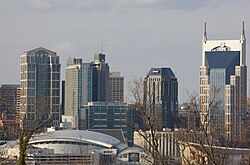
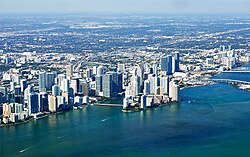
Other significant cities include Nashville, Memphis, and Miami, each contributing to the region's diverse economic profile.
Climate and Environment
The climate of the Southeast is characterized by a distinct latitudinal gradient. In northern areas like Tennessee, Virginia, and Maryland, winters are cool, with January highs averaging around 45°F (7°C). Moving south into Georgia and Alabama, temperatures rise to an average of 53°F (12°C).
Coastal regions and the Gulf of Mexico experience warm winters, often exceeding 60°F (16°C). Southern Florida is the warmest part of the United States during winter, with daytime highs frequently reaching the mid-70s°F. While Florida's winters are typically dry and sunny, rainfall increases as one moves north, particularly west of the Appalachian Mountains.
Economy and Education
The Southeast has evolved into a powerhouse of corporate headquarters and manufacturing. As of 2020, Virginia led the region in Fortune 500 headquarters (22), followed closely by Georgia and Florida (18 each). This growth has resulted in some of the lowest unemployment rates in the country.
Industrialization is evident in projects like the ThyssenKrupp steel facility in Mobile, Alabama. This economic vitality is supported by a robust network of higher education institutions.
Prominent Universities
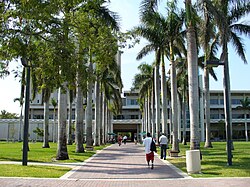
The region is home to prestigious public research universities and elite private colleges.
Public Institutions: Notable examples include the University of Florida, Georgia Tech, University of Virginia, and North Carolina State University.





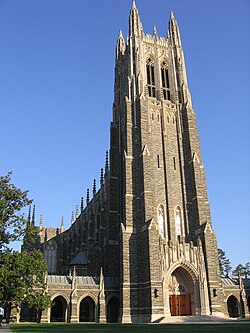
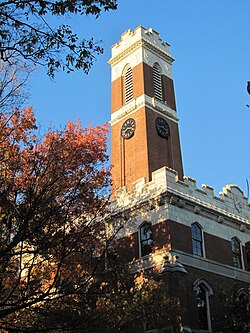
Private Institutions: The region boasts world-renowned private universities such as Duke University, Johns Hopkins University, Vanderbilt University, and Emory University.



Sports and Culture
Sports play a massive role in the cultural fabric of the Southeast, from professional leagues to collegiate athletics. The region is home to iconic teams such as the Atlanta Braves, Miami Heat, and New Orleans Saints.



Collegiate sports are particularly dominant, with the Atlantic Coast Conference (ACC) and the Southeastern Conference (SEC) being two of the most influential athletic conferences in the nation.


Frequently Asked Questions
Which is the most populous state in the Southeast?
Florida is the most populous state in the region, with a population of 21,538,187 according to the 2020 census.
What is the largest metropolitan area in the region?
The Atlanta–Sandy Springs-Roswell metropolitan area is the largest, with an estimated population of 6,307,261 as of 2023.
How does the winter climate vary across the Southeast?
Winters range from cool in the north (average highs of 45°F in January) to very warm in southern Florida, where daytime highs can reach the mid-70s°F.
Which states have the most Fortune 500 headquarters in the region?
As of 2020, Virginia had the most with 22, followed by Georgia and Florida with 18 each.
What was the first permanent European settlement in the U.S. located in the Southeast?
St. Augustine, Florida, established by the Kingdom of Spain in 1565, was the first permanent European settlement in the United States.