Republic of South SudanJubaSouth Sudanese historySouth Sudan independenceSouth Sudan economy

South Sudan: A Comprehensive Overview of the World's Youngest Nation

South Sudan: A Comprehensive Overview of the World's Youngest Nation Established as a sovereign state in 2011, the Republic of South Sudan represents one of the most recent chapters in mo...

South Sudan: A Comprehensive Overview of the World's Youngest Nation

Established as a sovereign state in 2011, the Republic of South Sudan represents one of the most recent chapters in modern geopolitical history. Emerging from decades of struggle, the nation is a land of vast potential, diverse ethnic groups, and significant natural resources. From its capital in Juba to the expansive wetlands of the Sudd, South Sudan is a country defined by its resilience and its complex journey toward stability and prosperity.
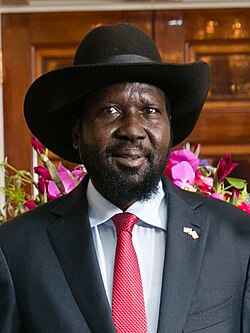
Salva Kiir Mayardit, the first president of South Sudan. His trademark Stetson hat was a gift from United States President George W. Bush.
: Salva Kiir Mayardit, the first president of South Sudan. His trademark Stetson hat was a gift from United States President George W. Bush.

Key Facts

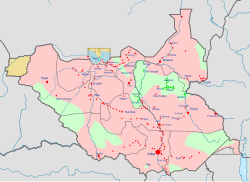
Military situation in South Sudan on 22 March 2020 Under control of the Government of South Sudan
  • Official Capital: Juba
  • Independence Date: 9 July 2011
  • Official Language: English
  • Motto: "Justice, Liberty, Prosperity"
  • Currency: South Sudanese pound (SSP)
  • Total Area: 644,329 km²

Historical Context and Independence
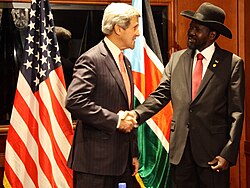
US Secretary of State John Kerry meets with President Salva Kiir, 26 May 2013.

The path to South Sudanese sovereignty was marked by long periods of autonomy and conflict. The region first gained status as an autonomous region on 28 February 1972, followed by a second period of autonomy starting on 9 July 2005. This culminated in the nation being officially declared and recognized as an independent country on 9 July 2011.

Following independence, the nation navigated significant challenges, including the Sudanese Civil War (2013–2020). Since then, South Sudan has worked toward integration within regional blocs, notably joining the East African Community (EAC).
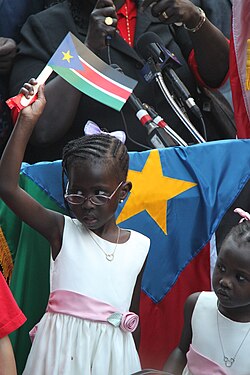
A South Sudanese girl at independence festivities
: A South Sudanese girl at independence festivities

Geography and Climate

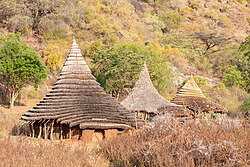
A village in Kimotong, South Sudan

South Sudan is a geographically diverse nation. Its landscape includes vast plains, significant river systems, and unique ecosystems. One of the most notable features is the Sudd Wetland, which ranks among the largest wetlands in the world.
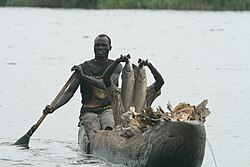
Fishing in the Sudd Wetland, one of the largest wetlands in the world
: Fishing in the Sudd Wetland, one of the largest wetlands in the world

The climate of the region is categorized by the Köppen climate classification system, which helps define the environmental conditions across its various administrative areas. The country is divided into several major regions, including Bahr el Ghazal, Equatoria, Greater Upper Nile, and various administrative areas such as the Abyei Special Administrative Area.
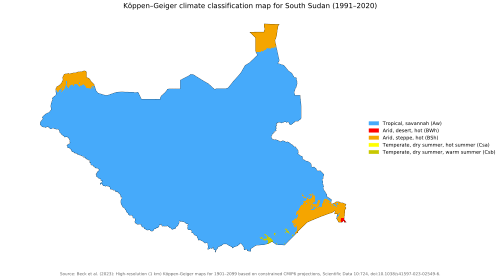
South Sudan map of Köppen climate classification
: South Sudan map of Köppen climate classification

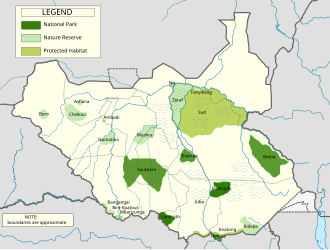
Protected areas in South Sudan
: Protected areas in South Sudan

Demographics and Culture

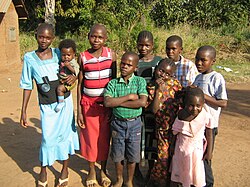
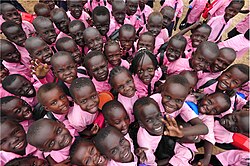
Children in Yambio, Western Equatoria, South Sudan

The population of South Sudan is characterized by a rich tapestry of ethnic groups. While English serves as the official language, several national and spoken languages are widely used, including Dinka, Nuer, Bari, Murle, Luo, Ma'di, Otuho, and Zande. This linguistic diversity is a reflection of the country's many distinct ethnic identities.
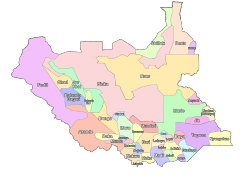
Map of the ethnic groups of South Sudan
: Map of the ethnic groups of South Sudan

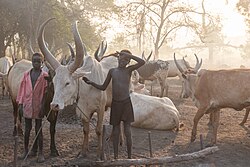
Religion plays a significant role in the lives of South Sudanese citizens. As of 2020, approximately 60.5% of the population identifies as Christian, 32.9% follow traditional faiths, and 6.2% practice Islam. Cultural expression is visible in everything from traditional attire to music and community structures, such as the cattle camps of the Mundari people.
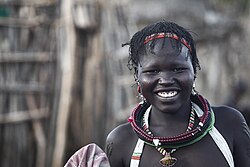
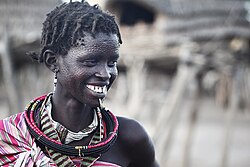
A young South Sudanese girl smiling in traditional attire
: A young South Sudanese girl smiling in traditional attire

Cattle camp of the Mundari people in Central Equatoria
: Cattle camp of the Mundari people in Central Equatoria

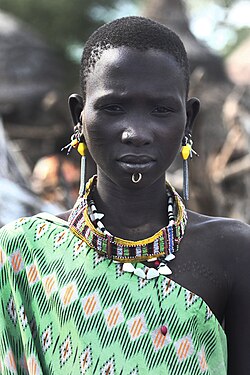
Scarified woman, South Sudan, 2011
: Scarified woman, South Sudan, 2011

Woman in South Sudan
: Woman in South Sudan

Government and Administration

Rural school children participating in the USAID-funded Southern Sudan Interactive Radio Instruction project, July 2010

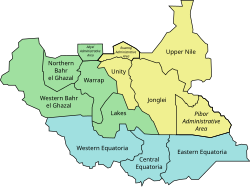
South Sudan operates as a federal presidential republic under a Transitional Constitution. The government structure includes a President and a First Vice-President, supported by the Transitional National Legislature. The nation is organized into several states and administrative areas to manage its vast territory.
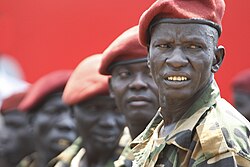
South Sudan's presidential guard on Independence Day, 2011
: South Sudan's presidential guard on Independence Day, 2011

Administrative areas of South Sudan as of 2020
: Administrative areas of South Sudan as of 2020

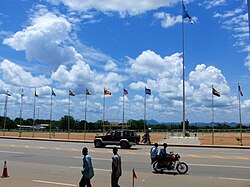
John Garang Square in Juba
: John Garang Square in Juba

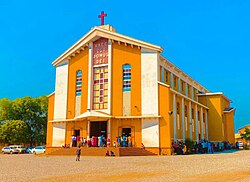
St. Theresa Cathedral in Juba
: St. Theresa Cathedral in Juba

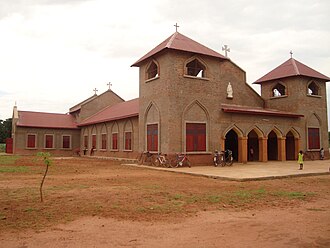
Holy Cross Cathedral in Lakes State
: Holy Cross Cathedral in Lakes State

Economy and Infrastructure

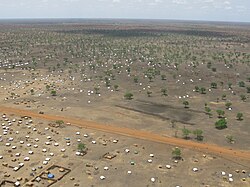
Jamam refugee camp
Jamam refugee camp

The economy of South Sudan is heavily influenced by its natural resources, particularly oil and gas. While these resources provide significant potential for growth, the nation also faces economic challenges including inflation and debt management. The currency used is the South Sudanese pound (SSP).
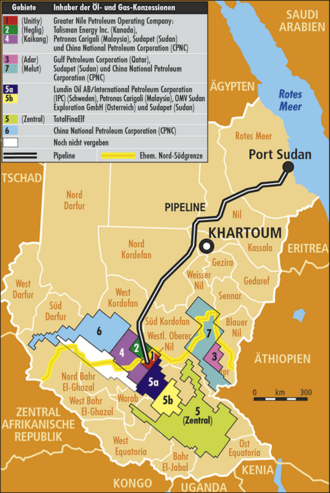
Oil and gas concessions in Sudan – 2004
: Oil and gas concessions in Sudan – 2004

Infrastructure development remains a key focus for the country. Transport is facilitated through various means, including air travel via Juba Airport, road networks, and limited railway services. The movement of people and goods is vital for connecting the various states and administrative areas.
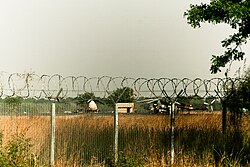
Two Mil Mi-17 helicopters at Juba Airport
: Two Mil Mi-17 helicopters at Juba Airport

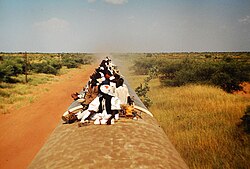
Passengers atop a train travelling towards Wau
: Passengers atop a train travelling towards Wau

Summary of National Statistics

Key Statistics for the Republic of South Sudan
Category Details
Capital City Juba
Population (2024 Est.) 12,703,714
Official Language English
GDP (PPP) 2025 Est. $15.160 billion
Religion (Christianity) 60.5%

Frequently Asked Questions

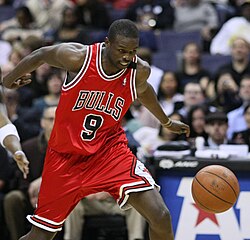
South Sudanese-born basketball player Luol Deng

When did South Sudan become independent?

South Sudan officially declared and was recognized as an independent nation on 9 July 2011.

What are the official languages of South Sudan?

English is the official language of South Sudan, though many national languages such as Dinka, Nuer, and Bari are widely spoken.

What is the capital of South Sudan?

The capital and largest city of South Sudan is Juba.

What is the main economic driver in South Sudan?

The economy is significantly influenced by the oil and gas sectors.

What is the religious makeup of the country?

As of 2020, the majority of the population is Christian (60.5%), followed by traditional faiths (32.9%) and Islam (6.2%).

Who is the current President of South Sudan?

The President of South Sudan is Salva Kiir Mayardit.

References

  1. Registered and operational since 2019
  2. The Transitional Constitution of the Republic of South Sudan, Part One, 6(1): "All indigenous languages of South Sudan are national languages and shall be respected, developed and promoted".[2]
  3. See table in Foreign relations of South Sudan with footnotes for early recognition countries.
  4. Source is from 2010, before South Sudan became an independent country. However, as late as July 2025, these estimates are still used, for instance in this article: www.researchgate.net/publication/395602141_Child_Marriage_and_Its_Legal_and_Cultural_Implications_In_South_Sudan
  5. "The Transitional Constitution of the Republic of South Sudan, 2011". Government of South Sudan. Part One, 6(2). Archived from the original on 21 July 2011. Retrieved 12 July 2011. English shall be the official working language in the Republic of South Sudan, as well as the language of instruction at all levels of education.