Exploring South Chungcheong: South Korea's Industrial and Economic Powerhouse
Located in the Hoseo region in the southwest of the Korean Peninsula, South Chungcheong Province—commonly known as Chungnam—stands as one of South Korea's most dynamic and prosperous regions. Bordered by the Yellow Sea to the west and surrounded by Gyeonggi, North Chungcheong, Sejong, Daejeon, and North Jeolla, this province serves as a vital link in the nation's geography and economy.
Historically established in 1896, Chungnam has undergone a massive transformation. Once a primarily agricultural area, it has evolved into a highly industrialized hub, becoming one of the fastest-growing regions in the country. Today, it balances rapid economic development with rich cultural heritage and stunning natural landscapes.
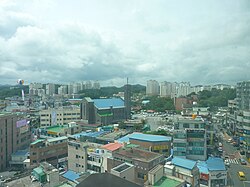
Key Facts
- Capital: Hongseong County
- Largest City: Cheonan
- Total Area: 8,226.14 km²
- Population: 2,123,037 (2022 data)
- Economic Status: South Korea's richest province by GDP per capita
- Major Industries: Manufacturing, agriculture, marine products, and mining
Economic Growth and Infrastructure
South Chungcheong is a leader in South Korean economic performance. With a nominal GDP of approximately KRW 143 trillion (US$ 114 billion) as of 2023, the province boasts a high per capita GDP of US$ 58,937. This prosperity is driven by a shift from traditional farming to advanced industrialization, characterized by significant growth rates in recent decades.
Connectivity is a cornerstone of the province's success. Chungnam is unique as one of the few provinces outside the Seoul Capital Area to be integrated into the Seoul Metropolitan Subway system, with Line 1 serving the cities of Cheonan and Asan. Furthermore, the KTX bullet train connects Cheonan-Asan Station to Seoul Station in under 30 minutes, facilitating seamless movement between the province and the national capital.
The Role of Sejong City
A significant administrative development in the region was the creation of Sejong Special Self-Governing City. Originally intended to replace Seoul as the national capital, a Constitutional Court ruling determined that Sejong would instead serve as a National Administrative Capital. It now functions as a secondary capital, housing approximately 36 government ministries and agencies, including the Prime Minister's office.
Geography and Natural Resources
The landscape of Chungnam is diverse, featuring fertile land and a significant coastline. Approximately one-third of the province is dedicated to cultivation, supporting a robust agricultural sector. Along the coast, 220 square kilometers of exposed beach are utilized for solar salt production through evaporation.
The province is also rich in mineral resources. Beyond coal, mining activities include the extraction of gold, silver, zircon, and monazite (a rare mineral containing thorium). While the province historically hosted half of South Korea's coal-fired power generation capacity, it has taken a proactive stance on environmental issues. In 2018, it became the first Asian member of the Powering Past Coal Alliance, committing to reducing coal use to combat global warming.
Summary of Provincial Statistics
| Category | Details |
|---|---|
| ISO Code | KR-44 |
| Area Rank | 6th in South Korea |
| Population Rank | 4th in South Korea |
| Area Code | 041 |
| Administrative Divisions | 8 cities (si) and 7 counties (gun) |
Culture, Tourism, and Education
Despite its industrial strength, South Chungcheong offers numerous sites for nature lovers and history enthusiasts. Mount Gyeryong, rising to 845 meters, is a centerpiece of the region, famous for its unique rock formations and ancient temples. Notably, Gwanchok-sa Temple houses the largest stone Buddha in South Korea.
For coastal tourism, the Taean Marine National Park provides some of the country's premier beaches. Visitors can also explore the Cheollipo Arboretum, which features approximately 14,000 plant species, including several rare and endangered varieties.
Academic Excellence
The province is a significant educational hub, hosting several prominent institutions, including:
- Kongju National University
- Dankook University (Cheonan)
- Soonchunhyang University (Asan)
- Korea National University of Cultural Heritage
- Korea University of Technology and Education (Cheonan)
Frequently Asked Questions
What are the major cities in South Chungcheong?
The largest city is Cheonan, followed by other significant urban centers such as Asan, Seosan, and Dangjin.
How is the province's economy structured?
While it has deep roots in agriculture and marine products, the economy has transitioned into a highly industrialized powerhouse, making it one of the wealthiest provinces in South Korea.
What is the religious landscape of the province?
Based on 2015 census data, the majority of the population (58.6%) identifies as non-religious. Of those with religious affiliations, 26.8% follow Christianity (including Protestantism and Catholicism) and 13.8% follow Buddhism.
Is South Chungcheong connected to Seoul's transport network?
Yes. It is one of the few provinces outside the Seoul Capital Area served by the Seoul Metropolitan Subway, and it is highly accessible via the KTX bullet train.
What is the administrative capital of the province?
The provincial government is located in Hongseong County, which serves as the official capital.