Soul Concepts: Religious, Philosophical, and Scientific Perspectives
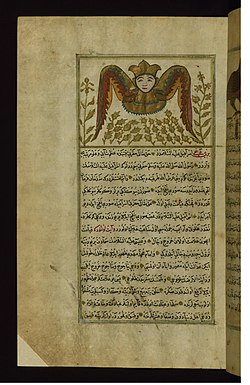
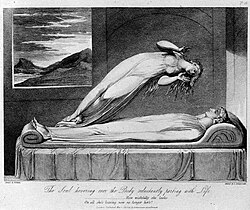
In the realms of religion and philosophy, the soul is defined as the immaterial aspect or essence of a living being. Across various cultures, it is typically perceived as an immortal entity that exists independently of the material body. Anthropological and psychological studies suggest that the belief in a soul or spirit is a widespread human phenomenon, characterized by a cross-cultural distinction between the physical body and the non-material essence.
Key Facts
- The soul is generally viewed as an immaterial, immortal essence separate from the physical body.
- Religious interpretations vary significantly, from the Buddhist doctrine of anattā (non-self) to the Hindu concept of Ātman.
- Philosophical foundations were laid by ancient Greek thinkers like Socrates, Plato, and Aristotle.
- In 1901, Duncan MacDougall conducted the controversial "21 grams experiment" to measure the soul's weight.
Diverse Religious Interpretations
Different faith traditions offer unique frameworks for understanding the nature and destiny of the soul. These perspectives range from seeing the soul as a permanent self to viewing it as a transient part of a larger cycle.
Eastern Traditions
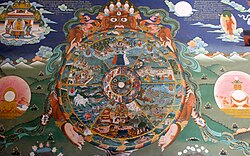
In Buddhism, the concept of a permanent, unchanging self is rejected through the doctrine of anattā. This stands in contrast to Hinduism, where the Ātman (the individual essence) is often viewed in certain traditions as being identical to Brahman, the universal reality. Jainism describes the soul, or jīva, as an eternal entity that undergoes changes until it achieves liberation.

Abrahamic and Other Faiths
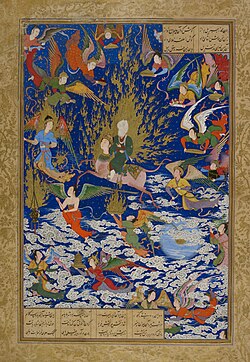
Christianity generally teaches the existence of an eternal soul that transitions to God's presence in heaven upon death. Islam utilizes two distinct terms: rūḥ to refer to the divine spirit and nafs to describe personal disposition. Judaism employs various terms, including nefesh and neshamah, to describe different aspects of the soul.

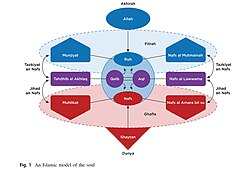
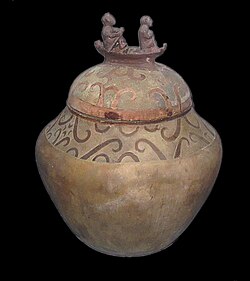
Other traditions include Sikhism, which views the soul as a part of God (Waheguru); Taoism, which recognizes dual soul types known as Hun and po; and Shamanism, which often embraces soul dualism involving "body souls" and "free souls." Even ancient artifacts, such as the Neolithic Manunggul burial jar, suggest long-standing beliefs in a soul journeying to a spirit world.
Philosophical Foundations
The Western understanding of the soul was heavily shaped by ancient Greek philosophy. Socrates and Plato established early frameworks, with Plato specifically emphasizing the immortality of the soul.
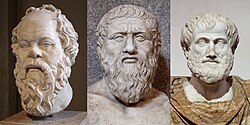
![Likeness of Plato after an engraved gem. The Psyche-wings fastened to his temples allude to his doctrine of the immortality of the soul.[129]](/images/90/6c/906c96834cc95a424dd8aa7598d84987479e026c6c5ff7822f8e62a229a68920.jpg)
Aristotle provided a more structured biological view, categorizing souls into different levels: Bios, Zoê, and Psūchê, which applied to plants, animals, and humans respectively.
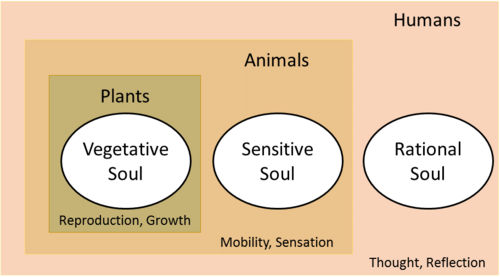
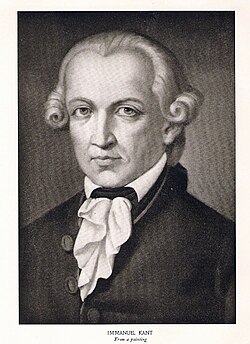
Later philosophers integrated these ideas into different frameworks. Avicenna merged Aristotelian theory with Islamic philosophy, while Thomas Aquinas expanded upon it within Christian theology. In the modern era, Immanuel Kant challenged the rationalist attempt to define the soul's nature through the analysis of the proposition "I think."


Scientific Inquiry and the "21 Grams"
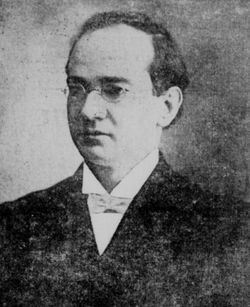
While philosophy and religion dominate the discussion, some have attempted to apply scientific methods to the concept. One of the most famous, albeit controversial, attempts was the 21 grams experiment conducted in 1901 by Duncan MacDougall.
MacDougall, a physician from Haverhill, Massachusetts, sought to determine if the soul possessed physical weight. He monitored six patients nearing death from conditions such as tuberculosis and diabetes. Using an industrial-sized scale, he observed that one patient appeared to lose approximately three-fourths of an ounce (roughly 21.3 grams) at the moment of death. While this led MacDougall to conclude the soul had weight, the experiment remains a significant point of discussion in the history of parapsychology.
Summary of Soul Concepts Across Traditions
| Tradition | Key Term(s) | Core Concept |
|---|---|---|
| Buddhism | Anattā | Non-existence of a permanent self |
| Hinduism | Ātman | The eternal self, sometimes identical to Brahman |
| Islam | Rūḥ / Nafs | Distinction between divine spirit and personal disposition |
| Christianity | Soul / Spirit | Eternal essence transitioning to God |
| Jainism | Jīva | Eternal but changing form until liberation |
| Judaism | Nefesh / Neshamah | Multiple aspects of the soul/life force |
Frequently Asked Questions
What is the difference between the soul and the body in most religions?
Most religions distinguish between the material body, which is physical and mortal, and the soul, which is considered an immaterial, non-physical essence that is often believed to be immortal.
Does Buddhism believe in a soul?
Buddhism teaches the doctrine of anattā, which is the concept of "not-self," suggesting that there is no permanent, unchanging soul or self.
What was the 21 grams experiment?
Conducted by Duncan MacDougall in 1901, it was an attempt to scientifically measure the weight of the soul by weighing patients at the moment of death. He claimed one patient lost about 21 grams, though this is not widely accepted as scientific proof.
How did Aristotle view the soul?
Aristotle viewed the soul through a biological lens, proposing a hierarchy of souls (Bios, Zoê, and Psūchê) that differentiated the life processes of plants, animals, and humans.
What are the two types of souls in Taoism?
Taoism recognizes two distinct types of souls: the Hun and the po.