Social Democrats: The 1914 Election and the Impact of Industrial Unrest
The early years of the Social Democrats were marked by a volatile mix of rapid political ascent and severe state suppression. Emerging as a force in New Zealand politics, the party initially found success through by-elections, but soon faced a defining crisis that would reshape its leadership and its relationship with the working class.
The Rise and the Crisis of 1913
Shortly after their formation, the Social Democrats experienced a surge in momentum. Paddy Webb and James McCombs both won by-elections, securing their entry into Parliament. They were joined by John Robertson, who had previously won a seat in 1911 as a Labour candidate, bringing the Social Democrat caucus to a total of three members.
However, this growth was interrupted by a controversial strike involving miners and dockworkers. The industrial action created a rift within the union movement: radicals offered strong support, while moderates viewed the strike as dangerous and ill-advised. The government, led by William Massey, responded with heavy suppression, leaving the United Federation of Labour—the primary organization for unionists—broken and disorganized.
Because the Social Democrats maintained close ties to the United Federation of Labour, the party was thrown into disarray. The government's crackdown led to the imprisonment of three key party leaders: Harry Holland, Peter Fraser, and Bob Semple.
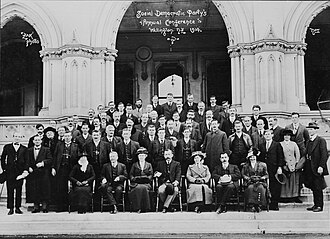
The 1914 General Election
The chaos resulting from the strike left the Social Democrats poorly prepared for the 1914 elections. Planning was minimal, and cooperation with local labour organizations and the remnants of the United Labour Party was sporadic at best.
Despite this lack of organization, two factors bolstered the labour vote: the lingering anger toward the Massey government's "heavy-handed" response to the 1913 strikes and the onset of World War I. These conditions allowed Paddy Webb and James McCombs to retain their seats under the Social Democratic banner. Additionally, the remnants of the United Labour Party won three seats, and John Payne, a labour-aligned independent, also succeeded.
Political Representation by 1915
By 1915, the Social Democrats had established a significant presence across various levels of government, extending beyond Parliament into local administration.
| Governing Body | Number of Representatives |
|---|---|
| Members of Parliament (MPs) | 2 |
| Mayors | 2 |
| City and Borough Councillors | 17 |
| Hospital and Charitable Aid Boards | 6 |
| Harbour Boards | 2 |
Formation of the Official Opposition
Although they belonged to different parties, the six labour-aligned MPs formed a unified front in Parliament. They selected Alfred Hindmarsh of the United Labour Party to serve as the chairman of their unified caucus.
In August 1915, William Massey formed a Liberal-Reform coalition government and invited Hindmarsh's caucus to join. The labour members declined the invitation. By refusing to join the coalition, they effectively became the official Opposition in Parliament.
Key Facts
- Leadership Losses: Harry Holland, Peter Fraser, and Bob Semple were jailed following the suppression of the 1913 strikes.
- Election Success: Paddy Webb and James McCombs successfully retained their seats in the 1914 election.
- Caucus Unity: Six labour-aligned MPs worked together under the chairmanship of Alfred Hindmarsh.
- Political Status: The labour caucus became the official Opposition after rejecting an invitation to join Massey's Liberal-Reform coalition in 1915.
Frequently Asked Questions
Who were the Social Democrat leaders jailed after the strike?
The three leaders jailed for their roles in the strike were Harry Holland, Peter Fraser, and Bob Semple.
How did the 1913 strikes affect the Social Democrats' 1914 election campaign?
The strikes caused significant disarray and a lack of planning for the election, resulting in only sporadic cooperation with other labour organizations.
What factors helped the labour vote in 1914 despite the party's disorganization?
The vote was strengthened by public anger over the government's heavy-handed suppression of the 1913 strikes and the outbreak of World War I.
Who led the unified labour caucus in Parliament?
Alfred Hindmarsh of the United Labour Party was selected as the chairman of the unified caucus.
Why did the labour-aligned MPs become the official Opposition?
They became the official Opposition after declining an invitation from William Massey to join his Liberal-Reform coalition government in August 1915.