Snowboarding: From Counterculture Roots to Olympic Glory
What began as a niche experiment in the mid-1960s has transformed into a global phenomenon. Today, snowboarding is a cornerstone of winter sports, captivating millions of enthusiasts and dominating television screens during the Winter Olympic Games. From its rebellious beginnings on the fringes of ski resorts to its status as a highly technical competitive discipline, the journey of snowboarding is one of rapid evolution and cultural impact.

The Evolution of a Sport
Modern snowboarding was pioneered by visionaries like Tom Sims and Jake Burton Carpenter. The sport's early DNA can be traced back to the 1960s, when Sims, inspired by skateboarding, crafted a board using carpet and aluminum sheeting. In 1968, the first "snurfing" competition—a precursor to modern snowboarding—was held in Michigan, drawing enthusiasts from across the country.
The transition from backyard experimentation to organized competition was solidified in 1979 at the National Snurfing Championship in Muskegon, Michigan. It was here that Jake Burton Carpenter entered a board of his own design, sparking a new era of competitive snowboarding. By the 1980s, the sport began to find its footing, eventually leading to its debut in the Winter Olympic Games in 1998.

Overcoming Resistance
The path to mainstream acceptance was not without friction. In the early years, many ski areas viewed snowboarders with animosity, often banning them from the slopes entirely. In 1985, only 7% of U.S. ski areas permitted snowboarding. However, as equipment technology improved and rider skill levels rose, the culture shifted. By 1990, most major resorts had established dedicated slopes for snowboarders, and today, approximately 97% of ski areas in North America and Europe welcome the sport.
Key Facts
- Origins: Developed in the United States in 1965.
- Olympic Debut: Officially included in the Winter Olympics in 1998.
- Paralympic Inclusion: Adaptive snowboarding debuted at the 2014 Sochi Games.
- Participation: In the 2009–2010 season, there were 8.2 million snowboarders in the US and Canada.
- Demographics: As of 2008, women comprised approximately 25% of participants.
Diverse Snowboarding Styles
Snowboarding is not a monolithic sport; it is a collection of distinct disciplines, each requiring different equipment and skill sets.
Freestyle and Freeride
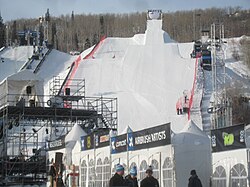
Freestyle snowboarding focuses on creativity and technical tricks. This includes disciplines like Slopestyle (navigating rails and jumps), Big Air (performing massive single jumps), and Halfpipe (riding within a U-shaped snow structure).
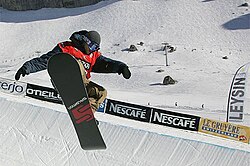
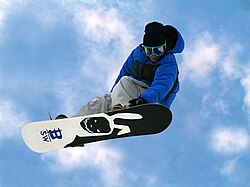
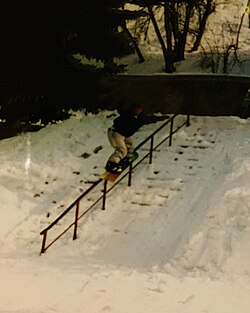
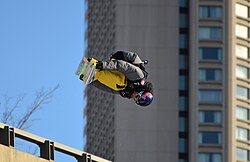
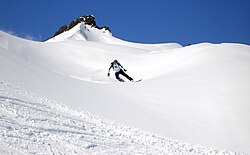
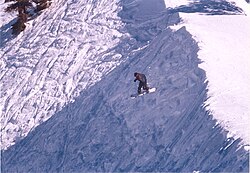
Freeriding involves riding in natural, un-groomed terrain, often far from the main trails. This style emphasizes navigating deep powder and natural obstacles.

Alpine and Racing
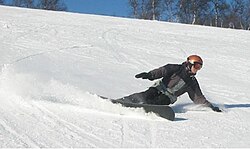
Alpine snowboarding utilizes boards that are narrower, longer, and stiffer to maximize carving performance on hard-packed snow. This is a highly technical style focused on edge control.
In the competitive racing arena, Snowboard Cross (SBX) stands out. Unlike individual time trials, SBX involves 4 to 6 riders racing head-to-head down a course filled with jumps, berms, and obstacles. It has been an official Olympic event since the 2006 Turin Games.
Safety and Injury Prevention
While snowboarding offers immense thrills, it carries inherent risks. Interestingly, injury patterns in snowboarding differ significantly from alpine skiing. While skiers frequently suffer lower-body injuries, two-thirds of snowboarding injuries occur to the upper body.
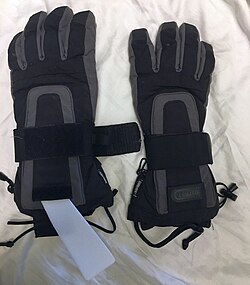
The most common injury is a sprain, accounting for roughly 40% of cases. The wrist is the most vulnerable point, with 40% of all snowboarding injuries affecting the wrist and approximately 100,000 wrist fractures reported worldwide annually. Using protective equipment, such as high-quality helmets and wrist guards, is essential for mitigating these risks.
Summary of Snowboarding Disciplines
| Discipline | Primary Focus | Key Features |
|---|---|---|
| Freestyle | Tricks and Maneuvers | Halfpipes, rails, jumps, and big air |
| Freeride | Natural Terrain | Off-piste, powder, and backcountry |
| Alpine | Carving Performance | Narrow, stiff boards for high-speed turns |
| Snowboard Cross | Head-to-Head Racing | Multiple riders on a course with obstacles |
Frequently Asked Questions
What is the difference between regular and goofy stance?
Stance refers to which foot is placed forward on the board. A rider in a Regular Stance has their left foot forward, while a rider in a Goofy Stance has their right foot forward.
What are the most common snowboarding injuries?
Sprains are the most frequent injury, making up about 40% of cases. The wrists are particularly susceptible, accounting for 40% of all injuries, including many fractures.
What equipment is essential for a beginner?
Essential gear includes a snowboard, bindings, boots, a helmet, goggles, and wrist guards to help prevent common injuries.
How does snowboarding compare to skiing regarding injuries?
Snowboarders are more likely to injure their upper bodies (two-thirds of injuries), whereas skiers more frequently experience lower-body injuries (two-thirds of injuries).
What is Snowboard Cross (SBX)?
Snowboard Cross is a racing discipline where several riders compete simultaneously on a course featuring jumps, berms, and other snow obstacles.