Sloane Street Real Estate and Architectural Character
Sloane Street stands as one of London's most prestigious addresses, blending high-end commercial interests with distinct residential architecture. From the modern luxury of the northern end to the historic charm of the south, the street reflects a unique intersection of global investment and British heritage.
Key Facts
- The Al Maktoum family of Dubai acquired the majority of properties on the west side of Sloane Street near Knightsbridge during the 1990s.
- The Jumeirah Carlton Tower Hotel is owned by the hotels arm of the Dubai Holding Company.
- The southern section features 19th-century Pont Street Dutch style red brick buildings.
- The area is anchored by world-famous retailers including Harrods and Harvey Nichols.
Global Investment and Ownership
The landscape of Sloane Street was significantly shaped in the 1990s when the ruling Al Maktoum family of Dubai, led by Mohammed bin Rashid Al Maktoum, purchased most of the properties on the west side of the street at the Knightsbridge end. This concentration of ownership is supported by the National Bank of Dubai, which established its first overseas branch in London specifically to serve UAE-based visitors who rent these properties during the summer months.
Further extending this influence, the Jumeirah Carlton Tower Hotel is owned by the hotels arm of the Dubai Holding Company, an entity also controlled by Sheikh Mohammed.
Regional Layout and Landmarks
The street is divided into two distinct halves, each offering a different atmosphere and set of amenities.
The Northern Half
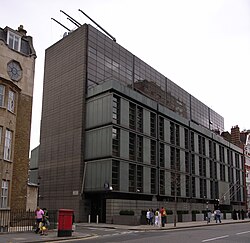
Located near Knightsbridge, the northern section is characterized by modern residential blocks that provide 24-hour porterage—a dedicated concierge service for residents. This area is also home to the Millennium Hotel and the Cadogan Hotel. The neighborhood is surrounded by iconic landmarks: Harvey Nichols sits at the corner of Knightsbridge and Sloane Street, while Harrods is located nearby, adjacent to Hans Place along Basil Street and Hans Crescent. To the east lies Lowndes Square.
The Southern Half
The southern portion of the street possesses a more individual character. It is defined by red brick buildings in the Pont Street Dutch style—an architectural aesthetic characterized by ornate gables—which were constructed in the 19th century by Earl Cadogan. While many of these buildings now house elegant apartments, some residences in the most exclusive stretch between Sloane Square and Cadogan Place have been preserved as whole houses.
Sloane Street Summary
| Feature | Northern Half | Southern Half |
|---|---|---|
| Primary Style | Modern residential blocks | 19th-century Pont Street Dutch |
| Key Architecture | 24-hour porterage blocks | Red brick buildings by Earl Cadogan |
| Notable Landmarks | Harvey Nichols, Millennium Hotel | Sloane Square, Cadogan Place |
| Ownership Influence | Significant Al Maktoum family holdings | Historic residential estates |
Frequently Asked Questions
Who owns much of the west side of Sloane Street?
During the 1990s, the ruling Al Maktoum family of Dubai, led by Mohammed bin Rashid Al Maktoum, purchased most of the properties on the west side of the street at the Knightsbridge end.
What is the Pont Street Dutch style?
The Pont Street Dutch style refers to the 19th-century red brick architectural style used by Earl Cadogan for the buildings in the southern half of Sloane Street.
Which hotel on Sloane Street is linked to the Dubai Holding Company?
The Jumeirah Carlton Tower Hotel is owned by the hotels arm of the Dubai Holding Company, which is controlled by Sheikh Mohammed.
Where is Harrods located in relation to Sloane Street?
Harrods is located next to Hans Place, immediately to the west of Sloane Street along Basil Street and Hans Crescent.
Are there still single-family homes on Sloane Street?
Yes, in the most exclusive residential area between Sloane Square and Cadogan Place, some of the residences have remained as whole houses.