Sir Peter Laurie: The Rise of a London Merchant and Lord Mayor
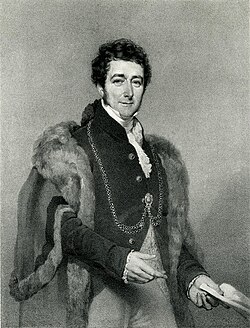
The story of Sir Peter Laurie is a classic tale of ambition and social ascent in 19th-century Britain. Born into a modest agricultural background in Scotland, Laurie transformed himself from a clerk into one of London's most prominent civic leaders, eventually serving as the Lord Mayor of London.
Laurie was born at Stichill, Roxburghshire, the son of John Laurie, a small-scale agriculturist. While his early life remains largely undocumented, it is known that he was initially intended for the ministry of the Established Church of Scotland. However, Laurie chose a different path, venturing south to London with very little money and few connections to seek his fortune.
From Clerk to Commercial Success
Upon arriving in London, Laurie entered the business world as a clerk in a saddler's counting-house. His diligence and ambition paid off; he married the daughter of his employer and eventually established his own merchant business. His commercial trajectory peaked when he became a large-scale contractor for the Indian army.
This venture proved exceptionally lucrative, allowing Laurie to retire from active commercial engagements as a relatively young man with significant wealth. This financial independence provided the foundation for his entry into public service and city governance.
Civic Leadership and Public Office
Sir Peter Laurie's ascent in London's civic hierarchy was rapid. He was elected Sheriff of London and Middlesex in 1823 and subsequently chosen as the Alderman of Aldersgate Ward in 1826. The pinnacle of his civic career came in 1832-33, when he held the prestigious office of Lord Mayor.
Beyond his ceremonial roles, Laurie was a man of action. In 1855, he played a critical role in the prosecution of Davidson and Gordon, two fraudsters who had deceived the public using fictitious warrants. To ensure the culprits could not escape through technical legal loopholes, Laurie insisted that the City Solicitor handle the case. This led to twelve sittings of investigation before the criminals were sent to the Old Bailey for trial.
![Alderman Cute and the Heir to Bowley. Alderman Cute was a character from Charles Dickens' The Chimes and was based on Peter Laurie. Laurie's remarks on the 1844 Mary Furley case have been cited as one inspiration to Dickens to write The Chimes.[4]](/images/eb/f3/ebf3549f90c8c0bf8c50516c075132b4e9bbd2a3d89e1e3c724f7e6c811f68e0.jpg)
Philanthropy and Social Contributions
Laurie dedicated much of his later life to philanthropy and social advancement. He served as the President of both the Bethlehem and Bridewell Hospitals, positions that allowed him to influence the leading social movements of his era. His interests were diverse, spanning from the support of Christian missions—presiding over annual meetings of the Wesleyan Missionary Society—to the promotion of the arts, where he helped originate the Wilkie Memorial.
In addition to these roles, he served as a magistrate and deputy-lieutenant for the city of Westminster and the county of Middlesex, as well as a Commissioner of Lieutenancy for London.
Final Days and Legacy
Sir Peter Laurie married Margaret, the daughter of John Jack, Esq., but the couple had no children. He became a widower in 1847. In his final years, his health declined. While staying in Brighton in late 1855, his condition worsened significantly.
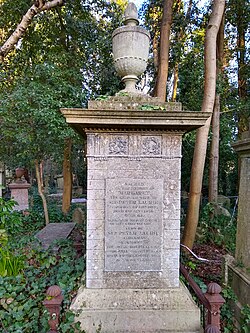
Despite the concerns of his friends who feared the journey might be fatal, Laurie was determined "to die at home." He returned to London on December 1, reaching his residence less than forty-eight hours before his death. He was buried on December 10 in Highgate Cemetery, attended by several members of the Aldermanic body.
Key Facts
- Origins: Born in Stichill, Roxburghshire, Scotland, to a small agriculturist.
- Career Path: Progressed from a saddler's clerk to a successful merchant and Indian army contractor.
- Major Offices: Sheriff of London and Middlesex (1823), Alderman of Aldersgate Ward (1826), and Lord Mayor (1832-33).
- Legal Impact: Instrumental in the prosecution of the Davidson and Gordon fraud case in 1855.
- Philanthropy: President of Bethlehem and Bridewell Hospitals; supporter of the Wesleyan Missionary Society.
- Death: Passed away in London in December 1855 and is buried in Highgate Cemetery.
| Category | Details |
|---|---|
| Early Life | Born in Roxburghshire; originally destined for the Scottish ministry. |
| Business Success | Merchant and contractor for the Indian army. |
| Civic Titles | Sheriff, Alderman, and Lord Mayor of London. |
| Public Service | Magistrate and Deputy-Lieutenant (Westminster and Middlesex). |
| Key Affiliations | Bethlehem Hospital, Bridewell Hospital, Wesleyan Missionary Society. |
Frequently Asked Questions
What was Sir Peter Laurie's original career path?
Before moving to London and entering business, Peter Laurie was originally destined for the ministry of the Established Church of Scotland.
How did Sir Peter Laurie accumulate his wealth?
He began as a clerk in a saddler's counting-house, started his own merchant business, and eventually became a highly successful contractor for the Indian army.
What role did he play in the Davidson and Gordon fraud case?
Sir Peter Laurie insisted that the case be placed in the hands of the City Solicitor to prevent the fraudsters from using technical pleas to avoid justice, leading to their trial at the Old Bailey.
Which charitable organizations did he lead?
He served as the President of the Bethlehem and Bridewell Hospitals and was active in the Wesleyan Missionary Society.
Where is Sir Peter Laurie buried?
He is buried in the west section of Highgate Cemetery in London.