Simla Conference of 1913-1914: Negotiating Tibet's Status
In 1913, the British Empire convoked a high-stakes diplomatic meeting at the Viceregal Lodge in Simla, India. The goal was to resolve the complex and contentious issue of Tibet's political status, a matter involving the competing interests of the British Empire, the newly established Republic of China, and the Tibetan government in Lhasa.
The conference was a clash of three distinct visions: Tibet's desire for full independence, China's claim of territorial integrity, and Britain's strategic need for a stable buffer zone in Central Asia. The resulting negotiations would lead to the conceptualization of "Inner" and "Outer" Tibet, shaping the geopolitical landscape of the region for decades to come.
Key Facts
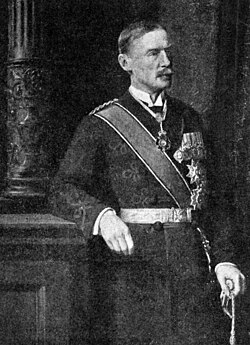
- Participants: Britain (Sir Henry McMahon), China (Ivan Chen), and Tibet (Lonchen Shatra).
- Timeline: Eight formal sessions held between October 13, 1913, and July 3, 1914.
- Locations: The meetings alternated between the hill station of Simla and the capital, Delhi.
- Outcome: A convention was initialled by all three parties on April 27, but ultimately signed only by Britain and Tibet on July 3, 1914.
- Core Concept: The introduction of "Inner Tibet" (shared presence) and "Outer Tibet" (Lhasa's dominion under nominal Chinese suzerainty).
The Plenipotentiaries
The success of the conference rested on the shoulders of three primary representatives, each bringing a different level of experience and authority to the table.
- Sir Henry McMahon: The Foreign Secretary of British India in Delhi, who acted as the primary mediator.
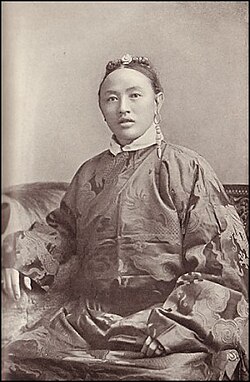
- Lonchen Shatra (Paljor Dorje Shatra): A leading Tibetan prime minister with extensive experience dealing with British India, having accompanied the Dalai Lama during his exile.
- Ivan Chen (I-fan Chen): The Chinese Commissioner for Trade and Foreign Affairs at Shanghai, who had previously served in London and on the Burma–Yunan frontier.
Conflicting Claims and Initial Sessions
The conference opened on October 13, 1913, with a stark contrast in positions. Lonchen Shatra declared that Tibet was an independent state, asserting that Tibet and China had never been under one another. He claimed boundaries extending from the Kuenlun Range in the north to the borders of Sichuan and Yunnan, demanding the return of revenues collected by China from these regions.
Conversely, Ivan Chen presented counter-proposals on October 30, asserting that Tibet was an integral part of China. He argued that any "misunderstandings" were the fault of the Dalai Lama and insisted that China maintain a Resident in Lhasa and guide Tibet's foreign and military affairs.
When the parties clashed over whether to prioritize the political status of Tibet or the definition of its borders, McMahon ruled that the frontier issue would be discussed first. This decision forced the participants to move from abstract political claims to concrete geographical evidence.
The Battle of Evidence and the Frontier
Throughout December 1913, the representatives engaged in a detailed debate over historical occupation. Ivan Chen claimed Chinese occupation as far west as Giamda, citing a boundary pillar erected near Batang in 1727. However, he could provide no documentary proof beyond second-hand reports.
Lonchen Shatra countered with a "mountain of evidence," including taxation and administration records reaching as far as Tachienlu (Kangding). He also cited ancient monoliths in Lhasa and the Chinese capital that recorded a treaty from a millennium prior, as documented in the History of Tibet compiled by the 5th Dalai Lama.
As the deadlock continued, McMahon proposed a compromise to distinguish between two zones:
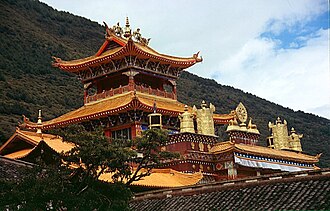
- Inner Tibet: Areas where China had garrisons but could not change the Tibetan administration of tribal states. This would be a zone of shared presence.
- Outer Tibet: The autonomous region under Lhasa's dominion, where Chinese influence was purely nominal (suzerainty).
The Path to the Final Convention
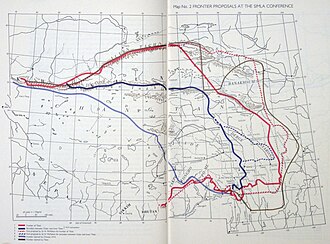
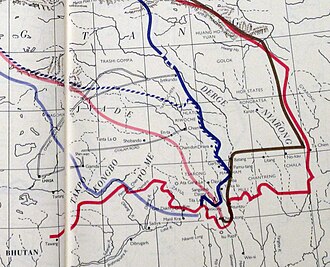
McMahon's proposal of two zones met with resistance. Lonchen Shatra fought to include Batang and Litang in Outer Tibet, while Ivan Chen argued that China had already restored Inner Tibet to Sichuan province. Despite these tensions, a draft convention and map were initialled by all three parties on April 27, 1914, though Chen did so reluctantly, believing it did not constitute final acceptance.
Between April and June, the situation deteriorated. China repudiated the initialled draft, claiming Chen had been coerced. Meanwhile, Britain consulted with Russia to adhere to the Anglo-Russian Convention of 1907, which designated Tibet as a neutral zone.
By late June, the British government, believing China was bluffing, decided to proceed with Tibet alone. On July 3, 1914, in a late-night session, the Convention was initialled by Britain and Tibet. Ivan Chen, still lacking final instructions from Beijing, declined to sign.
Summary of the Simla Conference
| Feature | Tibetan Position | Chinese Position | British Proposal (McMahon) |
|---|---|---|---|
| Political Status | Fully Independent State | Integral Part of China | Outer Tibet (Autonomous) / Inner Tibet (Shared) |
| Frontier Claims | Up to Tachienlu (Kangding) | Effective occupation as far west as Giamda | Defined by historical records and the "Blue Line" |
| Administration | Local Tibetan control | Chinese Resident in Lhasa | Lhasa's dominion in Outer Tibet |
| Final Agreement | Signed/Initialled | Repudiated | Signed/Initialled with Tibet |
Frequently Asked Questions
What was the primary purpose of the Simla Conference?
The conference was convened by the British to resolve the dispute over Tibet's political status and define its boundaries between the competing claims of the Republic of China and the Tibetan government.
What is the difference between Inner and Outer Tibet?
Inner Tibet was proposed as a region of shared presence where China had garrisons but Tibet maintained administration. Outer Tibet was intended to be the autonomous dominion of Lhasa, subject only to nominal Chinese suzerainty.
Why did China refuse to sign the final convention?
China repudiated the agreement, claiming that their representative, Ivan Chen, had been coerced and that the convention's terms regarding the boundary between Inner and Outer Tibet were unacceptable to the government in Beijing.
Who were the key representatives at the conference?
The conference was led by Sir Henry McMahon for Britain, Lonchen Shatra for Tibet, and Ivan Chen for the Republic of China.
Did the conference result in a legally binding agreement for all parties?
No. While all three parties initially signed a draft in April, the final convention signed on July 3, 1914, was only binding between Britain and Tibet, as China refused to sign.