Shrimp vs. Prawn: Understanding the Differences in Terminology and Taxonomy
Whether you are browsing a seafood menu or studying marine biology, you have likely encountered the terms shrimp and prawn. While they are often used interchangeably in casual conversation, the distinction between the two is a subject of linguistic debate and regional variation. At their core, both are small aquatic crustaceans belonging to the order of decapods—creatures characterized by having ten legs and a protective exoskeleton.
Despite the common tendency to categorize them by size, the truth is more complex. The terms "shrimp" and "prawn" are vernacular, meaning they are colloquial names rather than formal scientific classifications. Because they lack a strict taxonomic definition, their usage varies wildly depending on where you are in the world.
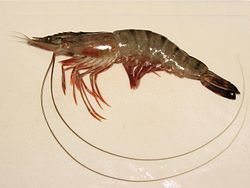
Key Facts
- Non-Scientific Terms: Neither "shrimp" nor "prawn" are formal taxonomic names; they are terms of convenience.
- Anatomy: Both are decapods with ten legs and an exoskeleton.
- Regional Usage: In the US, "shrimp" is the general term; in the UK and Commonwealth nations, "prawn" is more common for larger species.
- Size Variation: While often associated with smallness, some species (like Penaeus monodon) can exceed 25 cm in length.
- Interchangeability: In contemporary English, the two terms are almost entirely interchangeable.
The Linguistic Divide: Shrimp vs. Prawn
The confusion between these two terms often stems from the association of the word "shrimp" with small size. This has led to the famous oxymoron "jumbo shrimp," a contradiction that does not exist with the term "jumbo prawns."
Etymology and Origins
The word "shrimp" appeared around the 14th century, derived from the Middle English shrimpe and Middle Low German schrempen, meaning "to contract or wrinkle." Interestingly, linguists note that it is unclear why English associated this word with smallness, as other Germanic or Romance languages do not share this specific size-based association. The term "prawn" surfaced in England in the early 15th century in forms such as prayne or prane.
Scientific Perspectives
From a biological standpoint, experts like Raymond Bauer describe shrimp as having long antennae, slender legs, and a muscular abdomen adapted for forward swimming and backward escape responses. Prawns are often used as synonyms for penaeoid and caridean shrimp, particularly those of a larger size.
Taxonomists, including Tin-Yam Chan, emphasize that these terms have no definite reference to any known taxonomic group. While some biologists attempt to confine these names to specific taxa, popular usage continues to ignore these boundaries.
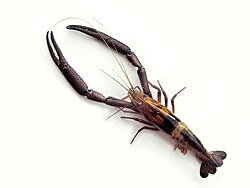
Regional Distinctions in Usage
The way these animals are named depends heavily on geography and local fishing traditions.
- United Kingdom, Ireland, and Commonwealth: These regions generally follow British usage. "Shrimp" is typically applied to smaller species that are dorsoventrally depressed (wider than they are deep) with a shorter rostrum (the beak-like projection). "Prawn" is used for larger forms that are laterally compressed (deeper than they are wide) with a long rostrum.
- United States: "Shrimp" is the dominant general term. "Prawn" is used much less frequently, typically reserved for very large species or those found in freshwater.
- New Zealand: A common rule of thumb here is that shrimp are small (three inches or less) and caught by netting in shallow water, while prawns are larger (up to 12 inches) and caught by trapping or trawling.
- Australia: Usage is varied; some authors call small Palaemonidae prawns, while others categorize Alpheidae as pistol shrimp.
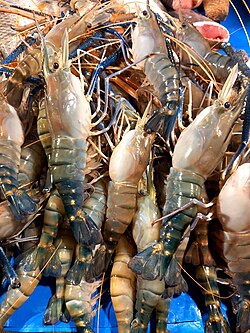
Summary of Differences
| Feature | Shrimp (Common Usage) | Prawn (Common Usage) |
|---|---|---|
| Scientific Standing | Vernacular/Colloquial | Vernacular/Colloquial |
| Typical Size | Generally perceived as smaller | Generally perceived as larger |
| US Preference | Primary general term | Used for freshwater or giant species |
| UK/Commonwealth Preference | Small, wider bodies | Large, deeper bodies |
| Body Shape | Often dorsoventrally depressed | Often laterally compressed |
Frequently Asked Questions
Is there a scientific difference between a shrimp and a prawn?
No. In scientific literature, "shrimp" and "prawn" are not formal taxa. They are common names used for convenience and do not have a strict biological definition that separates one from the other.
Why are they called "jumbo shrimp" in the US?
This is a linguistic quirk. Because "shrimp" is the general term for these crustaceans in North America regardless of size, the word "jumbo" is added to describe larger species, even though the word "shrimp" itself is often associated with being small.
Which one is larger, a shrimp or a prawn?
In colloquial terms, prawns are usually considered larger. However, this is not a biological rule. Some shrimp species, such as the giant tiger prawn (Penaeus monodon), can grow larger than 25 cm, far exceeding the size of many animals called prawns.
Are prawns only found in the ocean?
No. While many are marine, the term "prawn" is frequently used in the United States to refer to freshwater shrimp species.
What is a decapod?
A decapod is a member of an order of crustaceans characterized by having ten legs. This group includes not only shrimp and prawns but also crabs and lobsters.