Shorthand: The History and Evolution of Rapid Symbolic Writing
In a world that moves at the speed of speech, the ability to capture spoken words in real-time is a vital skill. This is the essence of shorthand, an abbreviated symbolic writing method designed to increase speed and brevity compared to standard longhand. Whether it is used by journalists, legal professionals, or in computerized autocomplete functions, shorthand serves as a bridge between the spoken and the written word.
The technical term for the process of writing in shorthand is stenography, derived from the Greek stenos (narrow) and graphein (to write). Depending on whether the primary goal is extreme compression or pure speed, the practice is also referred to as brachygraphy (short writing) or tachygraphy (swift writing).
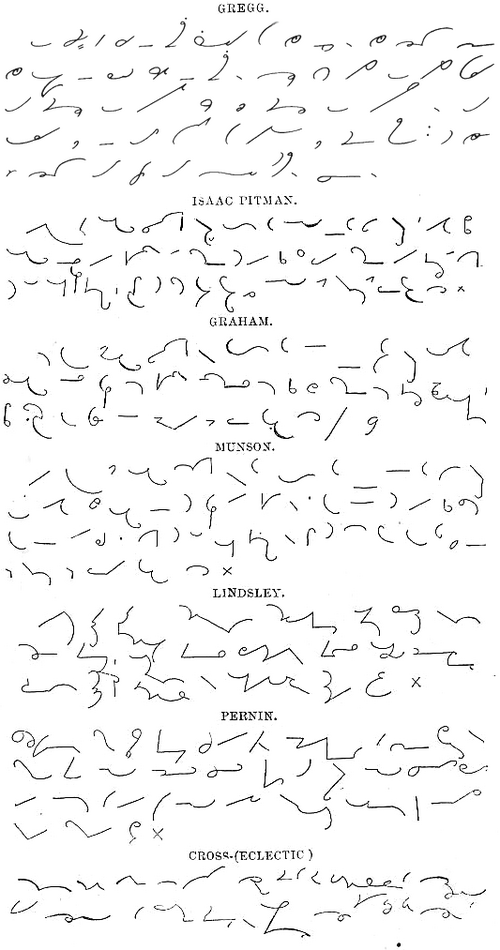
Key Facts
- Stenography is the process of using symbols or abbreviations to write as fast as people speak.
- The earliest known system, Tironian notes, was developed in Ancient Rome by Marcus Tullius Tiro.
- Pitman shorthand uses a phonemic approach, often called phonography, focusing on sounds rather than spelling.
- Modern journalists in the UK frequently use Teeline shorthand.
- Shorthand systems can be geometric (using shapes) or script-like (based on cursive handwriting).
The Ancient Roots of Stenography
The history of rapid writing stretches back to Classical antiquity. One of the most significant early developments was the creation of Tironian notes by Marcus Tullius Tiro, a freedman of the Roman orator Cicero. Tiro developed these notes to transcribe Cicero's speeches, utilizing Latin word stem abbreviations (notae) and word ending abbreviations (titulae).
While the system originally contained about 4,000 signs, it eventually expanded to as many as 13,000. Although the Tironian notes fell out of common use after the decline of the Roman Empire, they remained known during the Carolingian Renaissance before being largely forgotten after the 11th century.
The Rise of Modern Shorthand in Europe and North America
Interest in "short-writing" resurfaced in England toward the end of the 16th century. Early pioneers like Timothy Bright introduced systems using arbitrary symbols, while Thomas Shelton’s Short Writing (later known as Tachygraphy) became immensely popular due to its ease of use, despite the difficulty of distinguishing between certain vowels and diphthongs without context.
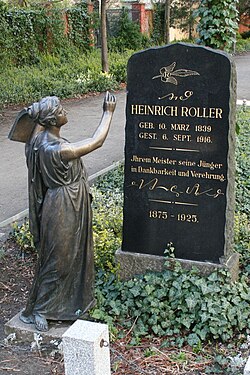
By the 18th and 19th centuries, shorthand became more structured. John Byrom introduced geometric shorthand in 1720, and in 1834, Franz Xaver Gabelsberger developed a system in Germany based on the shapes of German cursive handwriting. This marked a shift toward script-like systems, which are based on the natural motions of ordinary handwriting.
The Impact of Pitman and Gregg Systems
In 1837, Isaac Pitman introduced Pitman shorthand, a system utilizing phonemic orthography—writing based on sounds. This method, often called phonography, allows for incredible speed because vowel sounds can be omitted if the consonants are sufficient to identify a word. A notable record for Pitman shorthand was set in 1922 by Nathan Behrin, who reached 350 words per minute (wpm).
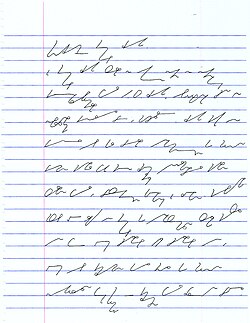
Following Pitman, John Robert Gregg introduced Gregg shorthand in 1888. Gregg's system is classified as semi-script, a compromise between geometric and script-based systems, utilizing elliptical shapes that mimic natural writing motions.
The Legacy of Andrew J. Graham
During the era between the Pitman and Gregg systems, Andrew J. Graham developed "Graham's Brief Longhand." This system saw significant adoption in the United States during the late 19th century. Interestingly, the former U.S. President Woodrow Wilson was a master of the Graham system, writing his personal correspondence in it throughout his life.
Global Variations and Classifications
Shorthand has evolved uniquely across different cultures and linguistic needs:
- Japan: Modern Japanese pen shorthand began in 1882, influenced by the American Pitman-Graham system but adapted to Japanese writing motions.
- Korea: Practical Hangul shorthand saw significant development in the 1940s and 1950s, with the parliamentary style (Uihoesik) becoming a standard in 1969.
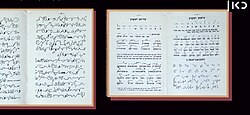
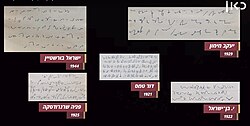
- Linguistic Scripts: Shorthand has been adapted for various scripts, including Yiddish and Hebrew.
System Classifications
Shorthand can generally be categorized into three main types:
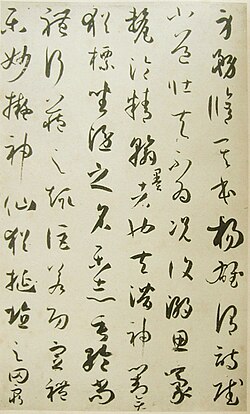
- Geometric and Script-like: These use shapes (geometric) or mimic handwriting (script). Examples include Gabelsberger and Gregg.
- Semi-script: A hybrid approach, such as Gregg shorthand, which uses elliptical motions.
- Alphabetic Systems: These use characters from the standard alphabet. While they cannot reach the extreme speeds of symbolic systems (often topping out at 70–100 wpm), they are much faster to learn.
Summary of Notable Shorthand Systems
| System Name | Primary Characteristic | Key Figure/Origin |
|---|---|---|
| Tironian Notes | Latin word stem/ending abbreviations | Marcus Tullius Tiro (Rome) |
| Pitman Shorthand | Phonemic (sound-based) orthography | Isaac Pitman |
| Gregg Shorthand | Semi-script/Elliptical motions | John Robert Gregg |
| Teeline Shorthand | Spelling-based; common in UK journalism | James Hill |
| Gabelsberger | Script-based (German cursive) | Franz Xaver Gabelsberger |
Frequently Asked Questions
What is the difference between stenography and steganography?
Stenography is the method of rapid writing using symbols to record speech. Steganography, conversely, is the process of concealing information within a message.
Why is Pitman shorthand called phonography?
It is called phonography because it uses a phonemic orthography, meaning it is based on the sounds of words rather than their traditional spelling.
Can anyone learn shorthand quickly?
It depends on the system. Alphabetic shorthand systems are much faster to acquire, allowing for speeds of 70 to 100 words per minute, whereas true symbolic stenographic systems may require years of dedicated training to master high speeds.
What is the fastest recorded shorthand speed?
In 1922, Nathan Behrin recorded a speed of 350 words per minute using the Pitman shorthand system during a two-minute test.
How is shorthand used in the digital age?
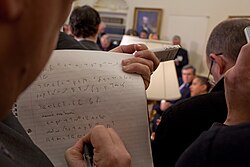
While manual shorthand is used by journalists and court reporters, digital shorthand exists in the form of autocomplete programs in text editors, which use word lists to expand frequently used phrases automatically.