Short-Track Speed Skating: High-Speed Competition on Ice
Short-track speed skating is a high-intensity form of competitive ice speed skating that demands precision, agility, and immense physical strength. Unlike long-track speed skating, which often involves athletes racing in pairs against the clock, short-track features multiple skaters—typically between four and six—competing simultaneously on a compact oval track. This format creates a dynamic, tactical environment where positioning and strategy are just as vital as raw speed.
The competition takes place on an oval ice track measuring 111.12 metres (364.57 ft) in length. The rink itself is 60 metres (196.85 ft) long and 30 metres (98.43 ft) wide, making it the same dimensions as an Olympic-sized figure skating rink or an international ice hockey rink.
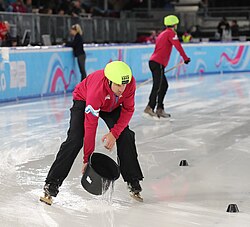
The Evolution of the Sport
Short-track skating originated from mass-start speed skating events. While the international form of speed skating was derived from Europe and primarily featured athletes skating in pairs, the North American style—practiced heavily in the United States and Canada—favored mass starts. In the early 20th century, these competitions were often held indoors in configurations similar to roller derby.
The International Skating Union (ISU), the sport's highest governing body, officially adopted short-track speed skating in 1967. Although international competitions began in 1976, the World Championships were not officially established until 1981. The competition underwent several name changes before settling on the "World Short Track Speed Skating Championships" in 1989.
Olympic Journey
Short-track made its debut as a demonstration sport at the 1988 Winter Olympics in Calgary, Canada. It was elevated to a full Olympic sport in 1992. Since then, the program has steadily expanded from just four events to include a variety of distances and the recently added mixed-team relay.
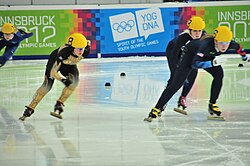
Competition Formats and Equipment
Short-track events are held for both men and women, though they are separate competitions. The standard Olympic distances include the 500m, 1000m, and 1500m. Relay races vary by gender, with men competing in the 5000m relay and women in the 3000m relay. Additionally, a 2000m mixed-team relay debuted at the 2022 Winter Olympics.
Due to the high speeds and close proximity of competitors, safety is paramount. Athletes must use specialized equipment, including:
- Ice skates
- Helmets
- Gloves
- Suits
- Shin guards
- Neck guards
- Safety glasses
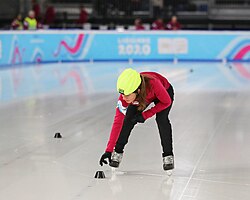
Rules and Disqualifications
Because skaters compete in tight packs, the ISU enforces strict rules to ensure safety and fair play. Violations can lead to immediate disqualification, invalidation of times, or temporary suspension. Key offenses include:
- Impeding: Intentionally pushing, blocking, or tripping another skater.
- Off track: Skating outside or inside the designated track boundaries.
- Assistance: Providing physical aid, such as pushing a teammate or allowing them to lean for stability.
- Shooting the line or Kicking out: Driving the lead foot forward to reach the finish, causing it to lift off the ice and create danger.
- Unsportsmanlike conduct: Behavior such as cursing at competitors or striking officials.
- False Start: Leaving the line before the starter's pistol. Under 2023 regulations, an offender must leave after the first false start.
Relay Specific Rules
In relay races, teams of four skaters exchange turns by tagging or pushing. While pushing is often used to help an incoming skater gain speed, specific rules apply:
- A skater may be relayed at any time except during the final two laps.
- Teams must receive a proper tag from a teammate.
- Exchanges cannot occur after the center red line when only three laps remain.
Key Facts
- Governing Body: International Skating Union (ISU).
- Olympic Status: Full medal sport since 1992.
- Track Dimensions: 111.12m length; 60m x 30m rink.
- Core Distances: 500m, 1000m, 1500m, and Relays.
- Mixed Events: 2000m mixed-team relay.
Summary of World Records
| Category | Distance | Athlete | Nation | Record Time |
|---|---|---|---|---|
| Men | 500 m | Wu Dajing | China | 39.505 |
| Men | 1000 m | Hwang Dae-heon | South Korea | 1:20.875 |
| Women | 500 m | Xandra Velzeboer | Netherlands | 41.399 |
| Women | 1000 m | Suzanne Schulting | Netherlands | 1:25.958 |
| Mixed | 2000 m Relay | Netherlands Team | Netherlands | 2:35.339 |
Frequently Asked Questions
What is the difference between short-track and long-track speed skating?
Short-track is held on a smaller oval with multiple skaters racing at once in a pack, whereas long-track is typically held on a larger track with athletes racing in pairs against the clock.
What happens if a skater falls during a race?
If a skater falls and cannot finish, they are marked as "Did not finish." In relay races, if a member falls, the next teammate must still successfully receive a tag to continue.
Is short-track speed skating a mixed-sex sport?
While most individual competitions are separate for men and women, the sport includes mixed-sex competition in the form of the 2000-meter mixed-team relay.
What is "shooting the line"?
Shooting the line (or kicking out) occurs when a skater drives their lead foot forward to reach the finish line faster, causing the foot to lift off the ice, which is considered a dangerous maneuver.
How many skaters are on a relay team?
Each relay team consists of four skaters who take turns skating around the track.