Sheriff Court: The Foundation of Scotland's Local Justice System
The Sheriff Court (Scottish Gaelic: Cùirt an t-Siorraim) serves as the primary local court for both civil and criminal matters in Scotland. Operating as a cornerstone of the Scottish judiciary, these courts handle the vast majority of legal disputes and criminal prosecutions, providing accessible justice across various districts.
From managing small claims to presiding over serious indictable offenses, the Sheriff Court bridges the gap between minor local disputes and the supreme courts of Scotland. It is presided over by a sheriff, a legally qualified judge who ensures the law is applied consistently across the nation's six sheriffdoms.
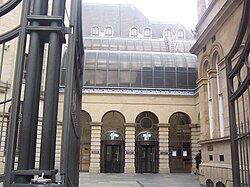
Key Facts
- Civil Jurisdiction: Exclusive authority over civil cases with a monetary value up to £100,000.
- Criminal Jurisdiction: Hears almost all criminal cases except treason, murder, and rape.
- Structure: Organized into six sheriffdoms containing 39 individual courts.
- Sentencing Power: Up to 12 months imprisonment/£10,000 fine for summary cases; up to 5 years imprisonment/unlimited fine for solemn cases.
- Appointment: Sheriffs are appointed by the Monarch based on recommendations from the First Minister and the Judicial Appointments Board for Scotland.
Jurisdiction and Legal Procedures
The remit of the Sheriff Court is broad, covering both civil and criminal law. In civil matters, the court typically conducts bench trials without a jury. A notable exception is the specialist Sheriff Personal Injury Court in Edinburgh, which has the authority to hear cases with a jury of twelve.
Criminal proceedings are divided into two distinct categories based on the severity of the offense:
- Summary Procedure: A bench trial where the sheriff sits alone. These are used for less serious offenses.
- Solemn Procedure: A trial involving a jury of fifteen, used for more serious indictable offenses.
While the Sheriff Court has concurrent jurisdiction with the High Court over specific crimes—such as drug trafficking, armed robbery, and sexual offenses involving children—the High Court typically handles the majority of these high-profile cases.
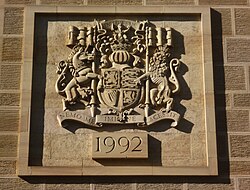
The Structure of Sheriffdoms
Scotland is divided into six sheriffdoms, each led by a Sheriff Principal. Within these sheriffdoms are various court districts. While some rural courts are small, urban centers handle massive volumes of litigation; for instance, the Glasgow Sheriff Court is recognized as the busiest court in Europe.
The administrative side of the courts is managed by the Scottish Courts and Tribunals Service, a non-ministerial government department. The most senior civil servant at each local court is the sheriff clerk, who is responsible for the court's daily management.
| Sheriffdom | Sheriff Principal | Example Courts |
|---|---|---|
| Glasgow and Strathkelvin | Aisha Anwar | Glasgow and Strathkelvin |
| Grampian, Highlands and Islands | Andrew Miller | Aberdeen, Inverness, Kirkwall |
| Lothian and Borders | Nigel Ross | Edinburgh, Livingston, Selkirk |
| North Strathclyde | Sean Murphy KC | Paisley, Greenock, Kilmarnock |
| South Strathclyde, Dumfries and Galloway | Kate Dowdalls | Ayr, Dumfries, Hamilton |
| Tayside Central and Fife | Gillian Wade KC | Dundee, Perth, Stirling |
Appeals and Relationship to Other Courts
The Sheriff Court sits above the Justice of the Peace Courts (which handle minor offenses) and below the Supreme Courts of Scotland. The path of appeal depends on the nature of the case:
- Summary Criminal and Small Claims: Appeals are directed to the Sheriff Appeal Court.
- Solemn Criminal Proceedings: Appeals are heard by the High Court of Justiciary.
- Other Civil Proceedings: Appeals are directed to the Inner House of the Court of Session.
Historical Evolution and Modern Reform
The office of the sheriff originated in the early Scottish monarchy as a hereditary position held by local lords to preserve the King's authority. Over time, judicial functions were delegated to trained lawyers known as sheriff-deputes. The Heritable Jurisdictions (Scotland) Act 1746 eventually abolished hereditary sheriffs, transitioning the role into a professional judicial appointment.
In recent years, the system has undergone significant modernization. The 2009 Scottish Civil Courts Review, led by Lord Gill, proposed a major shift of caseloads from the Court of Session to the sheriff courts to increase efficiency. This led to the creation of the Scottish Civil Justice Council in 2013 and the introduction of specialized judges for areas such as family law and commerce.
Frequently Asked Questions
What is the difference between summary and solemn procedure?
Summary procedure involves a bench trial where the sheriff decides the verdict alone, typically for less serious crimes. Solemn procedure involves a jury of fifteen and is used for more serious indictable offenses.
What is the maximum sentence a sheriff can give in a summary case?
In summary cases, a sheriff can impose a maximum sentence of twelve months imprisonment and/or a fine of up to £10,000.
Which crimes cannot be heard in a Sheriff Court?
Treason, murder, and rape fall under the exclusive jurisdiction of the High Court of Justiciary and cannot be tried in a Sheriff Court.
How are sheriffs appointed in Scotland?
Sheriffs are appointed by the Monarch following a recommendation from the First Minister of Scotland, who in turn receives a recommendation from the Judicial Appointments Board for Scotland.
What happens if someone wants to appeal a Sheriff Court decision?
Depending on the case, appeals go to the Sheriff Appeal Court (for summary criminal and small claims), the High Court of Justiciary (for solemn criminal cases), or the Court of Session (for other civil actions).