Shanghai Hongqiao International Airport: A Century of Aviation Excellence
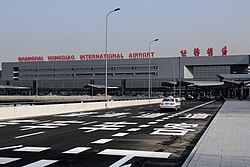
Located in the Changning and Minhang districts of Shanghai, Shanghai Hongqiao International Airport (SHA) stands as a cornerstone of China's aviation infrastructure. With a history stretching back nearly a century, this facility has evolved from a modest airfield into a sophisticated global hub, serving as a primary gateway for both domestic and international travelers.
As a major hub for China Eastern Airlines, Shanghai Airlines, and Juneyao Air, the airport plays a vital role in the regional economy. In 2025, the airport demonstrated its massive scale by handling over 50 million passengers, ranking it as the 8th busiest airport in China and the 42nd busiest in the world.
Key Facts
- IATA Code: SHA
- ICAO Code: ZSSS
- Owner/Operator: Shanghai Airport Authority
- Major Hubs: China Eastern Airlines, Juneyao Air, Shanghai Airlines, Air China
- 2025 Passenger Volume: 50,151,025
- Skytrax Rating: 5-Star Airport (2025)
Historical Evolution
The foundations of Hongqiao Airport were laid in 1921, with the airport officially opening for mixed civilian use in May 1923. Its early history was marked by significant military involvement, including the deployment of fighter-attack planes during the Shanghai Incident of 1932. Following periods of occupation and military use, the airport was rebuilt for civilian purposes in 1964.
The International Era (1964–1999)
The opening of the original Terminal 1 and the control tower in 1964 marked a new chapter. At the time, the terminal was highly advanced, offering amenities such as banks, cafes, and even a hotel. During this era, the airport hosted notable figures, including U.S. President Richard Nixon in 1972. As China's reform and opening up progressed in the late 1970s, Hongqiao became a critical stopover for international airlines like Pan Am, United Airlines, and Singapore Airlines.
The Modern Domestic and International Era
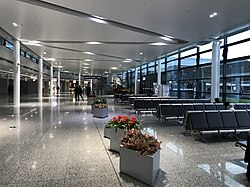
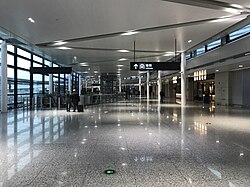
To prepare for the 2010 Shanghai Expo, the airport underwent a massive 15.3-billion-yuan expansion. This project introduced Terminal 2, a facility four times the size of Terminal 1, and a second runway. This expansion increased the airport's capacity to 40 million passengers annually. While international flights were temporarily suspended due to the COVID-19 pandemic, they successfully resumed in March 2023.
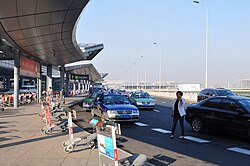
Airport Infrastructure and Operations
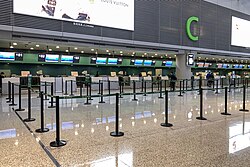
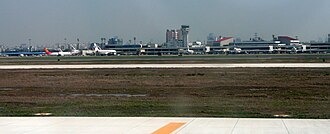
The airport operates with two primary runways to manage its high volume of aircraft movements. Terminal 2 serves as the primary hub for domestic airlines, while Terminal 1 focuses on international services and specific carriers like Spring Airlines.
| Feature | Details |
|---|---|
| Elevation | 3 m (9.8 ft) AMSL |
| Runway 18L/36R | 3,400 m (11,155 ft) - Asphalt |
| Runway 18R/36L | 3,300 m (10,827 ft) - Concrete |
| 2025 Cargo Volume | 445,265.5 Tonnes |
| 2025 Aircraft Movements | 282,692 |
Ground Transportation
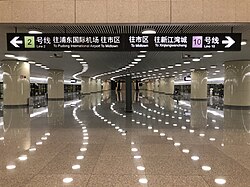
Connectivity is a hallmark of Hongqiao. The airport is integrated into the Shanghai metro network through several key stations:
- Hongqiao Railway Station: Served by Line 2, Line 10, and Line 17.
- Hongqiao Airport Terminal 2 Station: Served by Line 2, Line 10, and the Airport Link Line.
- Hongqiao Airport Terminal 1 Station: Served by Line 10.
The Airport Link Line, established in December 2024, provides a direct connection to Shanghai Pudong Airport, enhancing the efficiency of travel between the city's two major aviation hubs.
Frequently Asked Questions
Which airlines use Shanghai Hongqiao Airport?
The airport is a major hub for China Eastern Airlines, Shanghai Airlines, and Juneyao Air. Other notable carriers include Air China, Spring Airlines, and various international airlines such as ANA and Cathay Pacific.
How do I get from Hongqiao Airport to the city center?
The most efficient way is via the Shanghai Metro. Lines 2 and 10 provide extensive coverage to various parts of Shanghai, with specific stations located at both Terminal 1 and Terminal 2.
What is the difference between Terminal 1 and Terminal 2?
Terminal 2 is significantly larger and houses approximately 80% of the airport's domestic airlines. Terminal 1 is primarily utilized for international flights and specific carriers like Spring Airlines, Hebei Airlines, and XiamenAir.
Is the airport Skytrax certified?
Yes, in 2025, Shanghai Hongqiao Airport was certified with the Skytrax 5-Star Airport Rating for its facilities, terminal comfort, cleanliness, shopping, food and beverage options, and staff service.
How many runways does the airport have?
The airport operates two runways: 18L/36R (3,400 meters, asphalt) and 18R/36L (3,300 meters, concrete).