Shakhtar Donetsk: The Rise of Ukraine's Football Powerhouse
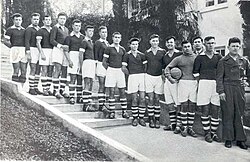
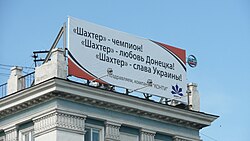
Founded on May 24, 1936, FC Shakhtar Donetsk has evolved from a regional team into one of Eastern Europe's most formidable football institutions. Known by the nicknames Hirnyky (The Miners) and Kroty (The Moles), the club reflects the industrial heritage of its home city, Donetsk. Over nearly nine decades, Shakhtar has transitioned from the Soviet league system to becoming a dominant force in the Ukrainian Premier League and a respected competitor on the global stage.
The club's identity is deeply intertwined with its community and its evolution through different political eras, moving from the ownership of the Gorky Coal Mine Trade Union Committee during the Soviet period to the modern era under President Rinat Akhmetov.
Key Facts
- Founded: May 24, 1936.
- Major European Achievement: UEFA Cup Winners (2008–09).
- Domestic Dominance: Record 9-time winners of the Ukrainian Super Cup.
- Iconic Figures: Darijo Srna (all-time appearance leader) and Mircea Lucescu (transformative manager).
- Current Status: Competing in the Ukrainian Premier League under head coach Arda Turan.
Historical Evolution and Soviet Era
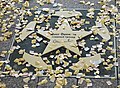
In its first two decades, Shakhtar established itself within the Soviet football hierarchy. The club saw significant early success, winning the Soviet First League in 1954 and securing four Soviet Cup titles (1961, 1962, 1980, and 1983). During this era, players like Vitaliy Starukhin emerged as legends, with Starukhin being named the Soviet Footballer of the Year in 1979.
![A star in the Shakhtar Walk of Fame in honor of Vitaliy Starukhin, considered by many fans the greatest player in the history of Shakhtar.[11]](/images/55/50/5550bbd727e5adcacbe697f434a831fdfcebebc51a33847717aa19dbbcb00bb6.jpg)
The club's resilience was evident in its ability to compete with the top Soviet sides, finishing as runners-up in the Soviet Top League twice, in 1975 and 1979. This period laid the foundation for the professional standards and competitive spirit that would define the club in the post-Soviet era.
The Akhmetov Era and Brazilian Influence
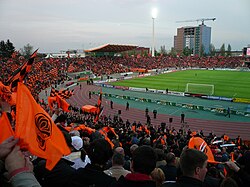
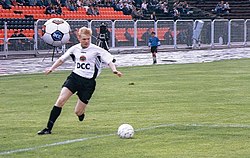
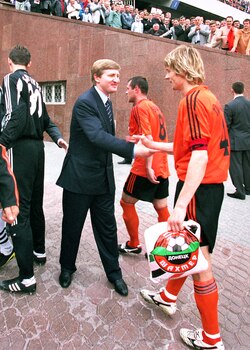
The modern trajectory of Shakhtar Donetsk changed significantly under the presidency of Rinat Akhmetov, who took over in 1996. This era was marked by a strategic shift in recruitment, specifically the acquisition of talented Brazilian players. This trend was so pronounced that the club earned the nickname "the most Brazilian club in Europe."
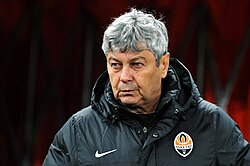
Under the guidance of manager Mircea Lucescu, who took over in 2004, Shakhtar became the dominant force in Ukrainian football. This period saw the club break the hegemony of other domestic rivals and establish a consistent presence in the UEFA Champions League.
European Glory and Individual Brilliance
The pinnacle of the club's international success came in the 2008–09 season when Shakhtar won the UEFA Cup, defeating Werder Bremen 2–1 in the final. They followed this achievement by reaching the 2009 UEFA Super Cup final, where they finished as runners-up after a narrow loss to Barcelona.
Individual brilliance played a key role during this ascent. Henrikh Mkhitaryan set a Ukrainian Premier League record with 25 goals in a single season (2012–13) and was named the CIS Footballer of the Year. Similarly, Luiz Adriano became one of the club's most prolific scorers, eventually becoming the all-time leading goalscorer with 128 goals.
![Henrikh Mkhitaryan was named the 2012 CIS Footballer of the Year[39] and set the Ukrainian Premier League record for goals scored in one season (25).[40]](/images/2b/48/2b48425014d2cbd64c628118d1d2c742cb2bd92207e5e817a3c9ad5a891f34c3.jpg)
Infrastructure and Displacement
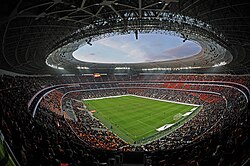
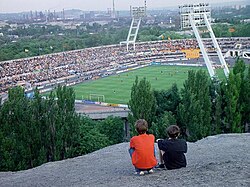
For years, the club's heart was the Donbas Arena, a world-class facility that earned a UEFA four-star rating, the highest possible. However, the conflict in the Donbas region forced the club into exile. Since 2014, Shakhtar has had to play home matches in various cities, including Lviv and Kharkiv, and more recently in Kraków for European competitions.
Despite these challenges, the club has maintained its professional infrastructure, including a robust youth academy and U-19 and U-21 teams to ensure a steady pipeline of talent.
Club Summary and Records
| Category | Details |
|---|---|
| Current Stadiums | Arena Lviv, Henryk Reyman Municipal Stadium (European cups) |
| Major Trophies | UEFA Cup (1), Soviet Cup (4), Ukrainian Super Cup (9) |
| All-time Appearance Leader | Darijo Srna (536 appearances) |
| All-time Top Scorer | Luiz Adriano (128 goals) |
| Current President | Rinat Akhmetov |
![Team captain Darijo Srna, one of the greatest players in the history of the team[11] and considered by some "the icon of Shakhtar."[30]](/images/20/42/2042ba325c22bac44ece2dfa803750ea6b1efa034403625116761cd473fe0eac.jpg)
Frequently Asked Questions
Who is the most successful manager in Shakhtar's history?
Mircea Lucescu is widely regarded as the most influential manager, having led the club to domestic dominance and the 2009 UEFA Cup title.
Why is Shakhtar associated with Brazilian football?
The club implemented a recruitment strategy that brought in a large number of Brazilian players, leading to the nickname "the most Brazilian club in Europe."
Where does Shakhtar Donetsk play its home games now?
Due to the war in Donbas, the club is in exile and uses various venues, including Arena Lviv and the Henryk Reyman Municipal Stadium in Kraków for European matches.
What is the club's greatest European achievement?
Their greatest achievement was winning the UEFA Cup in the 2008–09 season.
Who holds the record for the most appearances for the club?
Darijo Srna holds the record with 536 total appearances, making him an icon of the club.