Shade Gardening: Designing and Managing Low-Light Landscapes
While many gardeners focus on chasing the sun, shade gardens offer a unique and tranquil alternative. These gardens are cultivated in areas receiving little to no direct sunlight, such as under tree canopies, alongside buildings, or near fences. Although often perceived as more difficult due to challenges with light, drainage, and soil management, shade gardens provide a lush opportunity to showcase diverse foliage textures and a spectrum of green hues.
Beyond their aesthetic appeal, shade gardens can serve as cool, outdoor retreats during high temperatures. By understanding the nuances of light levels and soil conditions, you can transform a dark corner of your yard into a thriving ecosystem.
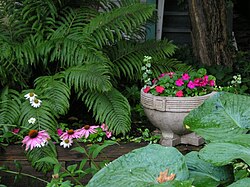
Ferns and small flowers are common shade garden plants
Key Facts
- Shade gardens can be categorized by light levels: partial, dappled, or full shade.
- Slowed evaporation in shaded areas can lead to standing water or, conversely, help retain moisture.
- Most edible plants in shade are grown for their leaves, stems, or roots rather than fruit.
- Shade can protect leafy greens from leaf scorch and slow down bolting (the process of a plant rapidly producing seeds).
- Many shade plants prefer slightly acidic soil and benefit from organic amendments like compost.
Understanding Light and Design
Successful shade garden design begins with assessing the specific type of shade your site receives. The nature of the light depends heavily on the surrounding environment and manmade structures.
Partial and Full Shade
Gardens near walls, hillsides, or buildings often experience partial shade, receiving between 2 to 6 hours of sunlight daily. For optimal health, east-facing locations are often preferred because they provide cooler morning sun. West-facing sites can expose shade plants to intense, hot afternoon sun, which may cause heat stress.
Full or deep shade sites receive 6 or more hours of shade per day. These are typically found north of buildings, within courtyards, or under roof overhangs. These areas require plants specifically adapted to minimal light.
Dappled and Filtered Shade
Dappled shade, also known as filtered shade, occurs beneath tree canopies. This creates a moving pattern of light and shadow throughout the day. These lighter conditions are often suitable for growing certain herbs and leafy vegetables.
It is important to note that seasonal changes impact light availability. In spring and autumn, the lower angle of the sun provides less light. However, deciduous trees (trees that lose their leaves annually) allow more light to reach the garden floor during late autumn and early spring.
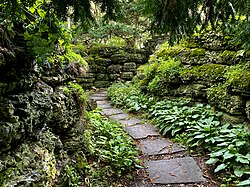
The Rock Garden in Sonnenberg Gardens, New York, shaded by trees, makes use of shade-plants and moss, creating a variety of foliage textures and shades of green.
Managing Moisture and Soil
Shaded environments present unique challenges regarding water and nutrients. Because sunlight is limited, evaporation happens more slowly, which can lead to standing water in areas with poor drainage or near stream-sides.
Drainage and Moisture Control
While some shade sites are prone to being boggy, others may experience dry shade, particularly under large trees or overhanging eaves. While shade generally helps retain moisture, plants located directly under large trees may actually require more frequent watering to compete with the tree's own root system.
Soil Fertility and Root Management
Proximity to large trees can impact soil fertility and create dense root networks. To manage this, you can:
- Amend soil with compost or organic matter, typically in the spring.
- Add a layer of compost and soil mixture to help new plants establish roots.
- Use screens over existing tree roots to prevent them from encroaching on garden beds.
- Select plants with shallow root systems to better compete in crowded soil.
Cultivating Edible Plants in the Shade
While most fruit-bearing crops require significant sun, shade gardens can still be productive. The key is to focus on plants that prioritize leaves, stems, or roots.
Vegetables and Herbs
Leafy greens and root vegetables can thrive in partial shade. In fact, shade can be a benefit in sunny climates, protecting these crops from leaf scorch and delaying the bolting process, which results in more palatable leaves for a longer period. Some herbs also benefit from the shade. Even certain vining plants, such as cucumbers, squash, runner beans, and peas, can grow decently in shaded conditions.
Fruits and Berries
While fruit yields may be lower in the shade, some crops are well-suited to these environments. Rhubarb and members of the Ribes genus (such as currants and gooseberries) grow well in shade. Additionally, many berries that naturally occur at forest edges can be successfully cultivated in a shade garden.
| Condition Type | Light Exposure | Typical Plant Options |
|---|---|---|
| Partial Shade | 2–6 hours of sun | Leafy greens, root vegetables, many herbs |
| Dappled Shade | Filtered sunlight | Herbs, some leaf vegetables |
| Full/Deep Shade | 6+ hours of shade | Rhubarb, Ribes (currants/gooseberries), mint |
| Dry Shade | Low light/low moisture | Plants requiring mulch and moisture retention |
Frequently Asked Questions
Can I grow a vegetable garden in the shade?
Yes, but your options are more limited. Focus on leafy greens, herbs, and root vegetables. Vining plants like peas and certain squash can also work, but avoid sun-loving crops like tomatoes or most gourds.
How do I deal with tree roots in my shade garden?
You can manage tree roots by adding compost and soil mixtures to create new planting areas, using screens to block root encroachment, or selecting plants with shallow root systems.
Why is my shade garden staying so wet?
Shaded areas experience slower evaporation rates. If the area has poor drainage or is near a water source, it may become boggy. You may need to improve drainage to prevent standing water.
Does shade help prevent pests?
Generally, many pests prefer sunlit spots, so shade gardens may experience fewer infestations, though you should still watch out for slugs, which thrive in damp, shaded environments.
How can I increase light in a shady area?
You can use reflective surfaces, such as white walls, fences, or mirrors, to bounce more light onto your plants.