Servicio Meteorológico Nacional: Argentina's Legacy of Weather and Climate Science
The Servicio Meteorológico Nacional (SMN) is the official government agency responsible for observing, understanding, and predicting weather and climate patterns across Argentina and its surrounding waters. Operating under the Ministry of Defense, the SMN provides essential data—including radar images, satellite imagery, and graphs for temperature, rainfall, and ozone levels—to protect the population and support sustainable economic development.
Beyond domestic forecasting, the SMN serves as Argentina's representative to international meteorological organizations, ensuring the nation remains at the forefront of atmospheric science.
Key Facts
- Founded: October 4, 1872 (the first meteorological organization in South America).
- Global Standing: The third meteorological organization established worldwide, following Hungary and the United States.
- Infrastructure: Operates 125 weather stations across Argentina and Antarctica.
- Specialization: Manages the Buenos Aires Volcanic Ash Advisory Centre (VAAC).
- Current Leadership: Directed by Alejandro de la Torre.
A History of Scientific Pioneering
Established by Federal Law №559 during the presidency of Domingo Faustino Sarmiento, the agency began as the Oficina Meteorológica Argentina (OMA) with Dr. Benjamin Apthorp Gould as its first director. From its inception, the OMA was ambitious; by 1873, it had established a national network of meteorological and geomagnetic observations and attended the International Meteorological Congress in Vienna.
The agency's early milestones include the first solar radiation observations in Córdoba in 1874 and the first international exchange of meteorological data with Chile in 1875.
Evolution of Governance
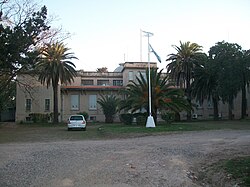
Over the decades, the organization underwent several name changes and shifts in jurisdiction. It was known as the Dirección Meteorológica in 1924 and later the Dirección de Meteorología, Geofísica e Hidrología in 1935. The current name, Servicio Meteorológico Nacional, was officially adopted in 1945 and reinforced by law in 1947.
The SMN's administrative parentage shifted between the Ministries of Justice, Agriculture, and Aeronautics. Following a 40-year period under the Argentine Air Force, the agency returned to civilian control on January 1, 2007. Today, it operates as a decentralized entity under the Ministry of Defense, granting it independent legal status and financial control.
Observation Networks and Antarctic Research
The SMN maintains a vast network of 125 weather stations. These facilities do more than track rain and wind; they utilize specialized observatories to measure atmospheric parameters—physical properties of the atmosphere—such as ozone levels, solar radiation, and ultraviolet radiation.
Argentina's commitment to polar science is evidenced by its presence in Antarctica. The first station was opened in 1904 at the Orcadas Base on Laurie Island. Currently, the SMN operates six synoptic weather stations (stations that provide a general overview of weather conditions over a large area) at the following bases:
- Carlini Base
- San Martín Base
- Belgrano II Base
- Esperanza Base
- Marambio Base
- Orcadas Base
Innovation: The Prevenir Project and AI
To combat the threat of urban flooding, the SMN is involved in the Prevenir project, a collaboration between Argentine and Japanese entities. This initiative integrates Artificial Intelligence (AI) to develop advanced early warning systems, specifically targeting vulnerable areas in Córdoba and Buenos Aires.
By leveraging high-performance supercomputers—namely Clementina XXI and Fugaku—and utilizing radar-provided data, the project improves precipitation dynamics forecasting. Led by researchers such as Juan Jose Ruiz, Prevenir aims to expand observation networks and increase public awareness regarding disaster risk prevention.
The Buenos Aires Volcanic Ash Advisory Centre (VAAC)
Aviation safety depends on the precise monitoring of volcanic ash, which can be hazardous to aircraft engines. The SMN operates the Buenos Aires VAAC, one of only nine such centers globally. This center is responsible for the region spanning longitudes 90°W to 10°W and latitudes 10°S to 90°S.
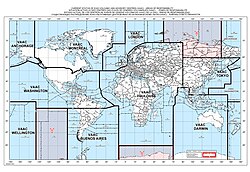
The Buenos Aires VAAC performs several critical functions:
- Detection: Analyzing geostationary and polar orbit satellite data to identify ash clouds.
- Modeling: Using computer simulations to predict the trajectory and movement of ash.
- Communication: Issuing advisories every six hours (at minimum) to Meteorological Watch Offices (MWO), Area Control Centres, and other VAACs.
- Coordination: Providing data to World Area Forecast Centres (WAFC) and international OPMET data banks.
Agency Summary
| Feature | Details |
|---|---|
| Founded | October 4, 1872 |
| Headquarters | Av. Dorrego 4019, Buenos Aires |
| Parent Agency | Ministry of Defense |
| Global Membership | World Meteorological Organization (since 1951) |
| Network Size | 125 Weather Stations |
| VAAC Responsibility | Buenos Aires (90°W-10°W, 10°S-90°S) |
Frequently Asked Questions
When was the Servicio Meteorológico Nacional founded?
The SMN was founded on October 4, 1872, making it the first meteorological organization in South America and the third in the world.
What is the role of the Buenos Aires VAAC?
The Buenos Aires Volcanic Ash Advisory Centre monitors volcanic ash using satellites and computer simulations to provide critical safety information to the aviation industry and other meteorological centers.
How is AI being used in Argentine meteorology?
Through the Prevenir project, AI is used alongside high-performance supercomputers to create early warning systems for urban floods in cities like Buenos Aires and Córdoba.
Does the SMN operate in Antarctica?
Yes, the SMN maintains six synoptic weather stations across various Argentine Antarctic bases, including the historic Orcadas Base, which dates back to 1904.
Which government ministry currently oversees the SMN?
Since 2007, the SMN has been a decentralized organization under the jurisdiction of the Ministry of Defense.