Serbian People: History, Culture, and Global Diaspora
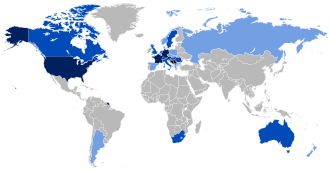
The Serbian people are a South Slavic ethnic group with a rich and complex history rooted in the Balkan Peninsula. With a total population of approximately 9 million, they maintain a strong cultural identity characterized by a unique blend of Eastern Orthodox spirituality, a resilient historical narrative, and a vibrant artistic tradition. While the majority reside in Serbia and Bosnia-Herzegovina, a significant global diaspora has established roots in countries such as Germany, Austria, the United States, and Canada.
From the early arrival of the Slavs to the establishment of powerful medieval dynasties and the challenges of the modern era, the Serbian journey is one of endurance and cultural preservation.
Key Facts
- Total Population: Approximately 9 million people worldwide.
- Primary Language: Serbian, featuring active digraphia (use of both Cyrillic and Latin scripts).
- Dominant Religion: Eastern Orthodoxy, centered around the Serbian Orthodox Church.
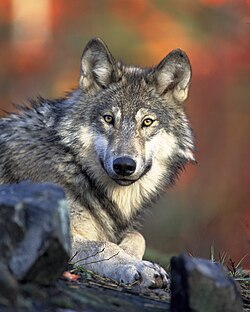
- National Animal: The wolf, which plays a central role in national mythology and naming conventions.
- Major Regions: Serbia (5.36 million) and Bosnia-Herzegovina (1.08 million).
Historical Evolution
Early Origins and the Middle Ages
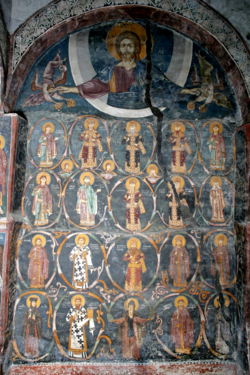
The foundation of the Serbian people began with the arrival of the Slavs in the Balkans. During the Middle Ages, the Nemanjić dynasty emerged as the leading force, establishing a powerful state and fostering the growth of the Serbian Orthodox Church.
Early Modern and Modern Periods
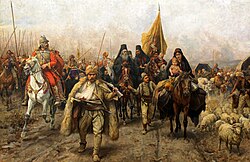
The early modern period was marked by struggles and migrations. A pivotal moment occurred at the end of the 17th century during the Great Migration of the Serbs, as many moved from Ottoman-controlled territories to the Habsburg monarchy to escape oppression.
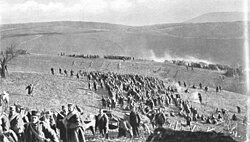
The 20th century brought both triumph and tragedy. The Battle of Cer marked the first Allied victory in World War I, signaling a turning point in the conflict.
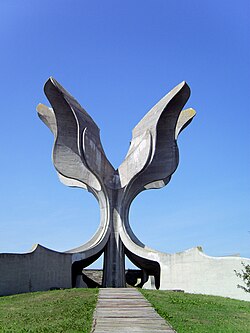
However, World War II brought immense suffering, particularly during the Genocide of Serbs. The Stone Flower monument stands today as a solemn reminder of the victims of the Jasenovac concentration camp.
Culture and National Identity
Language and Literacy
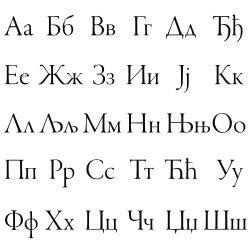
The Serbian language is unique in Europe for its active digraphia, meaning that both the Cyrillic and Latin alphabets are used interchangeably in daily life and official capacities.
Symbols and Traditions
Serbian identity is deeply tied to its symbols and folklore. The wolf is the national animal, and its influence is evident in many traditional names and surnames.
The national tricolour serves as a primary symbol of statehood, while the three-finger salute is often used as a gesture of national and religious identity.


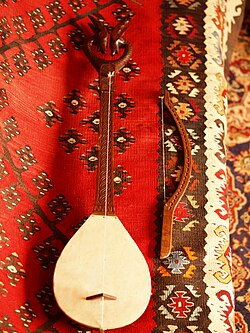
Traditional crafts and music also define the culture. The gusle (a single-stringed instrument) is used to recite epic poetry, and the Pirot carpet is a world-renowned example of Serbian handicraft.
Religion and the Slava
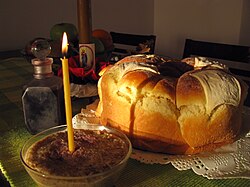
The Serbian Orthodox Church is the spiritual cornerstone of the people. One of the most distinct traditions is the Slava, a family celebration of a patron saint. This ritual involves specific foods, including Slavski kolač (yeast bread) and koljivo (sweetened boiled wheat with walnuts).
Daily Life and Arts
Traditional Attire and Cuisine
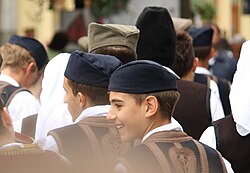
The šajkača, a traditional cap, remains a recognizable symbol of Serbian rural heritage.
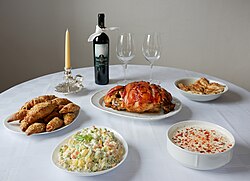
Serbian cuisine is hearty and celebratory. A traditional Christmas table typically features roast pork, hearty soups, crescent rolls, and Olivier salad, often paired with wine or rakija (a potent fruit brandy).
Contributions to Arts and Science
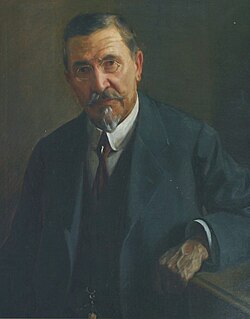
Serbia has produced influential figures across various fields. In music, Stevan Mokranjac is revered as the father of modern Serbian music. The nation's contributions extend to cinema, philosophy, and science, including notable Serbs who contributed to the Apollo Space Program.
Sporting Excellence
Serbians are globally recognized for their athletic prowess, particularly in basketball and tennis. Figures like Nikola Jokić in the NBA and Novak Djokovic in tennis have reached the pinnacle of their respective sports, while others have excelled in taekwondo and shooting.
Demographic Distribution
While the heart of the population remains in the Balkans, the Serbian diaspora is widespread. Significant communities exist in Western Europe and North America, contributing to a global network of Serbian culture.
| Region/Country | Estimated Population | Data Year |
|---|---|---|
| Serbia | 5,360,239 | 2022 |
| Bosnia-Herzegovina | 1,086,733 | 2013 |
| Germany | 387,000 | 2023 (est.) |
| Austria | 300,000 | 2025 (est.) |
| Montenegro | 205,370 | 2023 |
| United States | 176,643 | 2024 |
Frequently Asked Questions
What is the significance of the Slava?
The Slava is a unique Serbian Orthodox tradition where families celebrate their specific patron saint. It is a cornerstone of family identity and community bonding, involving ritual foods like Slavski kolač and koljivo.
What does digraphia mean in the context of the Serbian language?
Digraphia refers to the official and active use of two different writing systems for the same language. In Serbia, both the Cyrillic and Latin scripts are used in daily communication and administration.
Who were the Nemanjić dynasty?
The Nemanjić dynasty was the leading royal house of medieval Serbia, responsible for establishing the Serbian state and strengthening the ties between the nation and the Eastern Orthodox Church.
What is the national animal of Serbia?
The wolf is the national animal of Serbia. It holds a significant place in national mythology and is the root of many traditional Serbian names and surnames.
Which sports is Serbia most famous for?
Serbia is highly regarded for its success in basketball (notably in the NBA) and tennis, as well as achieving Olympic success in taekwondo and shooting.