Self-Publishing: Evolution, Technology, and the Modern Literary Landscape
For centuries, authors have sought ways to share their stories and ideas without relying on the approval of traditional gatekeepers. While often viewed as a modern phenomenon driven by the internet, self-publishing—the process of an author publishing their own work independently—has a rich history involving some of the most influential figures in literature and music.
The Historical Roots of Independent Publishing
Long before digital platforms, legendary writers utilized self-publishing to bring their visions to life. Notable examples include John Locke, Jane Austen, Emily Dickinson, Nathaniel Hawthorne, Martin Luther, Marcel Proust, Derek Walcott, and Walt Whitman. In the realm of music, François Couperin self-published keyboard music in the 18th century, and Joseph Haydn independently published his oratorio The Creation in 1800.
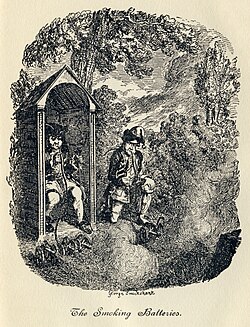
One of the earliest milestones occurred in 1759 when British satirist Laurence Sterne self-published the first two volumes of Tristram Shandy.
The 19th and 20th centuries saw a variety of independent paths to success. Ezra Pound sold copies of A Lume Spento for six pence each, while Franklin Hiram King's Farmers of Forty Centuries gained enough traction through self-publishing to eventually be picked up commercially. Virginia Woolf took a unique approach by using her own Hogarth Press to publish her final novel, Between the Acts. Some independent ventures led to massive commercial success; Irma S. Rombauer paid a local printer for 3,000 copies of The Joy of Cooking, which was later acquired by the Bobbs-Merrill Company and has since sold over 20 million copies.
The Stigma and the Quality Gap
Despite its history, self-publishing has often carried a social and professional stigma. Traditional publishers act as filters, employing a rigorous selection process and providing professional editors, proofreaders, and book designers to ensure a high standard of quality. For independent authors, replicating this professional polish can be a significant challenge.
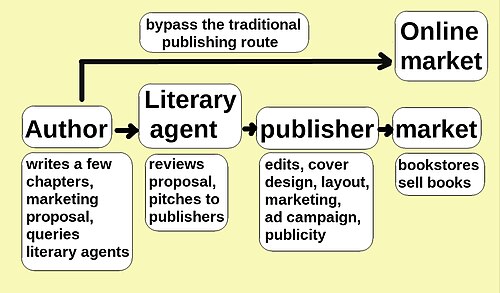
Historically, authors without a traditional contract relied on vanity presses—companies that charge authors for publishing services—which were often expensive and created a barrier to entry. The digital revolution removed these financial barriers, allowing ebooks to be published at virtually no cost. However, this accessibility has led to concerns regarding quality control. One blogger estimated that 70% of self-published books are unreadable, and a 2014 Digital Book World survey noted that traditionally published books generally receive higher critical reviews.
To combat this, many modern self-published authors now adopt a professional workflow, hiring beta readers (initial readers who provide feedback), critique groups, and professional editors to match traditional industry standards. This shift is gradually lending more respectability to the medium.
Technological Catalysts for Growth
The growth of the independent publishing industry is inextricably linked to technological leaps. A primary driver is Print-on-Demand (POD), a technology emerging in the mid-1990s that allows books to be printed only after an order is placed, eliminating the need for costly inventory storage.
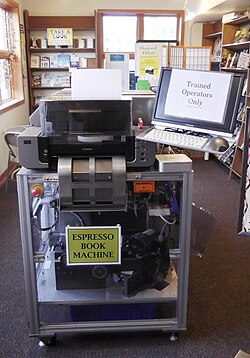
The landscape shifted dramatically in 2007 with the launch of the Amazon Kindle and Kindle Direct Publishing (KDP), which provided authors with instant access to global distribution channels. Simultaneously, the Espresso Book Machine was introduced at the New York Public Library. This device can print, collate, cover, and bind a single paperback book in minutes using two PDF files (one for text and one for the cover), helping small bookstores compete with larger chains and reviving out-of-print editions.
Other initiatives, such as the Self-e platform created by Library Journal and Biblioboard, allow authors to submit works online for review. While authors do not earn money directly through this specific platform, it serves as a powerful marketing tool for those whose work is selected for nationwide publication.
The Impact of Artificial Intelligence
The emergence of AI has introduced a new era of controversy. Proponents argue that AI streamlines tasks that were previously only available through traditional publishing houses. However, critics fear a decline in originality and quality. For example, the startup Spines plans to publish 8,000 AI-generated books in 2025, sparking concerns about the lack of genuine care in book production.
Legal challenges have also surfaced. In September 2023, the writers of Game of Thrones accused OpenAI of copyright infringement, alleging that their writing was used to train ChatGPT to generate realistic responses.
Key Facts
- Historical Precedent: Famous authors like Jane Austen and Walt Whitman utilized self-publishing.
- POD Advantage: Print-on-Demand removes the need for inventory storage by printing books only after purchase.
- The Kindle Effect: The 2007 launch of KDP is considered a tipping point for independent authors.
- Quality Control: While some self-published works lack editorial oversight, many authors now hire professional editors and beta readers to ensure quality.
- AI Controversy: AI-driven publishing is raising legal questions regarding copyright and content standards.
| Feature | Traditional Publishing | Modern Self-Publishing |
|---|---|---|
| Gatekeeping | High (Agents/Editors) | Low to None |
| Upfront Cost | Low (Publisher pays) | Variable (Author pays for services) |
| Editorial Support | Included | Optional/Author-funded |
| Distribution | Established Networks | Global via Online Retailers/POD |
| Production Speed | Slow (Long lead times) | Fast (Instant for ebooks) |
Frequently Asked Questions
What is Print-on-Demand (POD)?
Print-on-Demand is a technology that allows books to be printed individually after a customer places an order, eliminating the cost and risk of storing large amounts of physical inventory.
How does self-publishing differ from a vanity press?
A vanity press is a company that charges authors to publish their work, often acting as a costly barrier. Modern self-publishing, particularly via ebooks and platforms like KDP, can be done at virtually no cost.
Why is there a stigma associated with self-published books?
The stigma stems from a lack of traditional gatekeepers (agents and editors), which can lead to inconsistent quality control and a higher prevalence of unpolished or unreadable content.
What is the Espresso Book Machine?
The Espresso Book Machine is a POD device found in some libraries and bookstores that can print, bind, and cover a complete paperback book in minutes using PDF files.
How is AI affecting the self-publishing industry?
AI is streamlining production tasks but has also led to the mass publication of low-quality literature and significant legal disputes over copyright and the use of existing authors' works for training models.